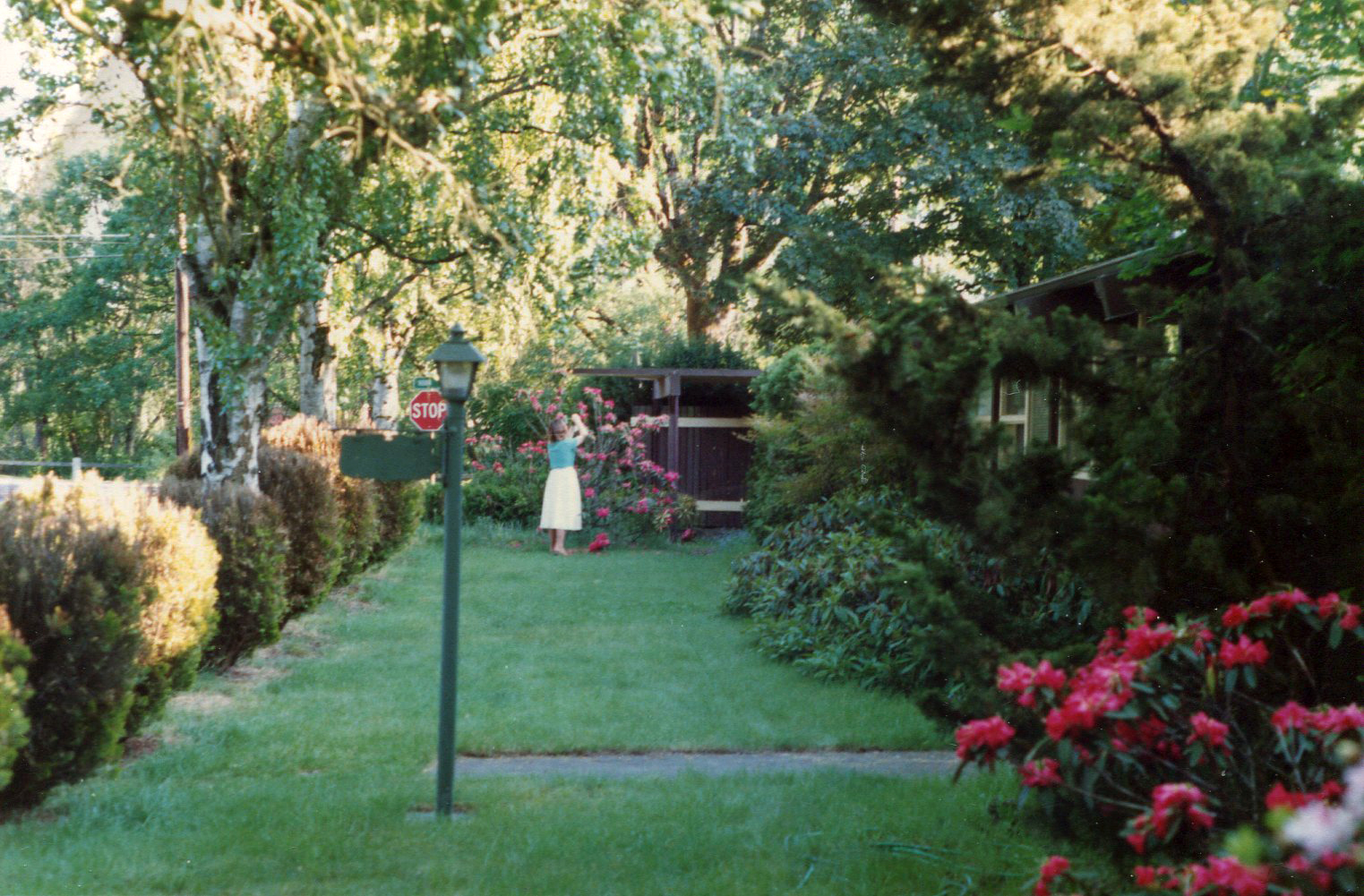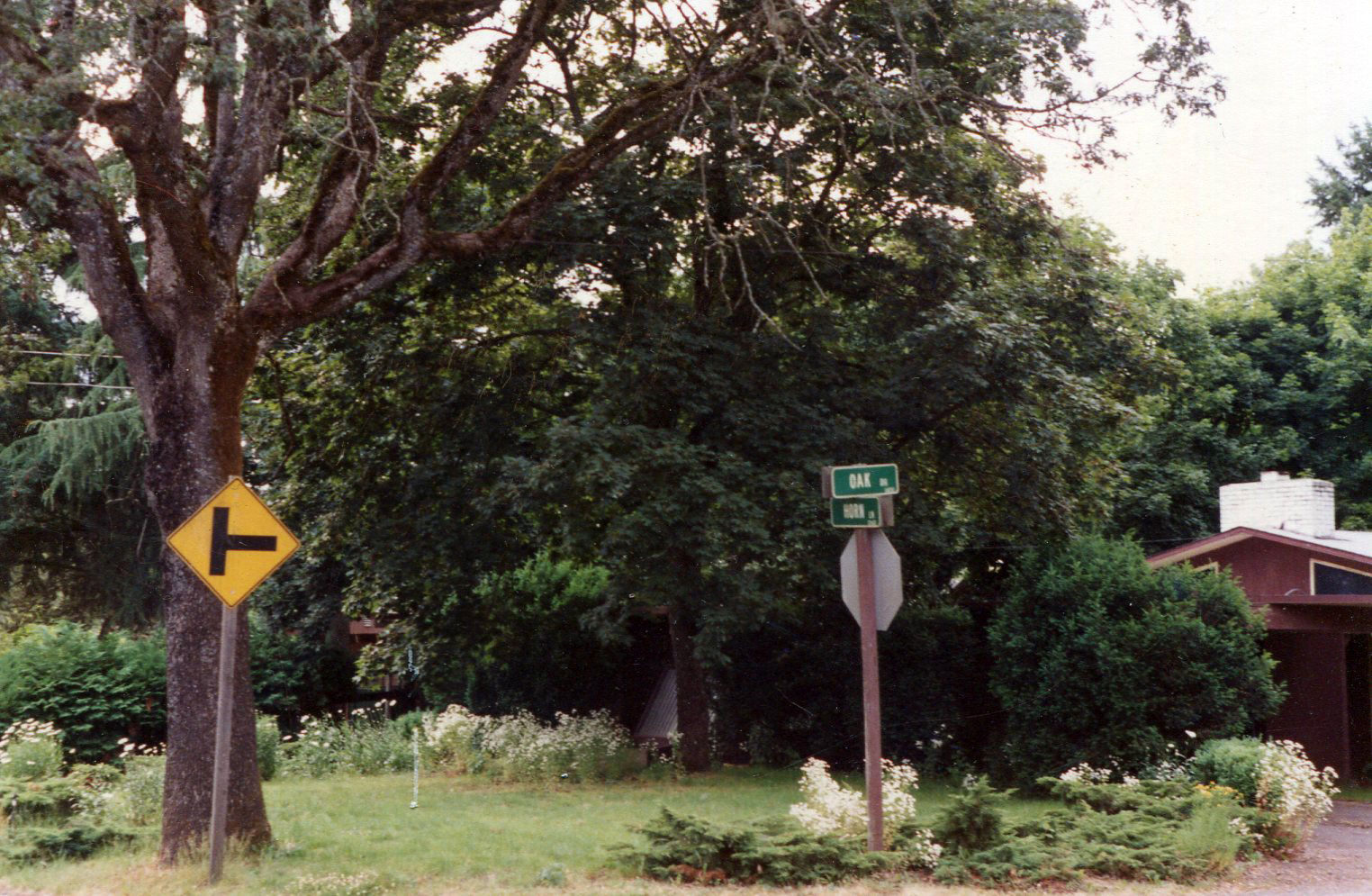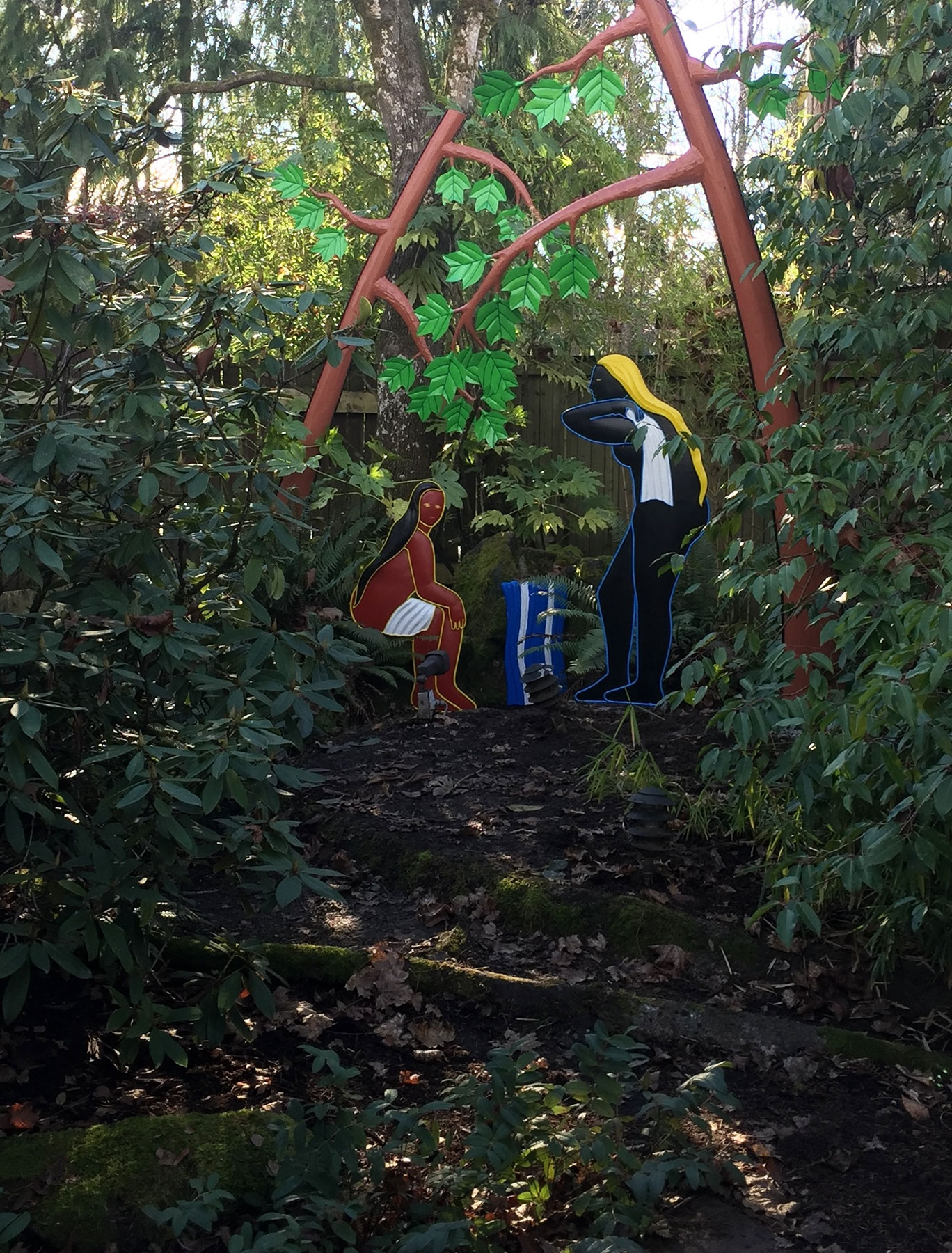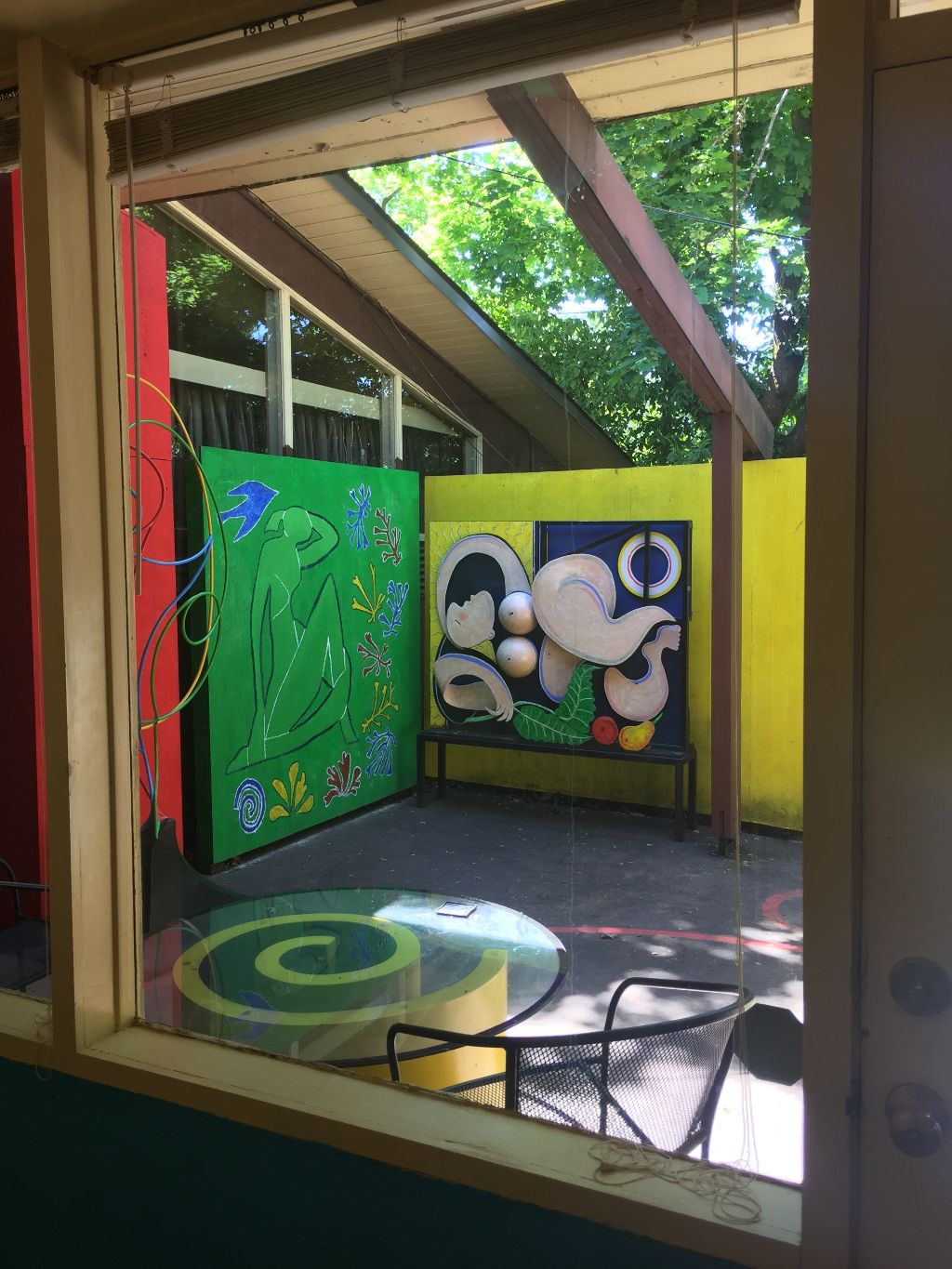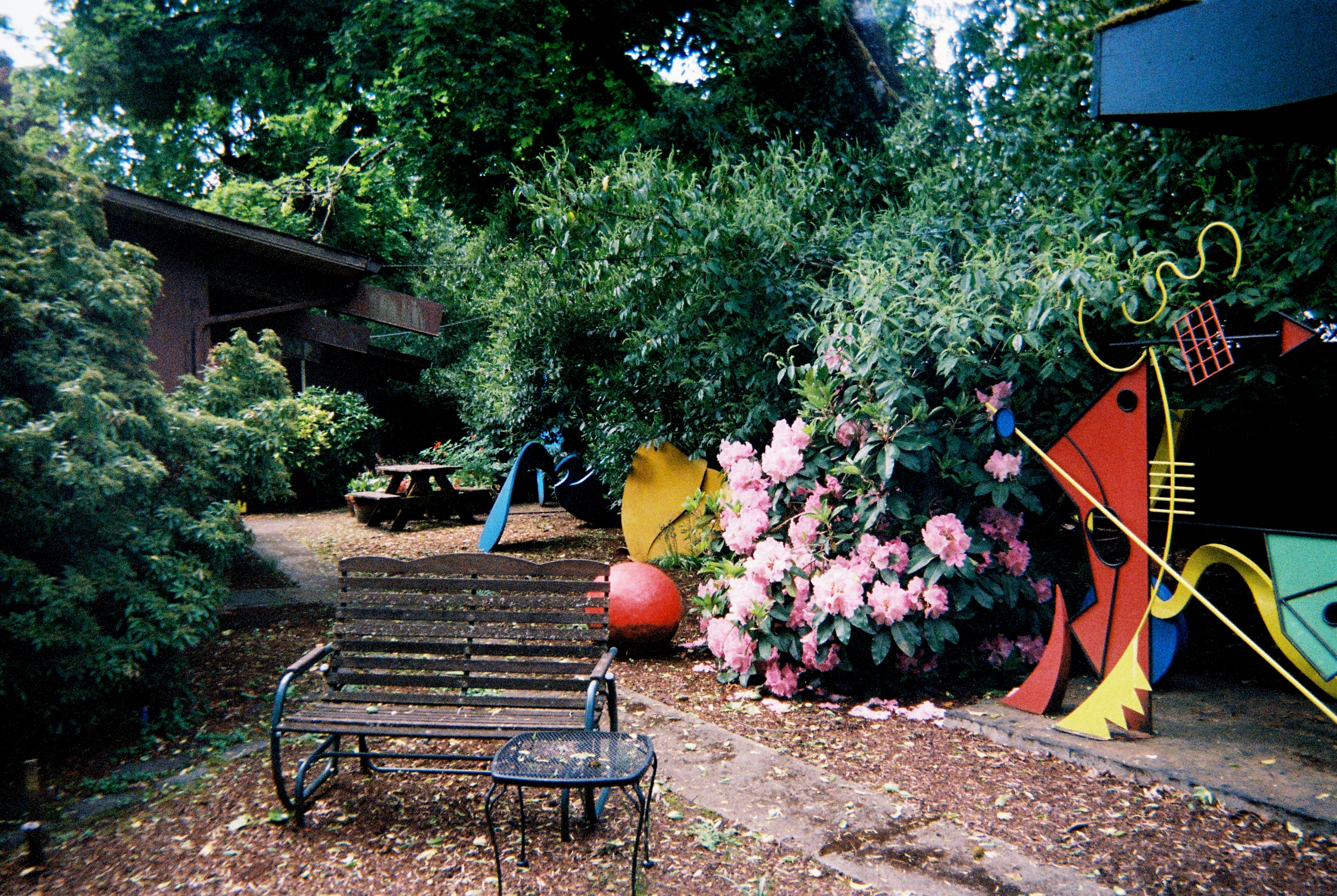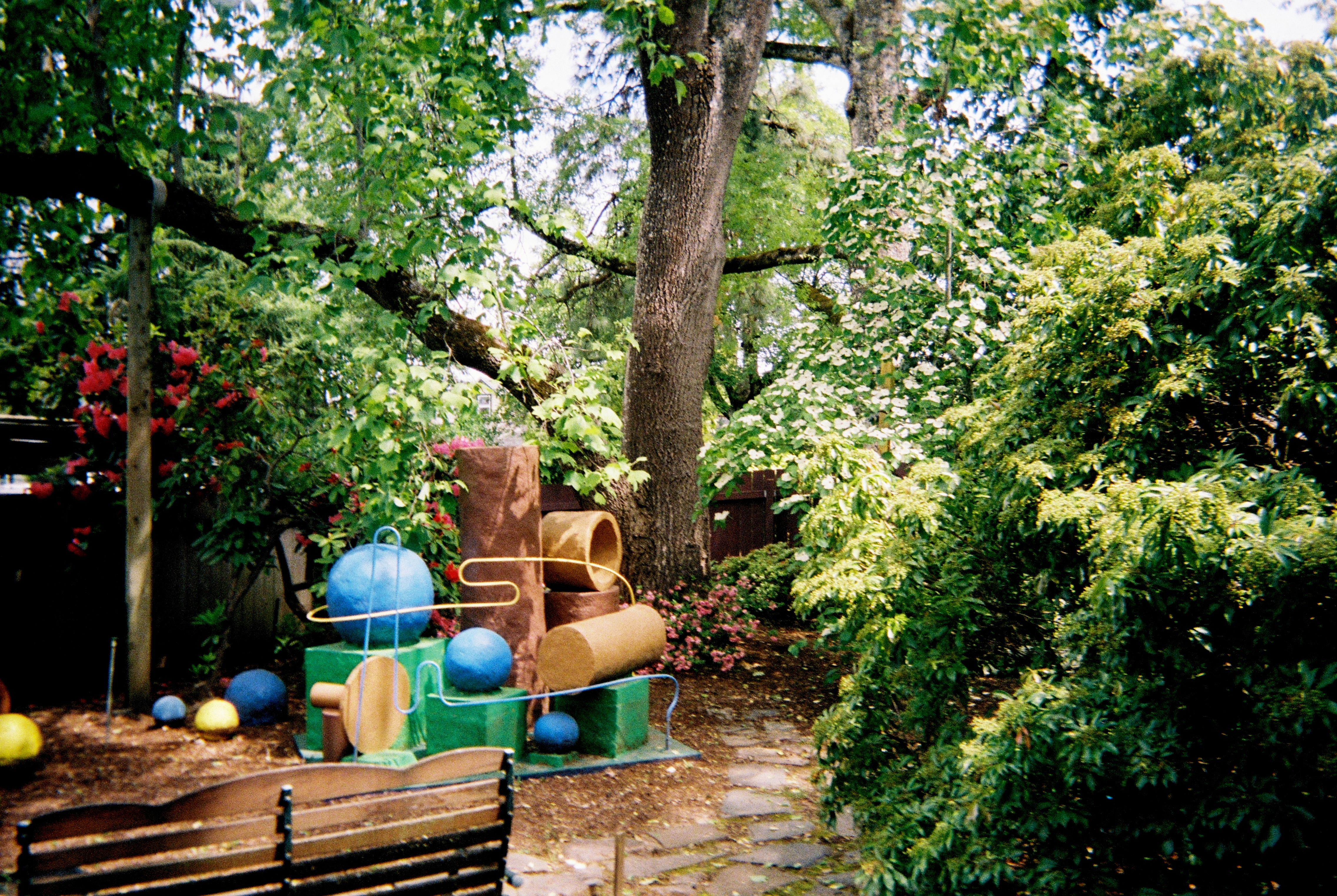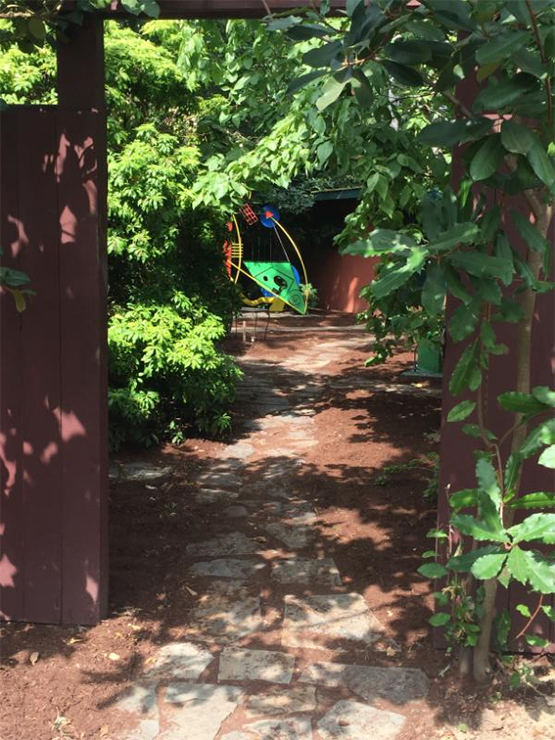
1a. View of sculpture garden through the east gate
Sculptures aren’t as ubiquitous as paintings. I’ve found that people who are definite about the kinds of paintings they like tend to be more open about sculptures. My intention in posting this website is to make contact with persons who have sculpture gardens, possibly to spark an interest in sculpture in others who haven’t thought about it, and to show friends and acquaintances an activity of mine.
In countless ways, art enters everyone’s life. Paintings and other wall art are the commonest sign of it in homes. One reason is that they don’t take up space, whereas sculptures, especially standing sculptures, can get in the way. Outdoor sculptures don’t have that disadvantage, as many people have found. A private sculpture garden on the grounds of the home – a combination of art, landscape, and exteriors – is an outdoor gallery, analagous to the familiar gallery of pictures inside the home.
Public sculpture gardens and parks have greatly multiplied in recent years, and private sculpture gardens have kept pace. Private sculpture gardens tend to be more personal than public ones, as is to be expected.
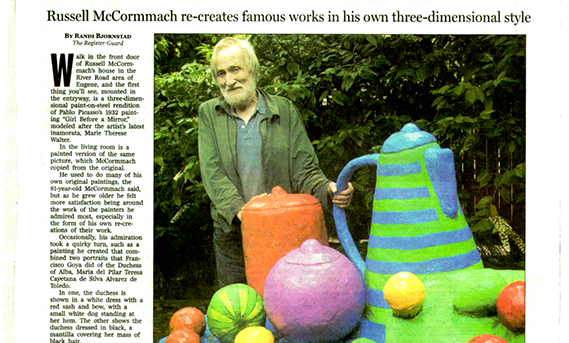
A story in the arts section of Eugene's newspaper Register-Guard gives biographical information.
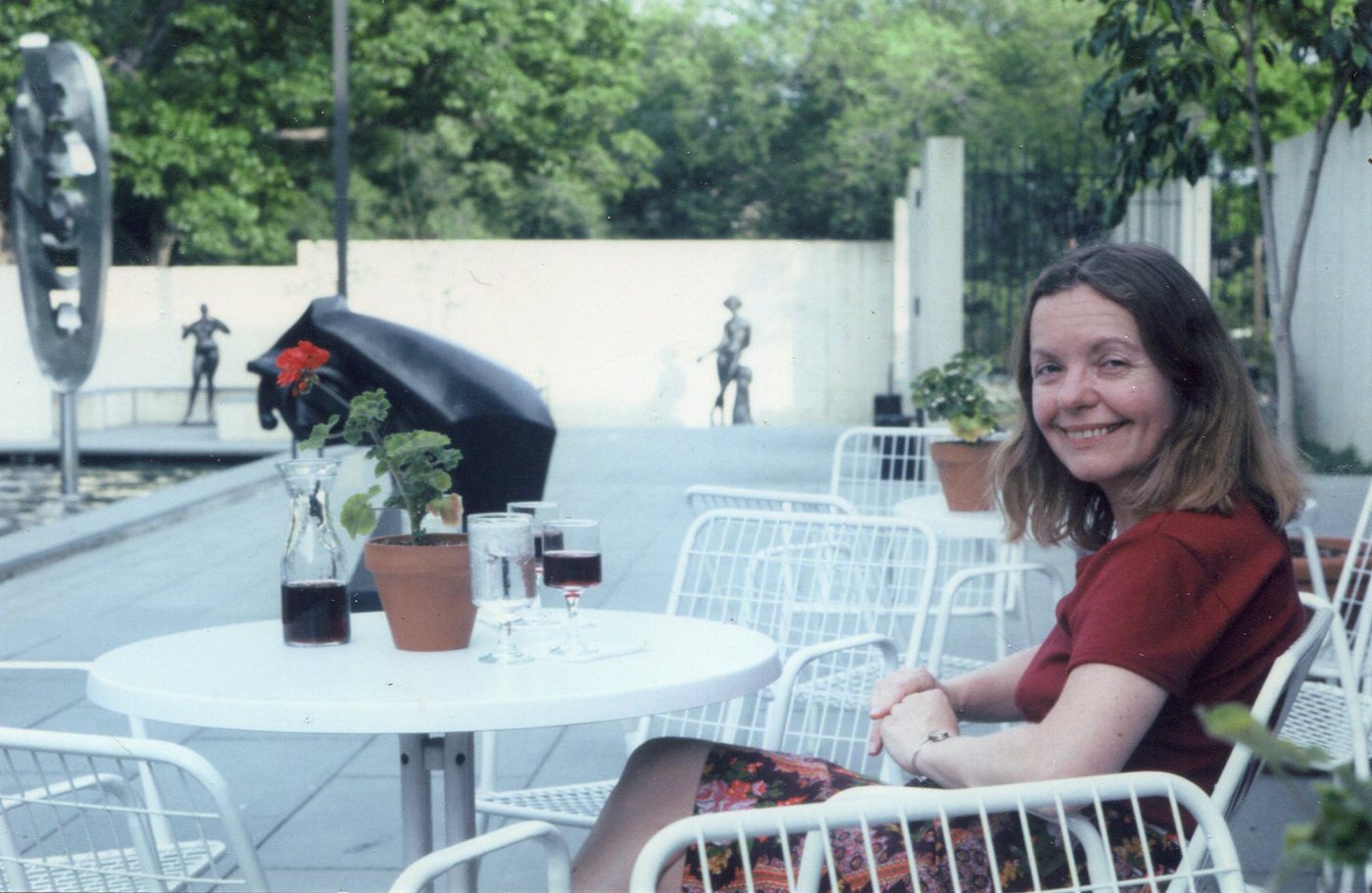
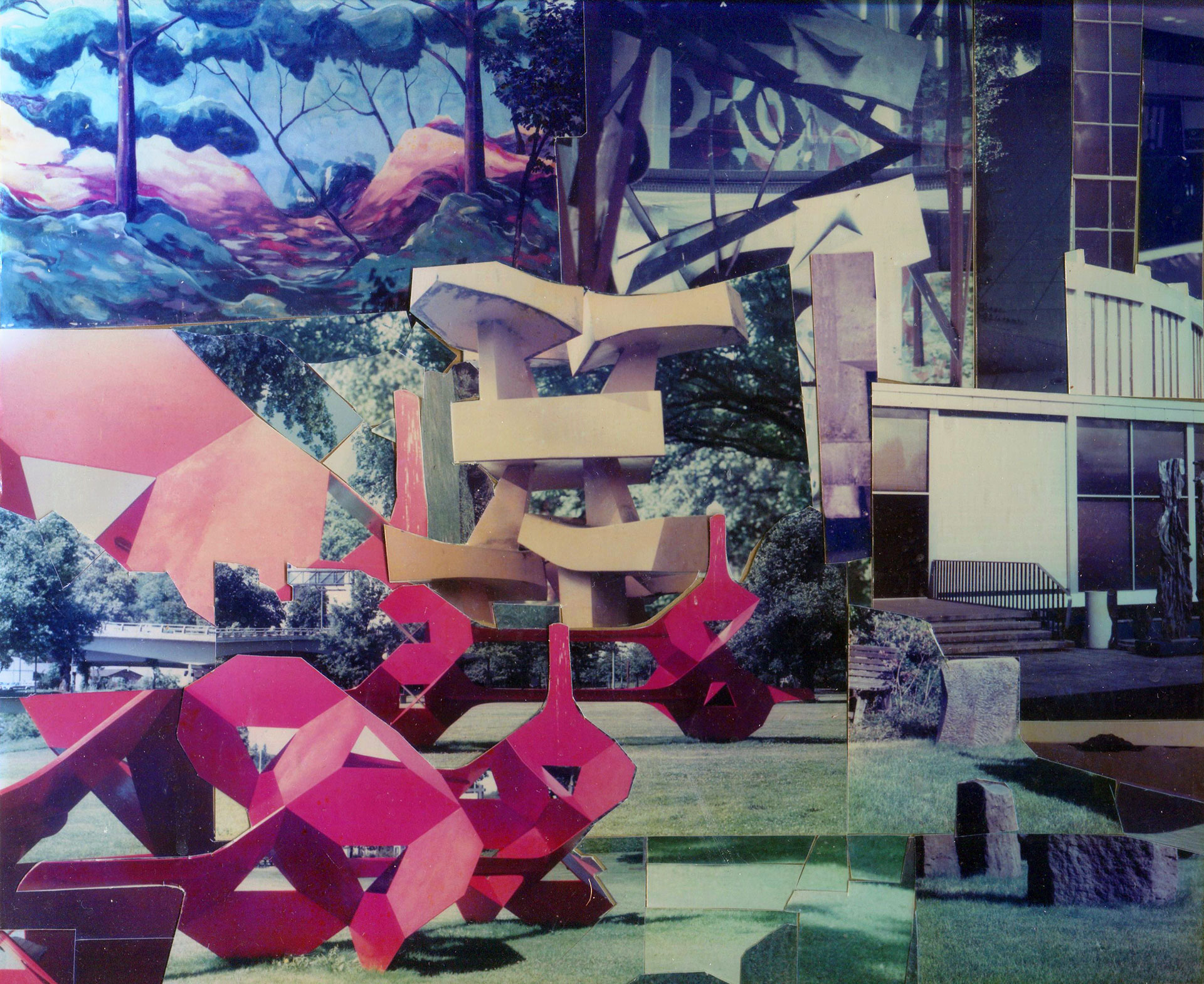
For a number of years, my wife, Christa Jungnickel, and I lived in Baltimore. During that time, in 1980, the Baltimore Art Museum added an outdoor sculpture garden. Every day on the way to work, we walked by the sculpture garden, which was visible through a wrought iron fence.
We took to spending time inside the sculpture garden too, where we could order a drink, sit at an outside table, enjoy the art, and dream. In that setting, we formed the idea of having a sculpture garden of our own. For lack of means, that was not going to happen in Baltimore.
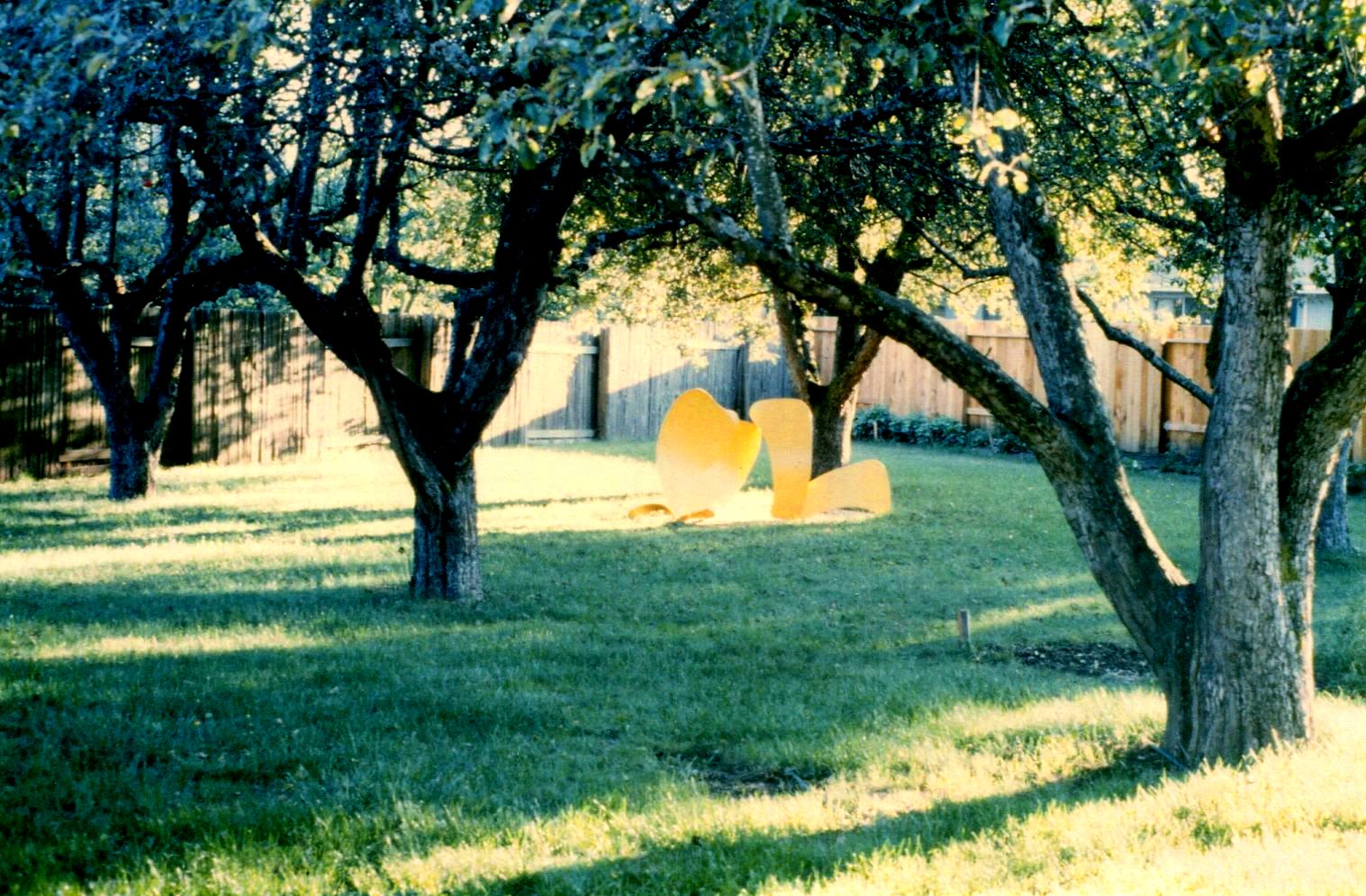
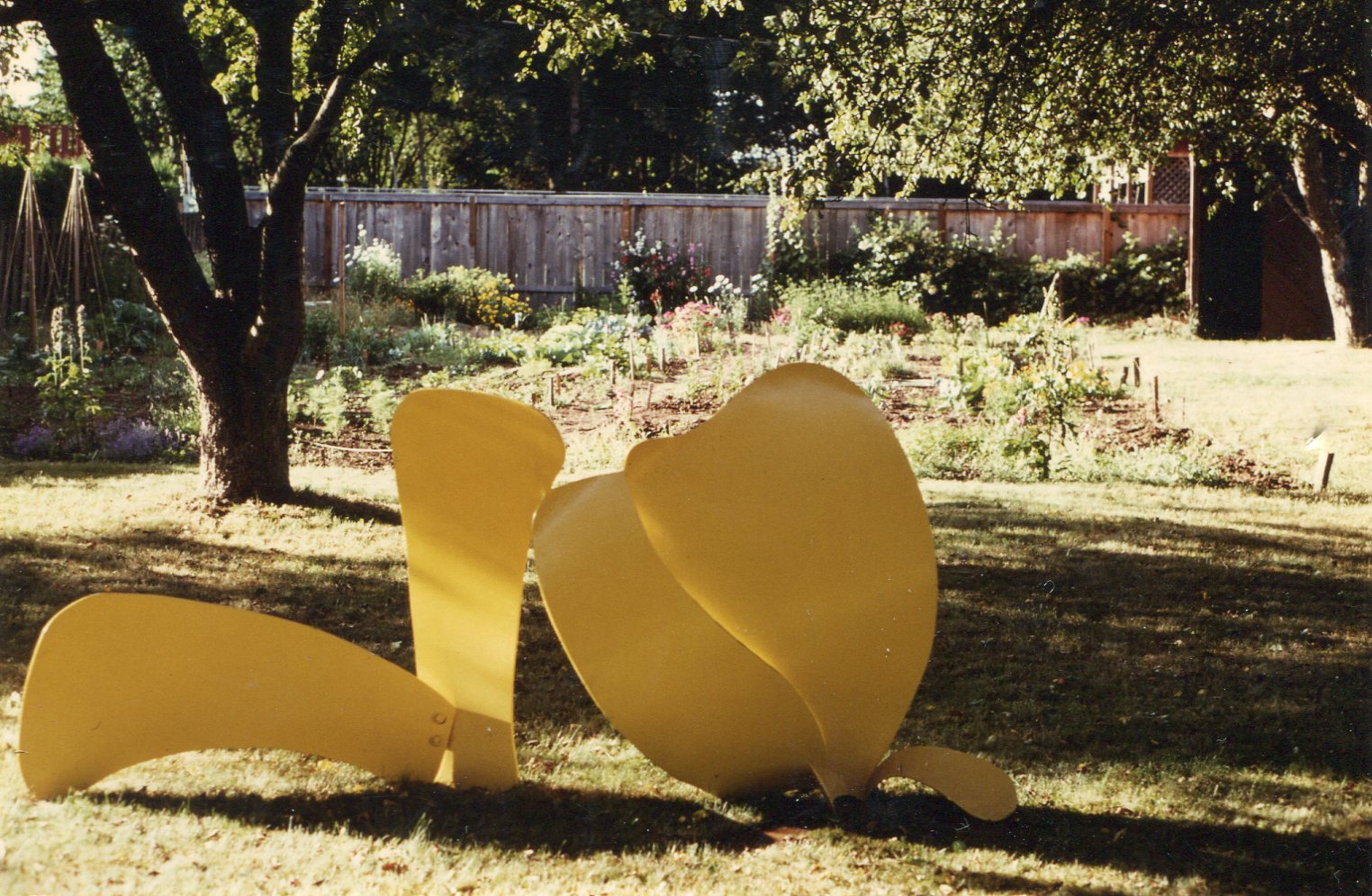
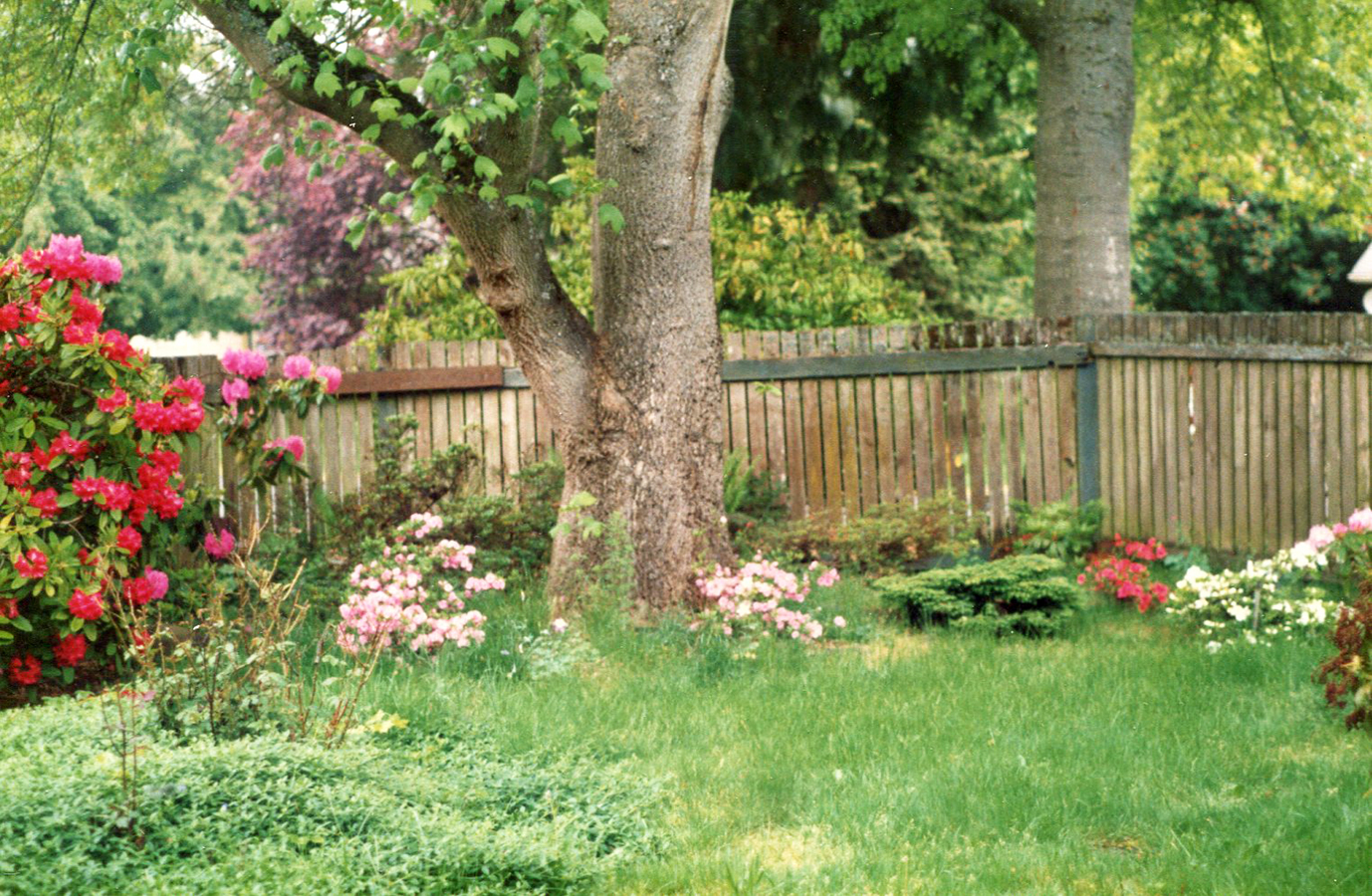
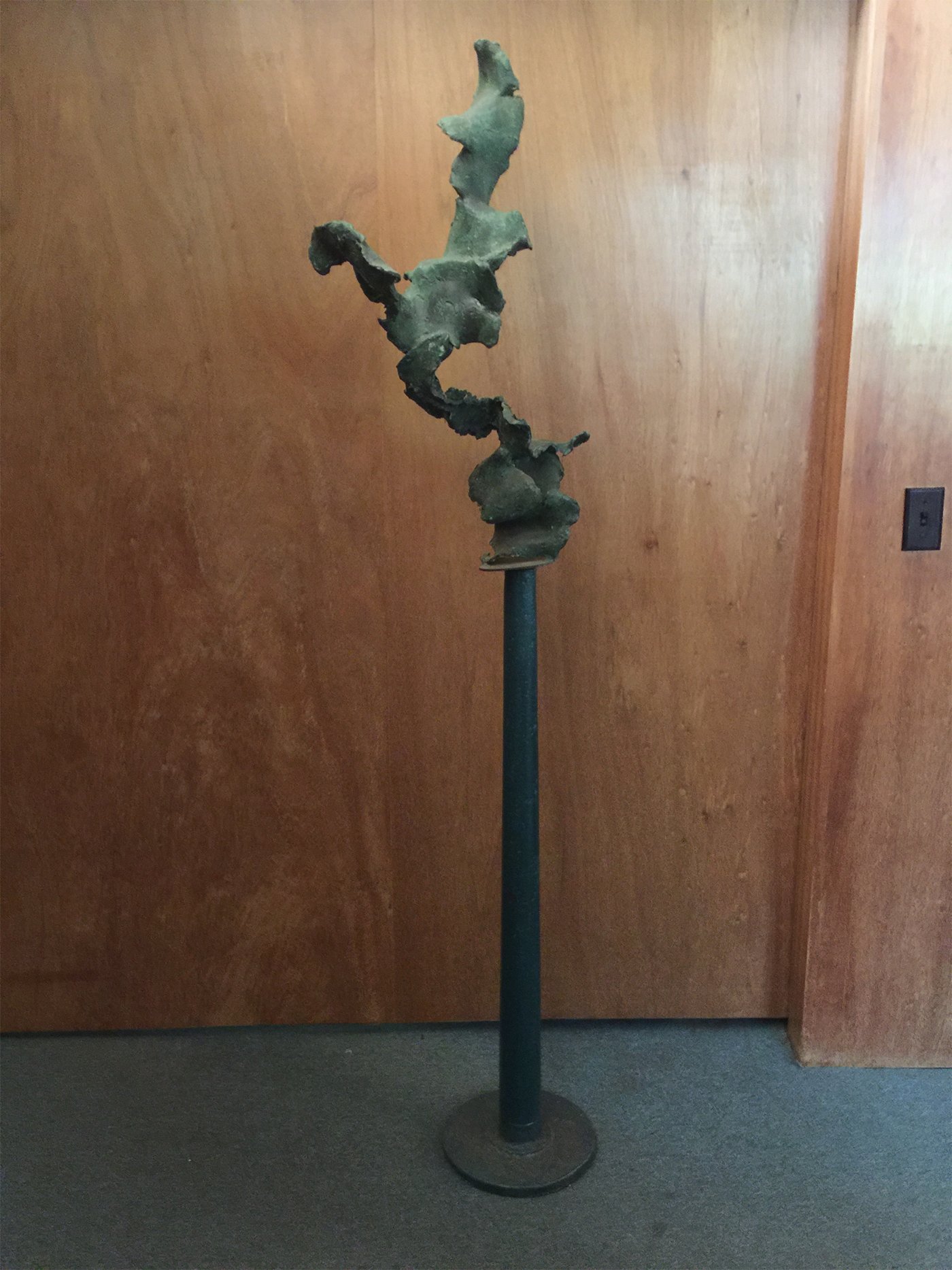
In time, we moved from Baltimore to Oregon, a state we both knew well. Our first house was a ranch-style rental in a suburb of Eugene. The house was tiny, but it sat on a large lot, which had been part of an apple orchard. There were still apple trees on it, which formed the setting of our first outdoor sculpture, a yellow organically shaped steel piece, shown in the photographs here. It was made by Tom Walsh, who was just completing his studies in fine arts at the University of Oregon. We met him at a community art center during a show of works by a number of sculptors in the area. His entry appealed to us, as did the talk he gave on his work. We told him we were interested in his sculpture, and he told us to wait until the show was over, when we could buy it directly from him. When we went to the art center after the show was taken down, we learned that they had sold the sculpture. We were disappointed, but the sculptor assured us that we could buy his next work if we wanted it, and in the meantime he loaned us a sculpture. In the end, we bought both sculptures. We would go on to buy more sculptures by this highly talented and dedicated artist, a number of which are shown in photographs on this website. In this way, by accident and good fortune, we took our baby steps toward having a sculpture garden. We now had a direction if not a plan; the sculpture garden would evolve by its own hidden laws.
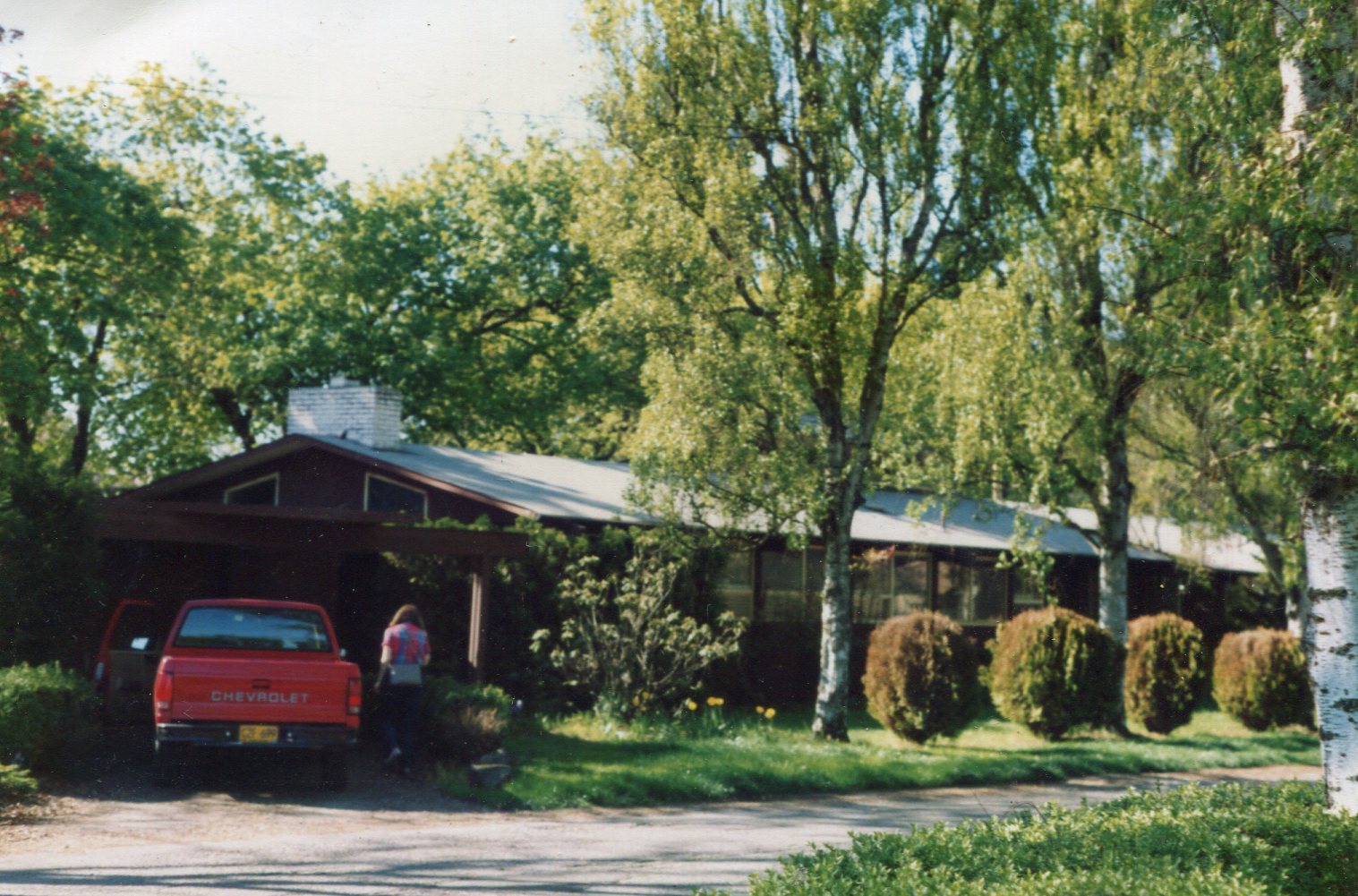
About this time we learned of an unusual house for sale in another suburb of Eugene, at a price we could afford. It appealed to us immediately both for its style and for the opportunity it offered for a well-sited sculpture garden. Designed by an architect at the University of Oregon, the house is an example of Northwest Regionalism in architecture, embodying the basic elements of that style. It stresses lighting, aided by ample windows, some very large. It uses post-and-beam construction as an architectural feature. The floor plan is open. Native materials are used throughout.
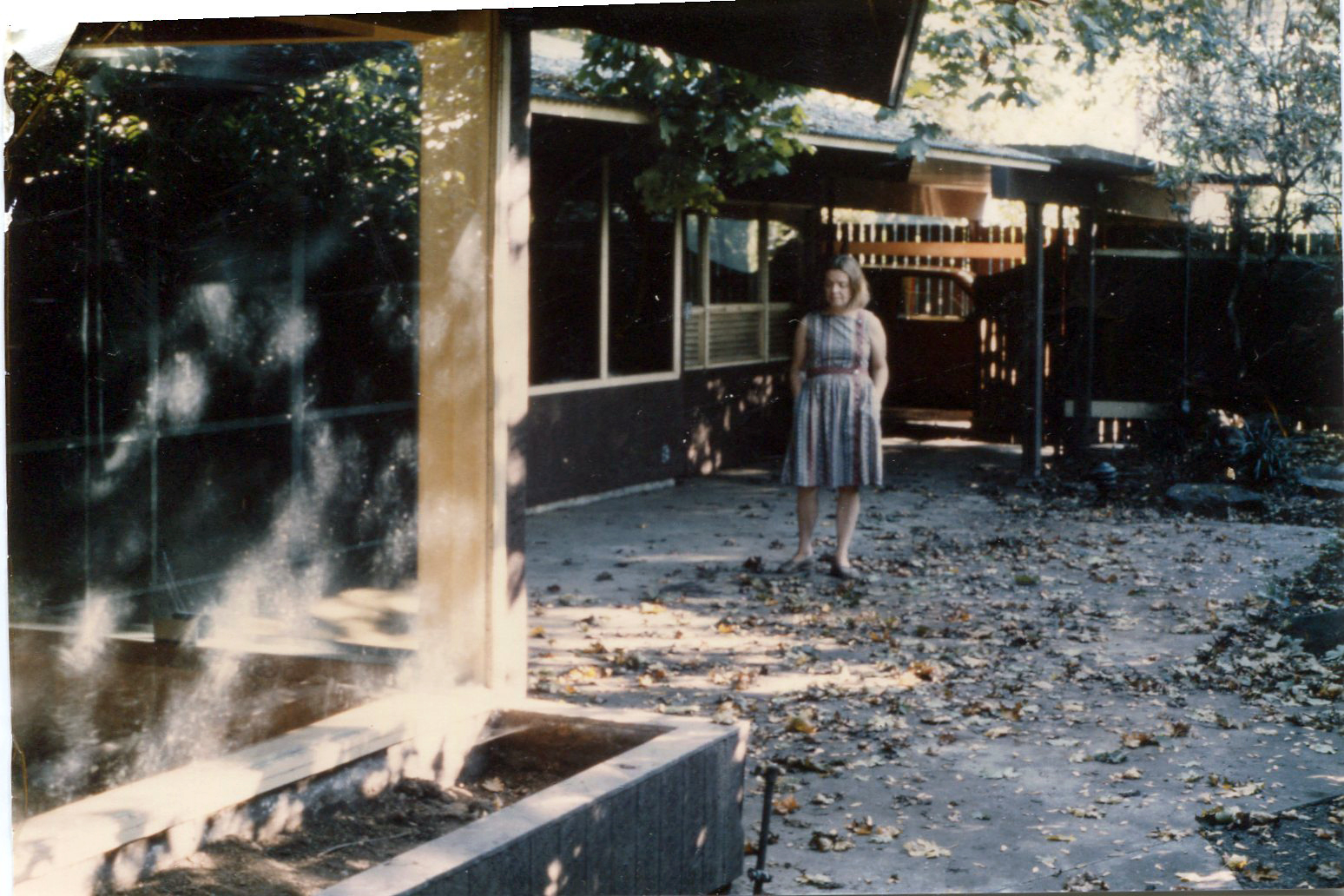
From the standpoint of sculptures, the most important feature of the house is the interplay of the interior with the natural setting, which includes access; the house has six outside doors, two of which open onto patios. Referred to as a terrace by the architect, one of the patios is very large, and the overhang of the roof there is very wide, providing shade and shelter for seating. To the smaller patio, large colored panels have been added by us, creating an open-air room separated from the interior mainly by glass. On all sides of the house, there are large trees, forming the natural setting of the garden overall. The other setting is the exterior of the house, which being of the Northwest regional style has a sculptural form of its own. In keeping with the style of the house, there are sculptures inside as well as outside the house.
My wife died unexpectedly five years after we moved to Eugene. For a long time, I did nothing more with our sculpture garden, but I kept the thought of returning to it one day.
I’ve always had an interest in art, at times an active interest. I made oil and acrylic paintings mainly. When I came down with a neuropathy, I thought I had lost the ability to paint (not entirely, it turned out), and I looked to a medium that required less dexterity, one which was new to me, concrete. With it, I returned to our sculpture garden, with the object of making a transition from painting on canvas to painting sculptural forms.
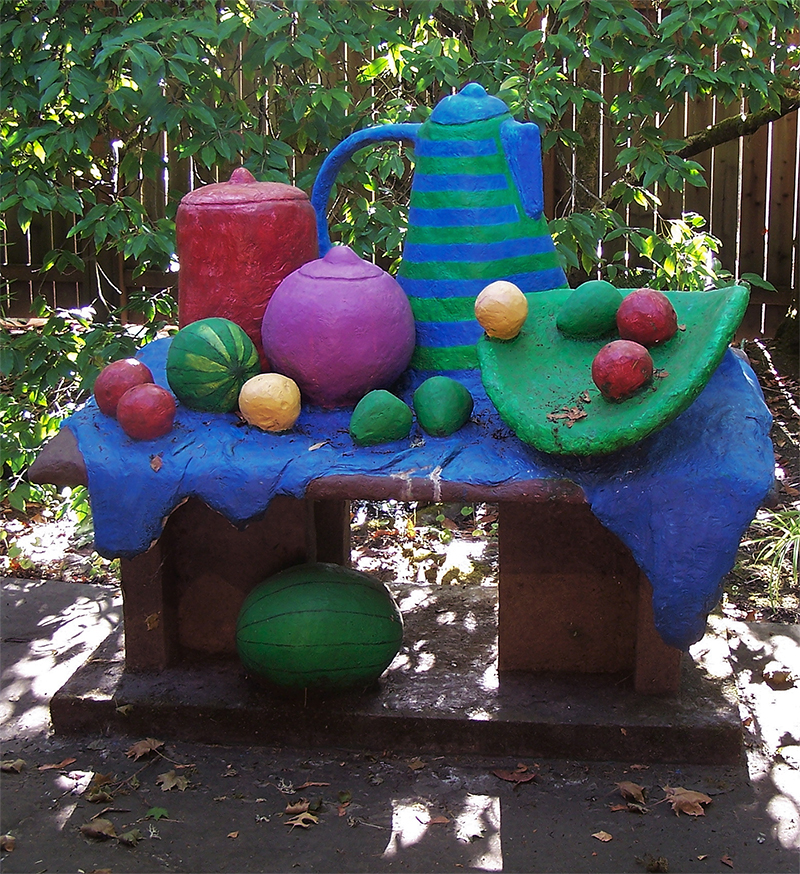
My field, history, which includes the history of art, helped in making the transition. I began with Cézanne, who found it useful to view a scene from several angles, a sculptural approach. My first concrete sculpture was a three-dimensional Cézanne-like still life. With this, our sculpture garden took on a new life.
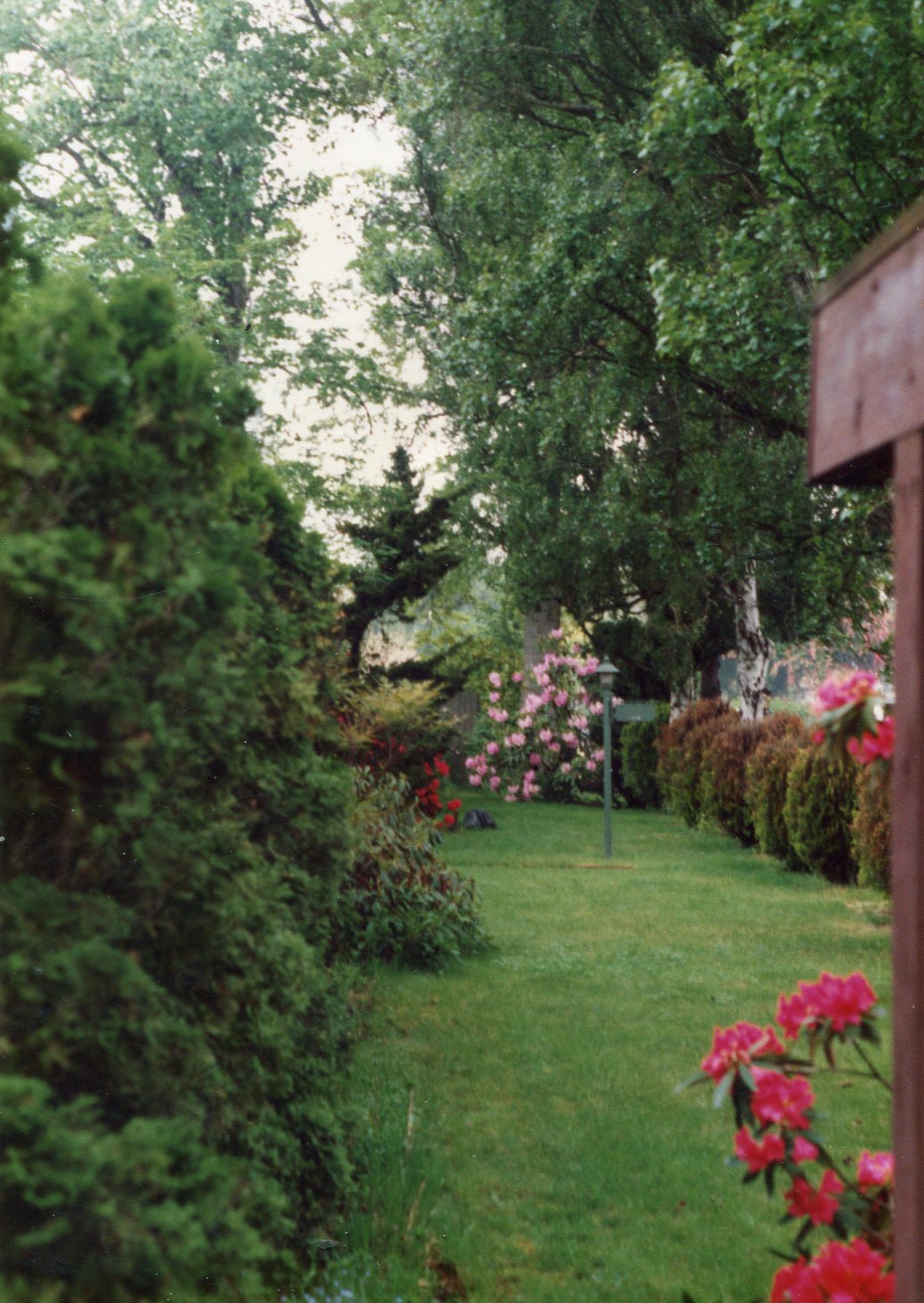
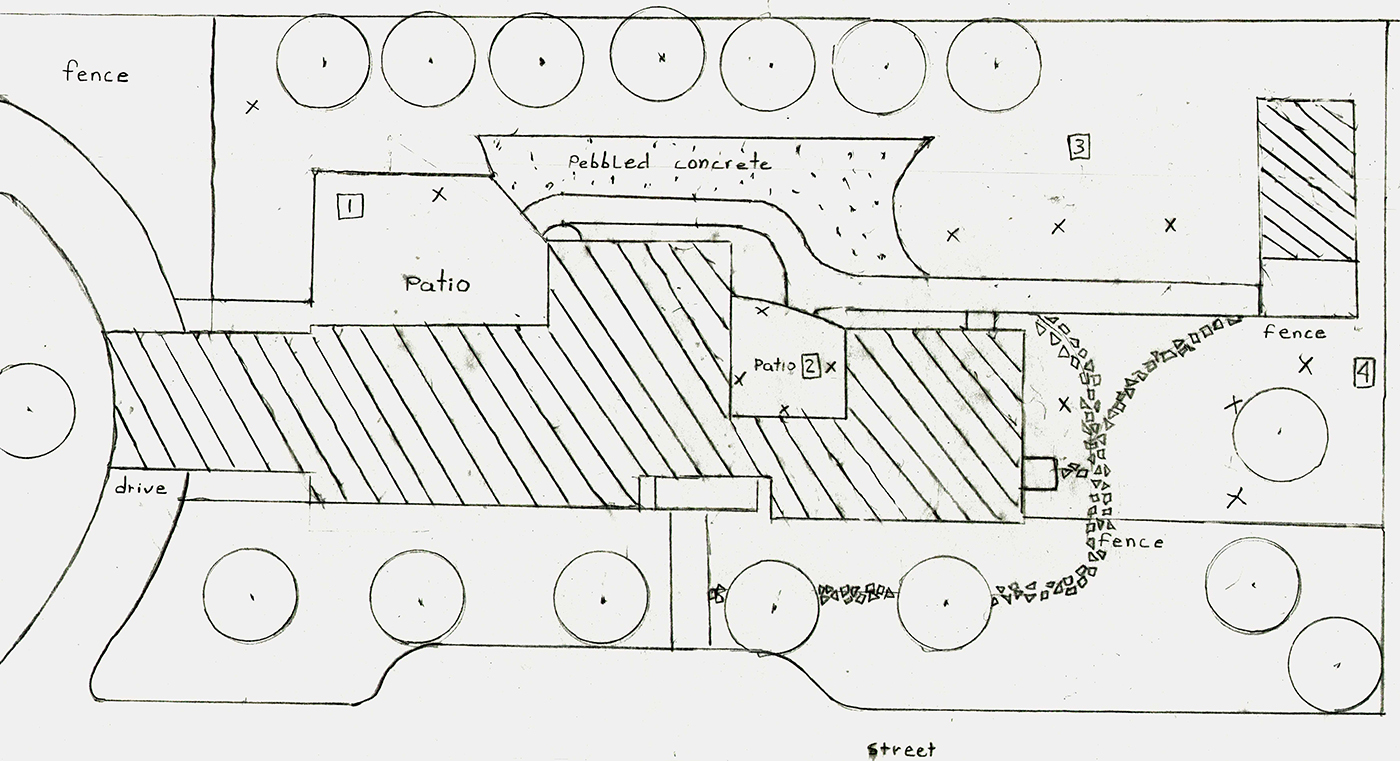
The garden sculptures are set out in four spaces, which are more or less partitioned off. The partial visual separation allows for a grouping of sculptures. It also introduces an element of discovery on the first visit to the sculpture garden, as well as avoiding the appearance of clutter.
6a. Drawing of House and Grounds. The house and garden shed are denoted by diagonal lines. The four spaces are numbered on the drawing. The locations of outdoor sculptures are marked by x’s. The house measures 2600 square feet; 3200 square feet with garage. The property occupies roughly 1/3 acre.
This space consists of the large patio and the grounds and greenery beyond it. It contains two sculptures, which are based on major themes of Cézanne’s paintings: still lifes and bathers. Still lifes offered Cézanne the freedom to invent a subject by selecting and arranging the elements, oranges and apples, teapots and flower vases and the like. My concrete sculpture is an invention in this sense, a still life in Cézanne’s manner. Although it is inspired by Cézanne’s still lifes – like his tables, the concrete table is tilted, yet the fruit doesn’t slide off – its elements are of my choosing. The sculpture is set out on the concrete patio.
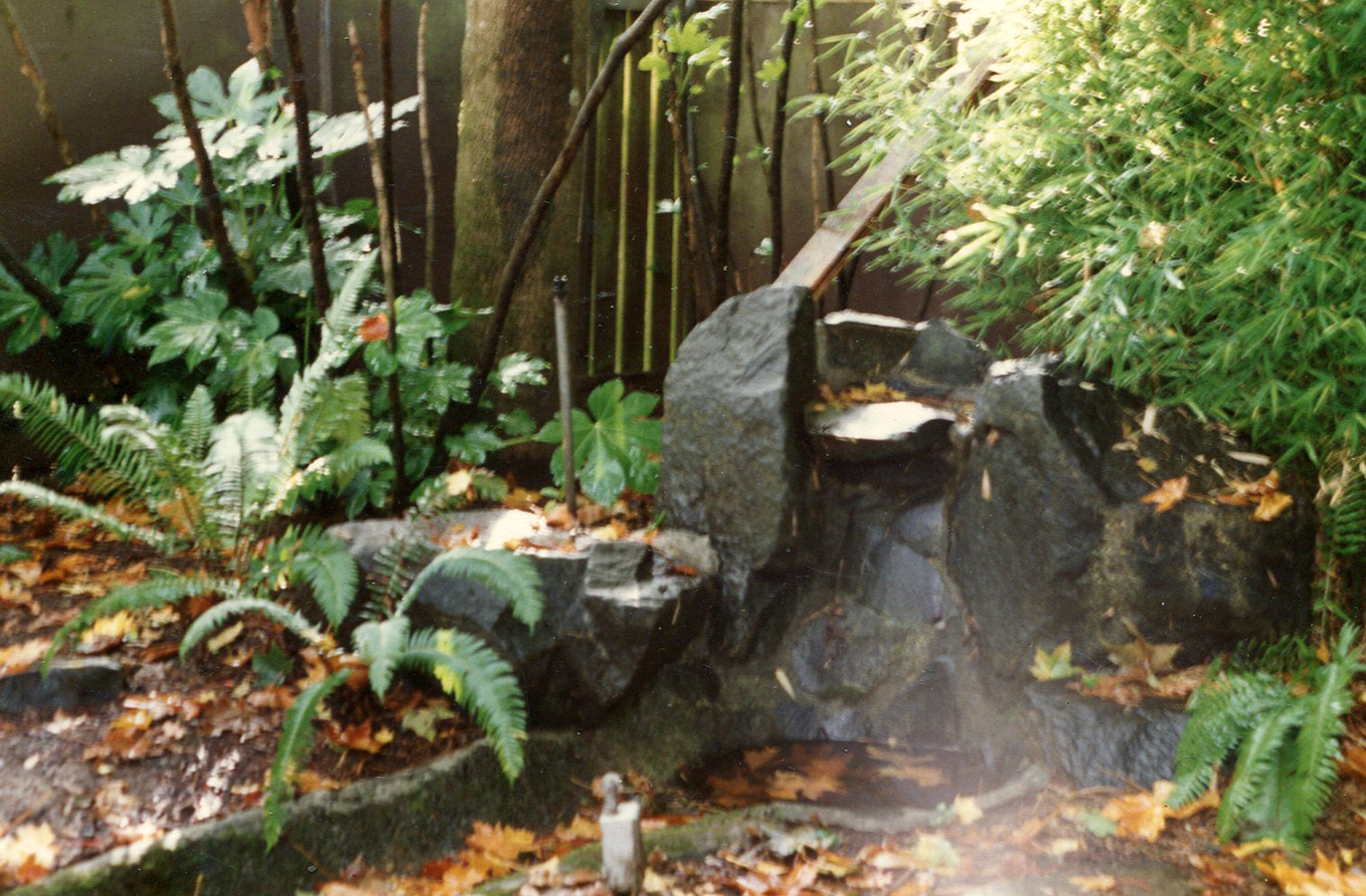
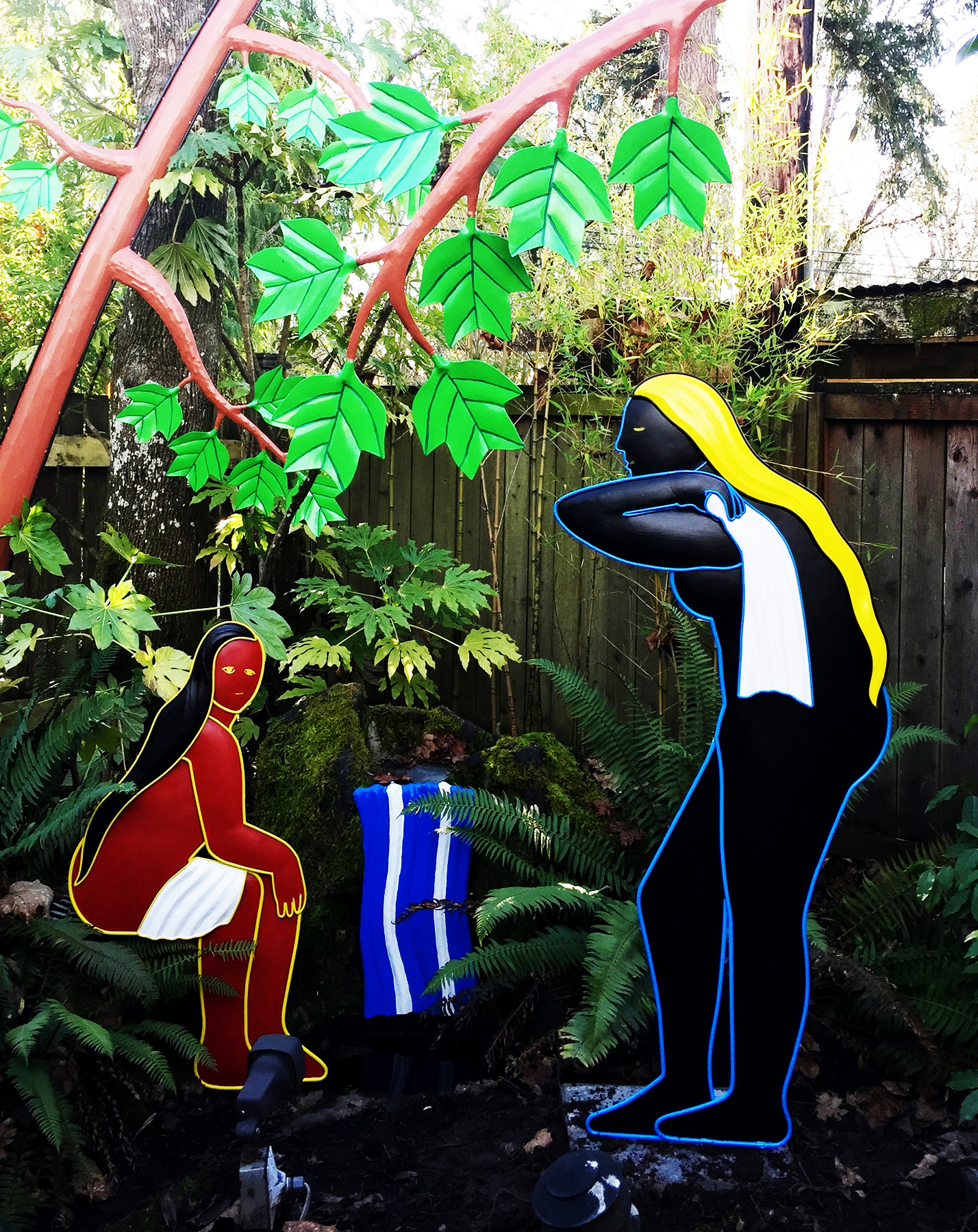
The second Cézanne-like sculpture is placed on the ground, among trees, shrubs, and a disused stone waterfall, a natural setting. This corresponds to the setting of Cézanne’s paintings of groups of women bathing at a river. With these paintings, Cézanne introduced an influential solution to a perennial problem in art, the bringing together of figures and landscape in a satisfactory way. With that problem and solution in mind, I designed a sculpture of two women bathing at a waterfall, to be made of steel this time. A pair of inwardly angled trees frames the bathers, as in Cézanne’s paintings, but the figures of the two invented women in the sculpture are rotund, unlike Cézanne’s figures, which are treelike, and the colors are not naturalistic like his. The steelwork is done by Jonathan Chandler, a master metalworker, who is a fine sculptor as well. We have worked together on a number of sculptures shown on this website.
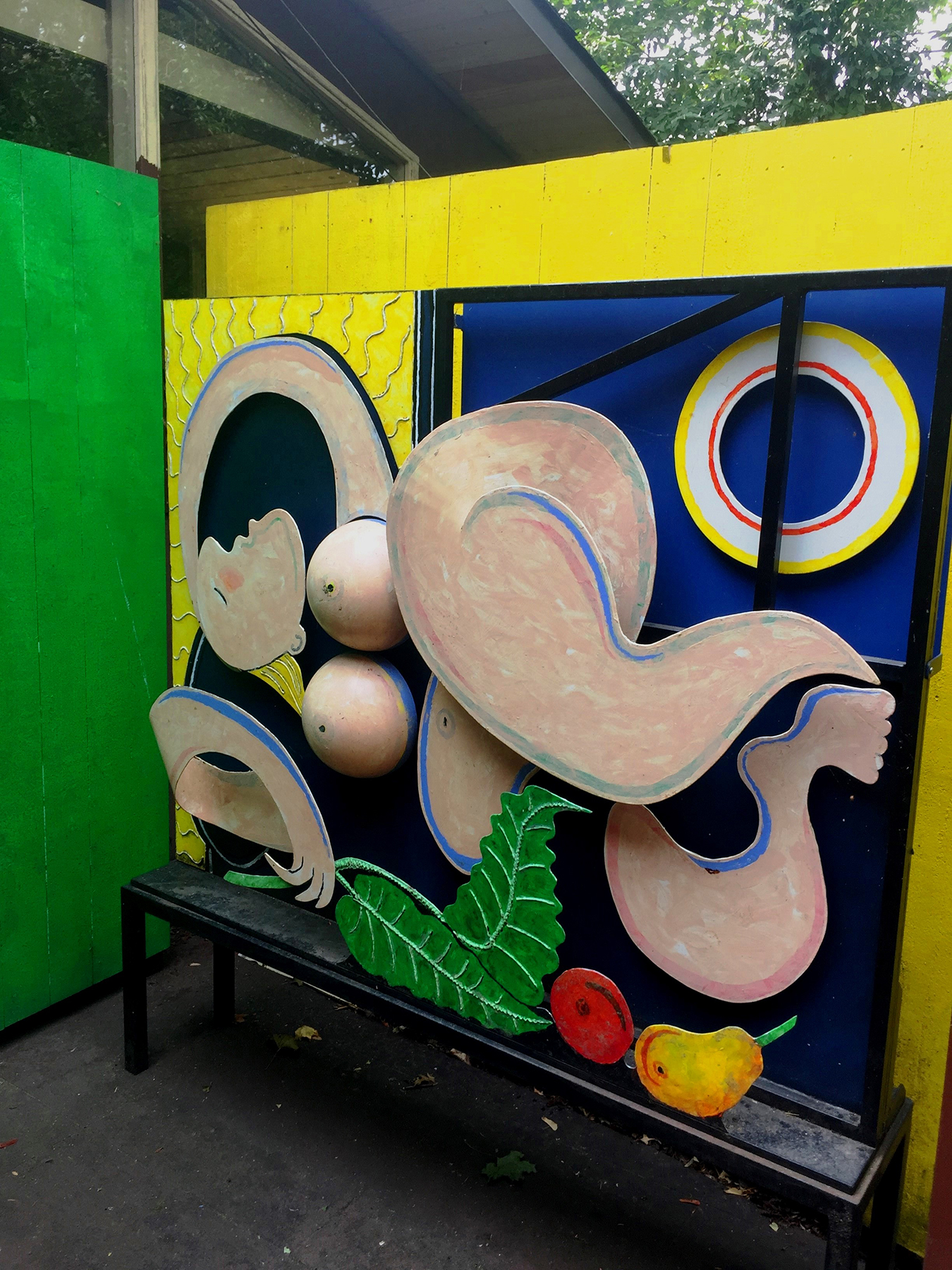
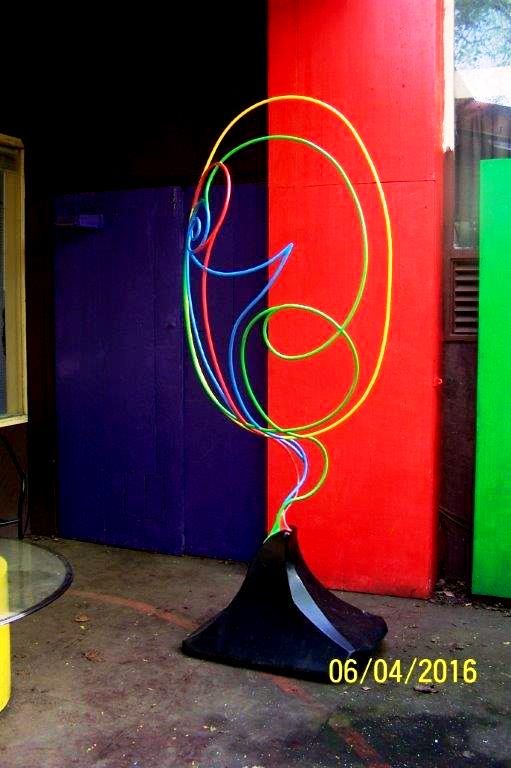
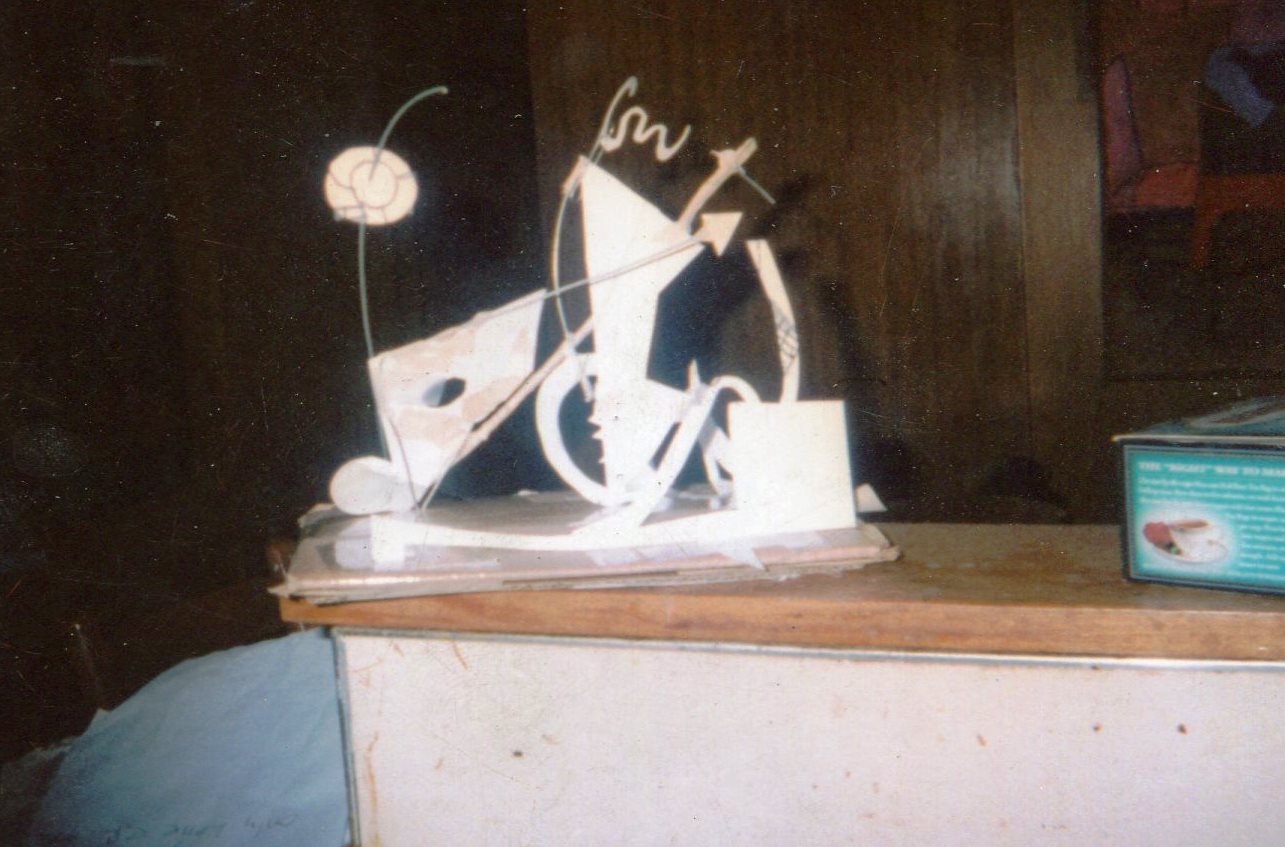
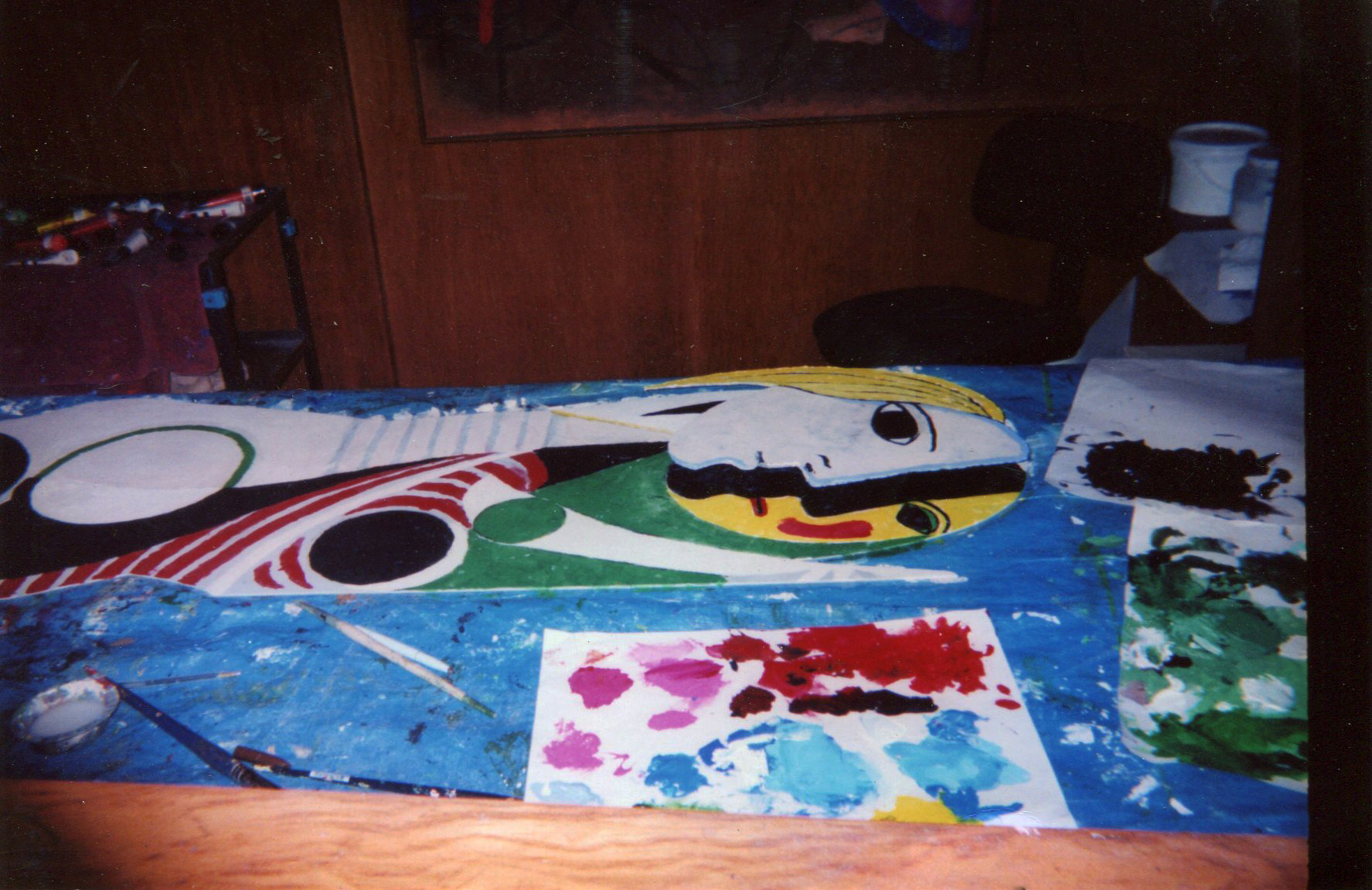
As the first space pays homage to Cézanne, this space pays homage to Picasso. Picasso was indebted to Cézanne for the idea of his Cubist paintings, but the sculptures here derive from other paintings of his. One of them shows a reclining nude in a room. In the sculpture, the figure is divided into a set of discrete forms projected at different distances from the backdrop. A second sculpture is based on one of Picasso’s light-paintings. These are forms he painted in space in the dark using a flashlight instead of a paintbrush, caught on film using a long exposure. In some of his light-paintings, you can recognize objects such as a bull’s head, but the light-painting I chose to work with appears abstract, and more than others in the series it appears well-organized and self-contained. The resulting sculpture turns an image formed of the most evanescent substance, light, into one formed of one of the most permanent, steel. I regard making art as a type of work, and the light-sculpture is a three-dimensional record of Picasso at work. The colors in both of the Picasso-like sculptures do not follow Picasso’s own.
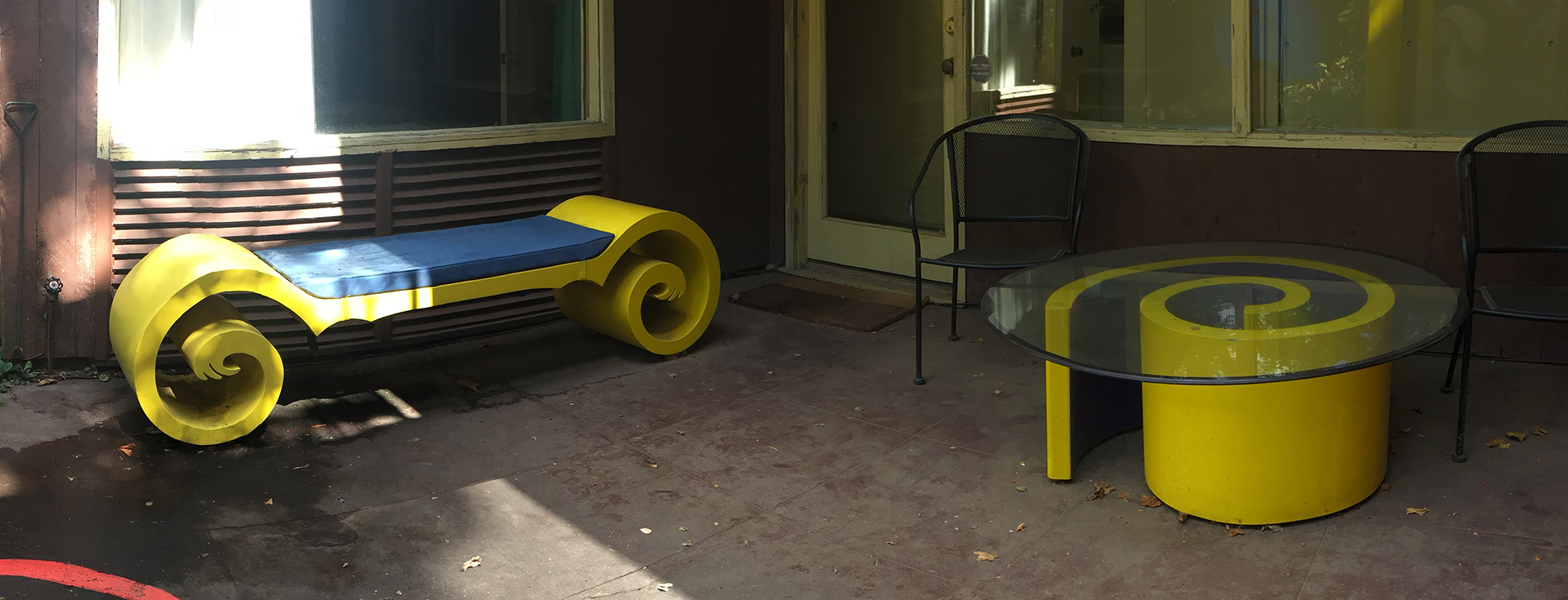
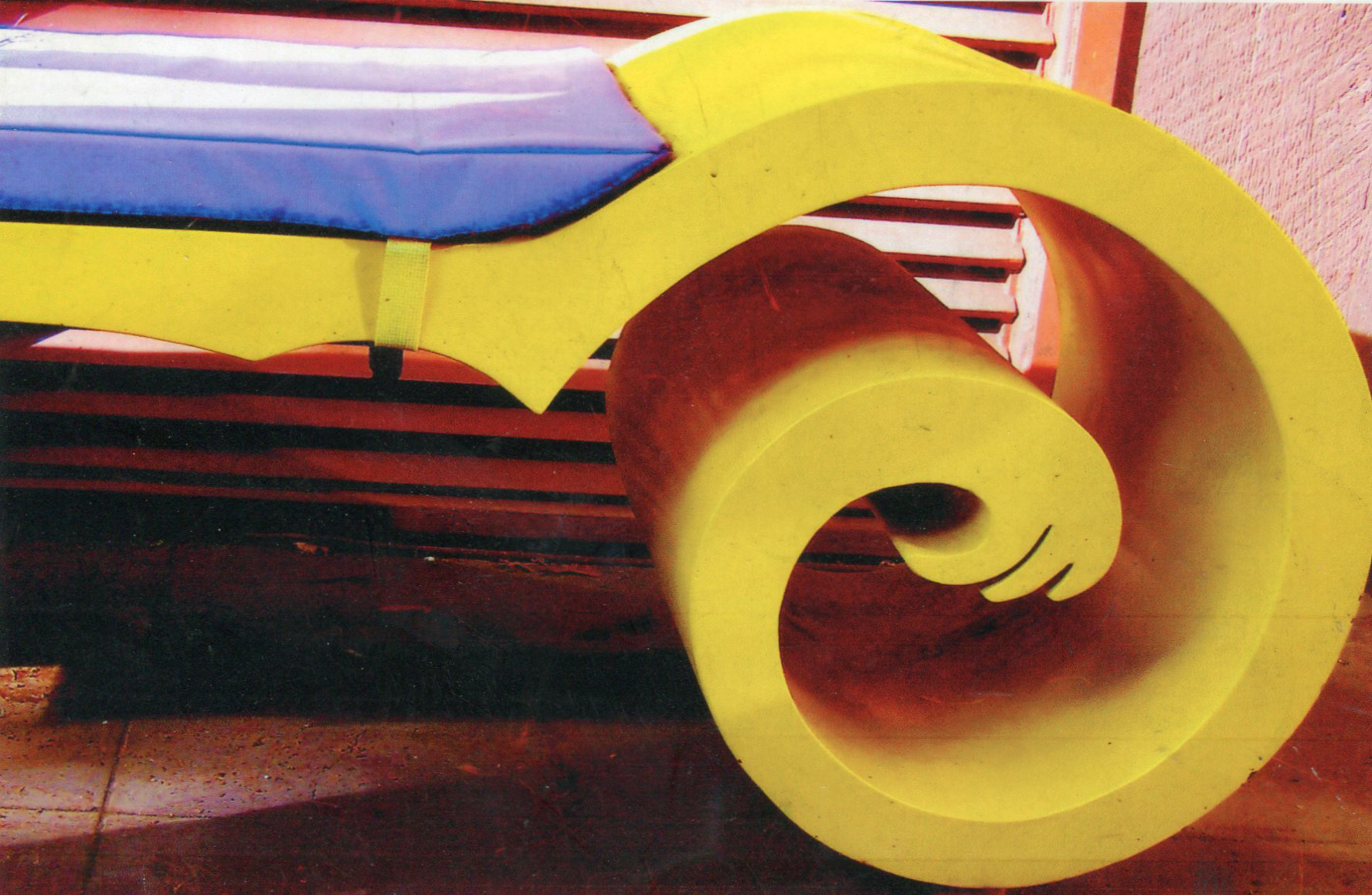
In addition to the two Picasso-like sculptures, the small patio contains two furniture-sculptures, a table and a bench. Both the table and the bench are supported by spiral forms, which together with their common color establish a connection between them. They in turn are connected to the other sculptures. The curved hand-like ends of the bench spirals repeat the curved hand of the reclining nude sculpture, and the light-sculpture contains a spiral form. The painted spiral on the patio floor further connects the contents of space 3.
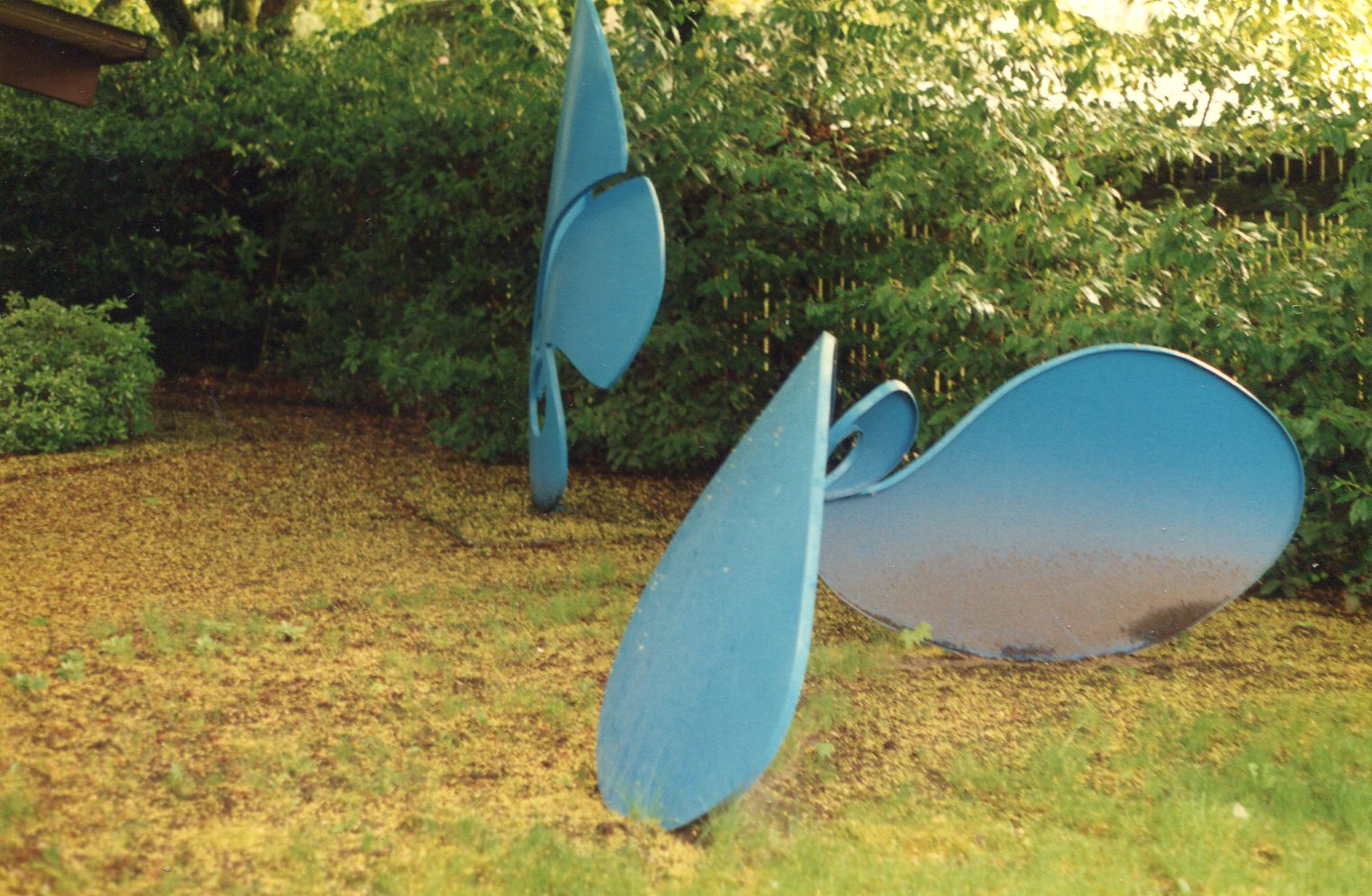
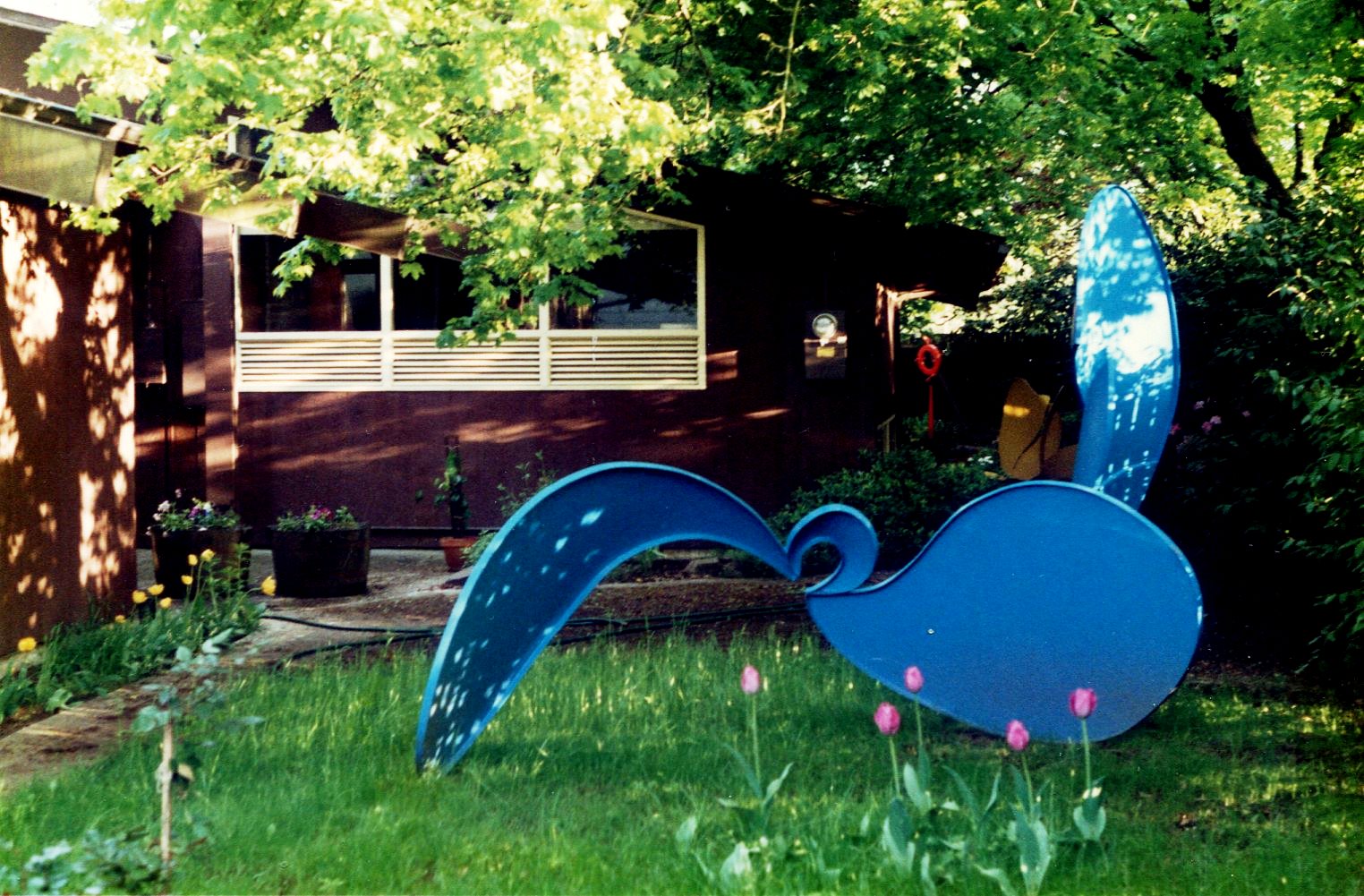
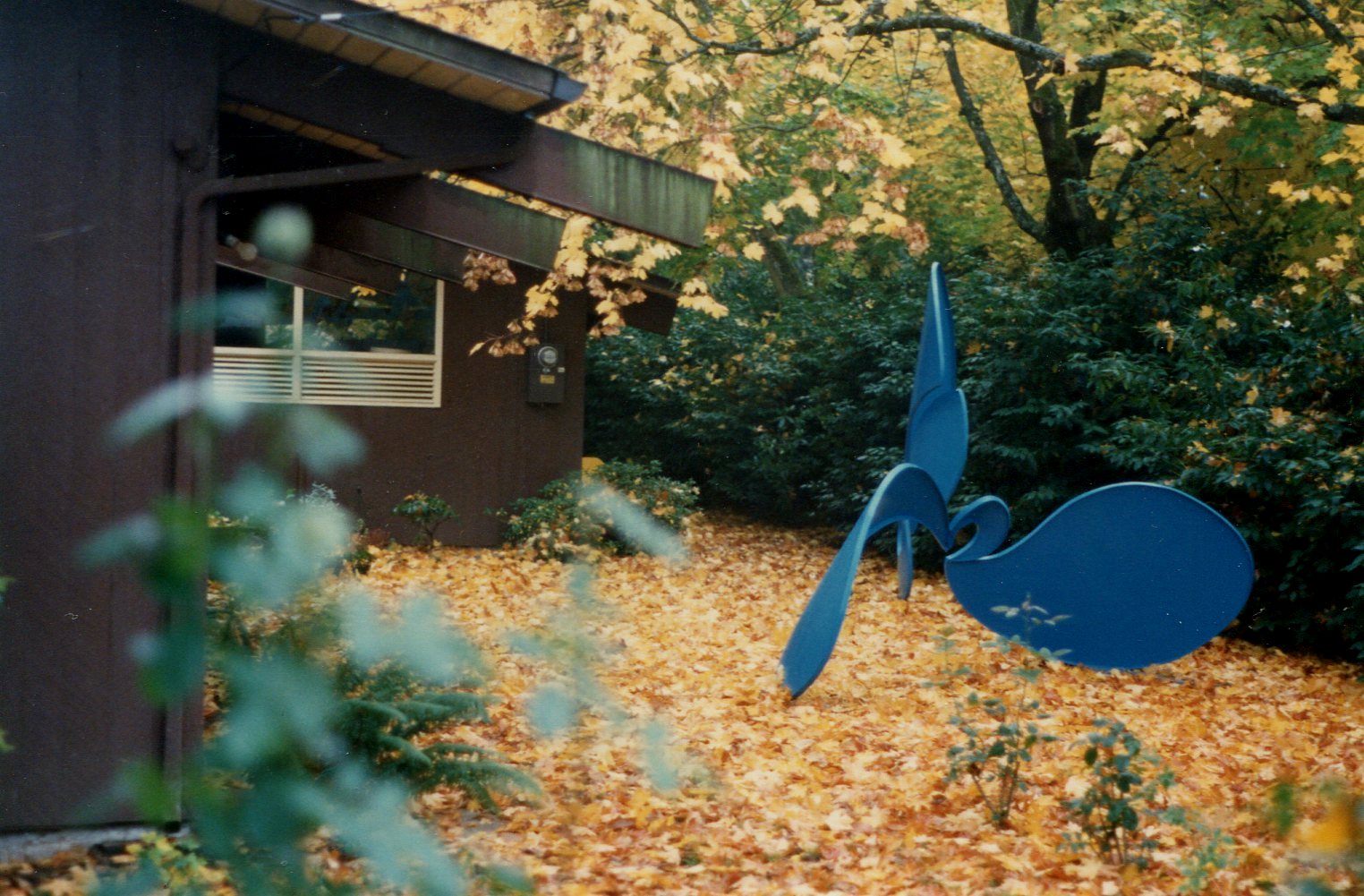
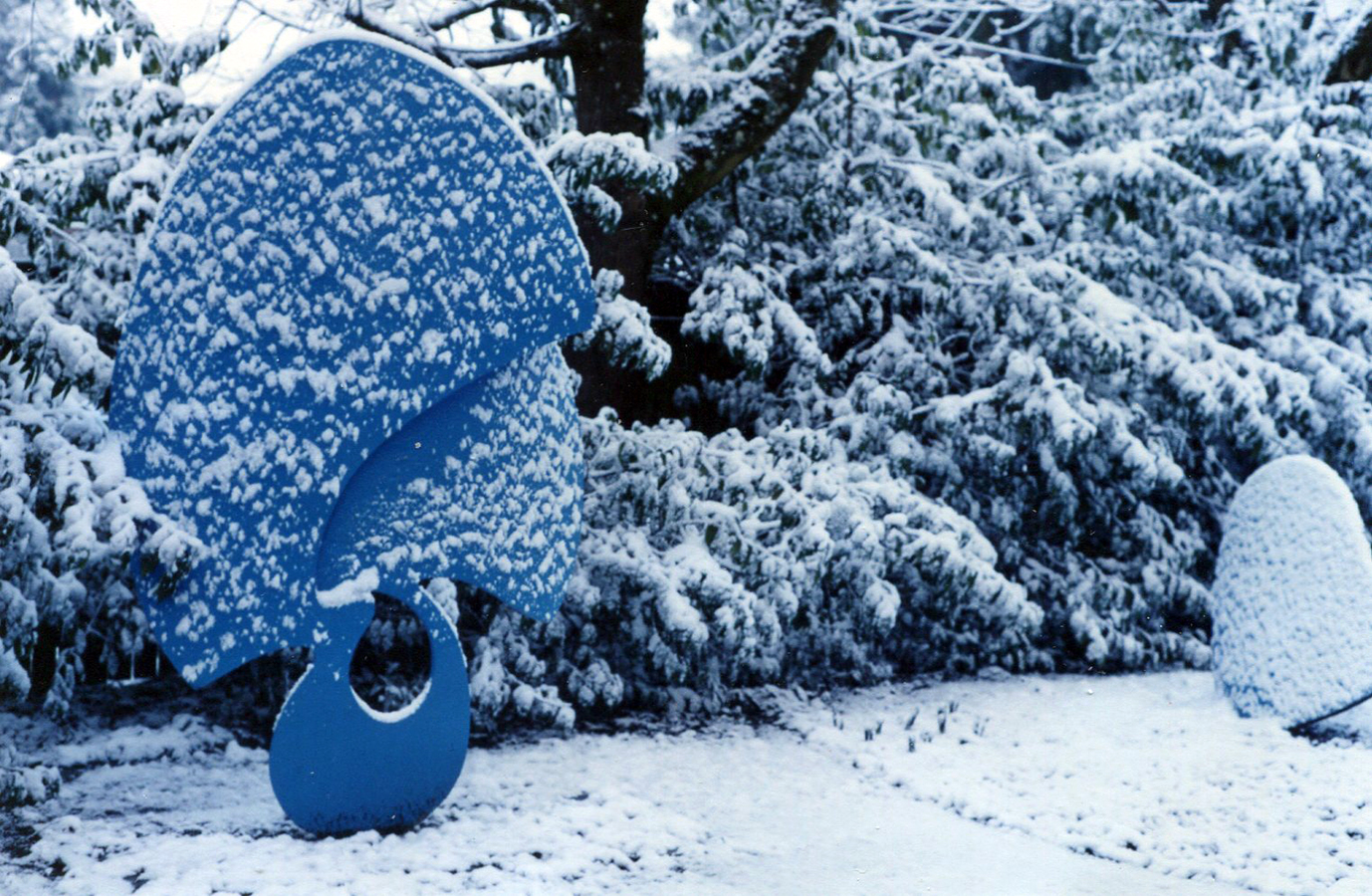
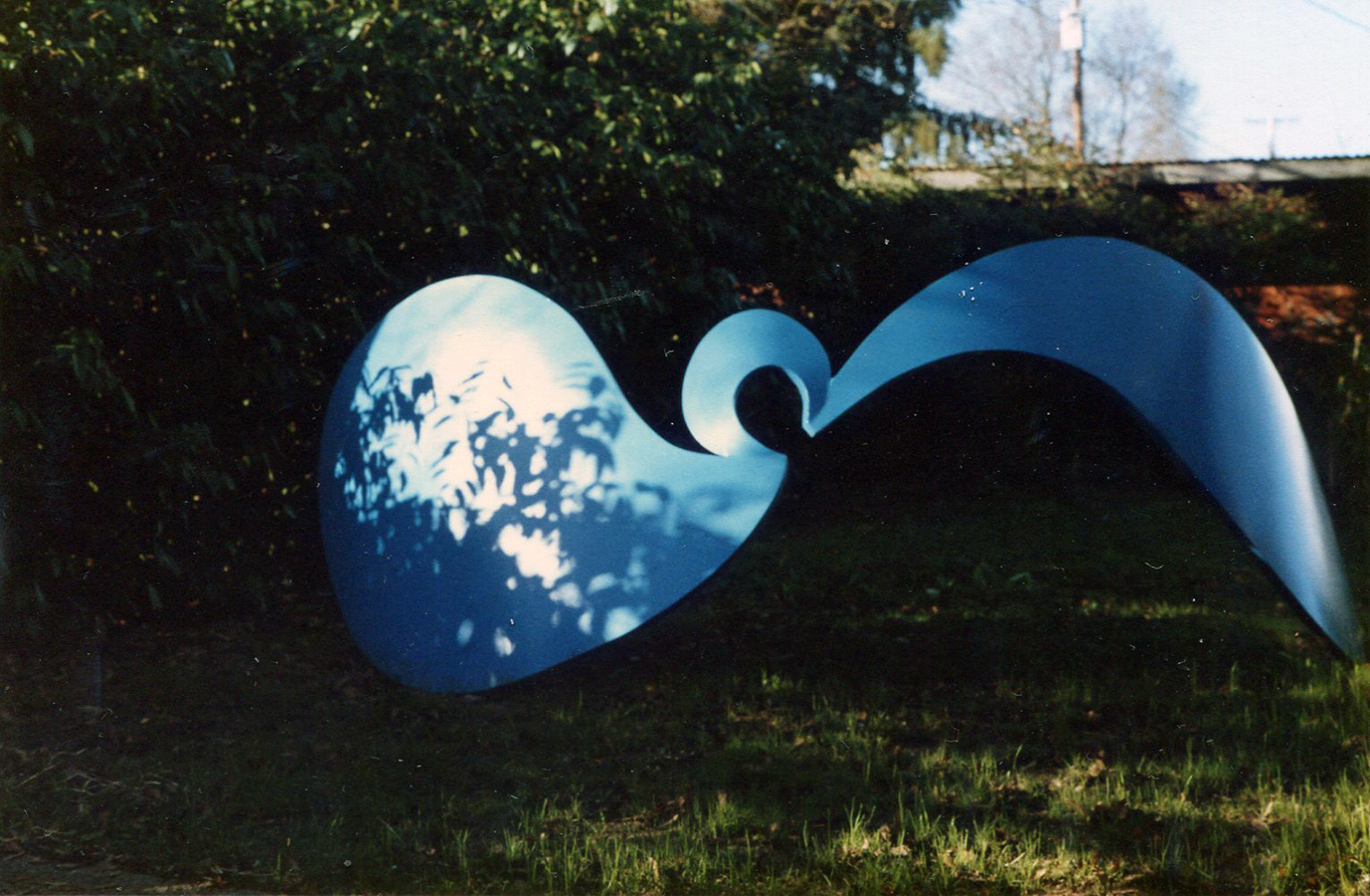
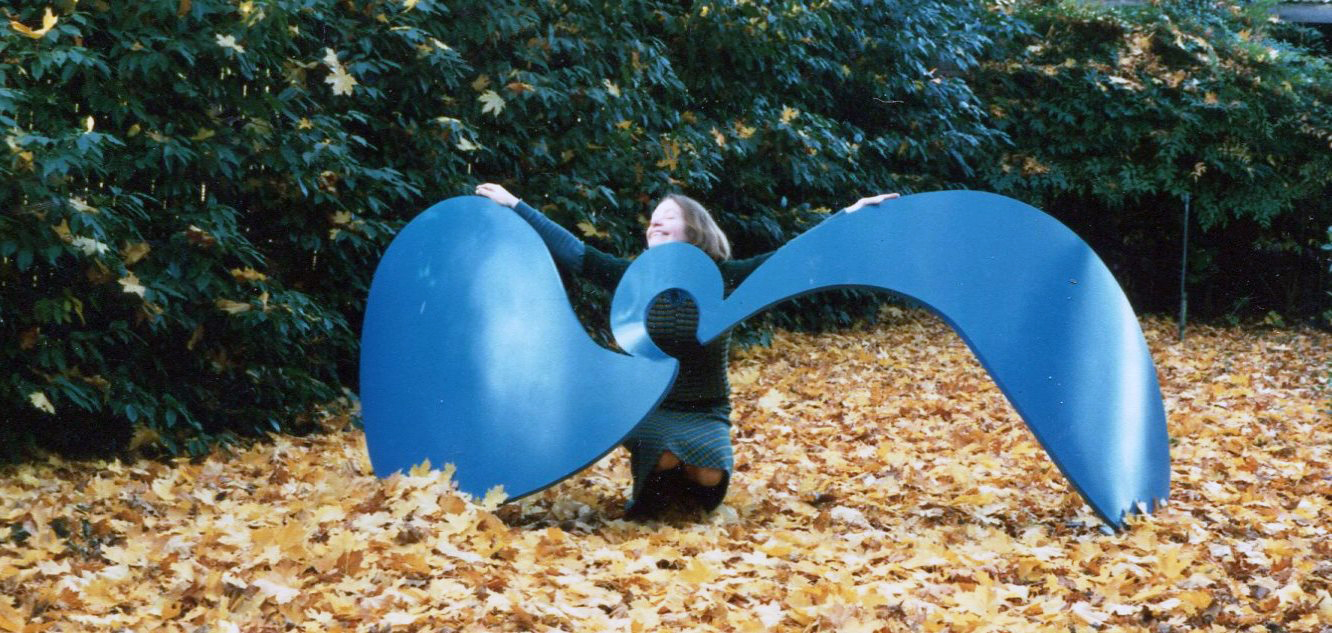
There are three steel sculptures in this space, all abstract. Two of them are our first outdoor sculptures. The blue sculpture consists of two pieces, one vertical and one horizontal, which relate to one another, the one unfolding into the other. The yellow sculpture likewise consists of two pieces, though they are connected at the top. In their colors, the two sculptures stand out from the foliage behind them, but in their organic forms they reflect it. There is also a large concrete sphere, painted red, completing the set of primary colors in this space.
Outdoor sculptures appear differently under different skies and in different seasons. The following group of photographs of the blue sculpture provides an example.
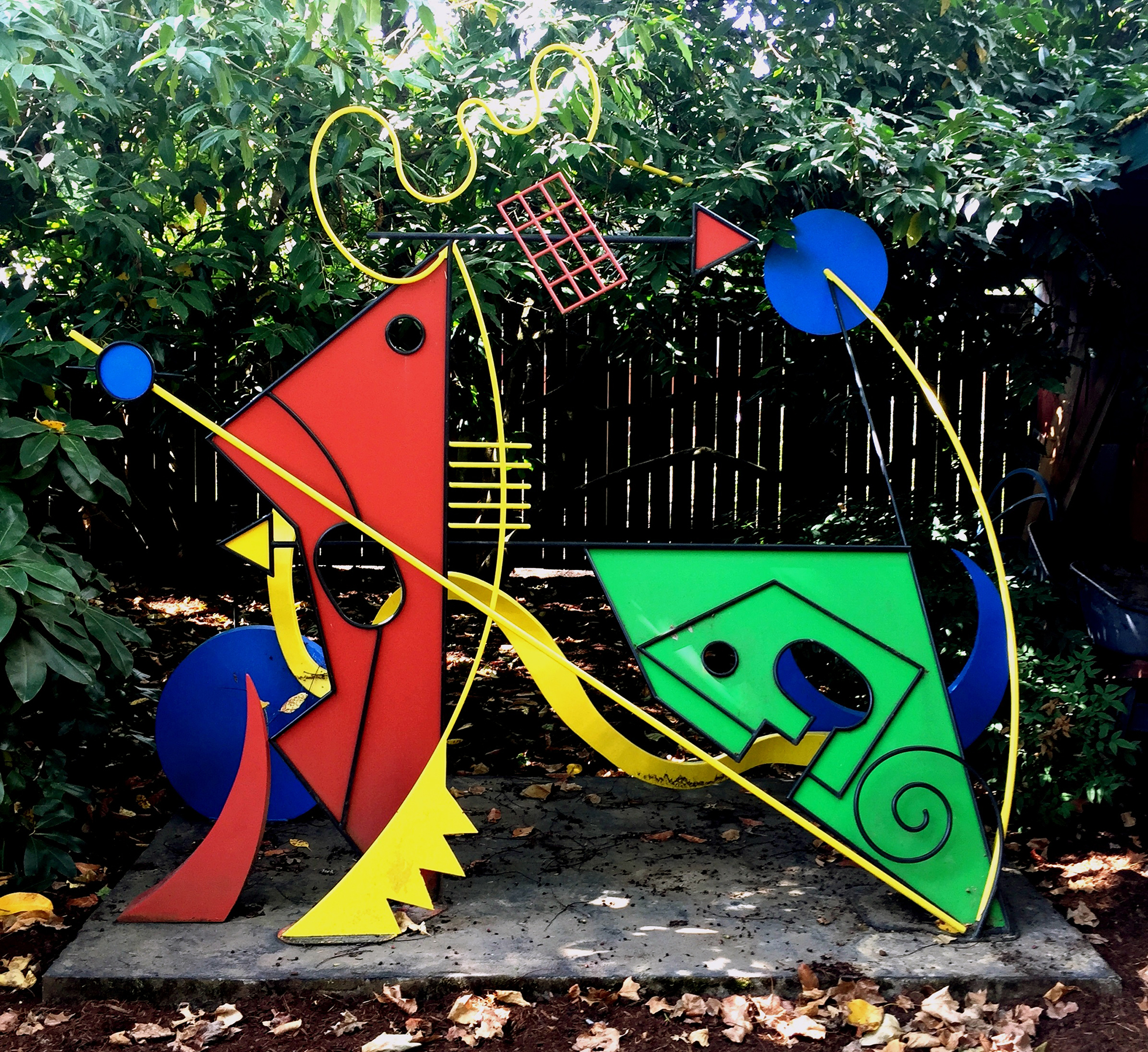
Separated from the other two sculptures by a large shrub, the third sculpture in this space pays homage to another artist, a pioneer of abstract art, Kandinsky. When I look at a Kandinsky abstract painting, I see a three-dimensional pattern of individual components. These are circles, squiggles, and the like, which he used repeatedly in different combinations in different paintings. Based on a selection of these components, I invented a three-dimensional abstraction in the manner of Kandinsky. In selecting the colors for them, I was guided by Kandinsky’s theory of colors and shapes.
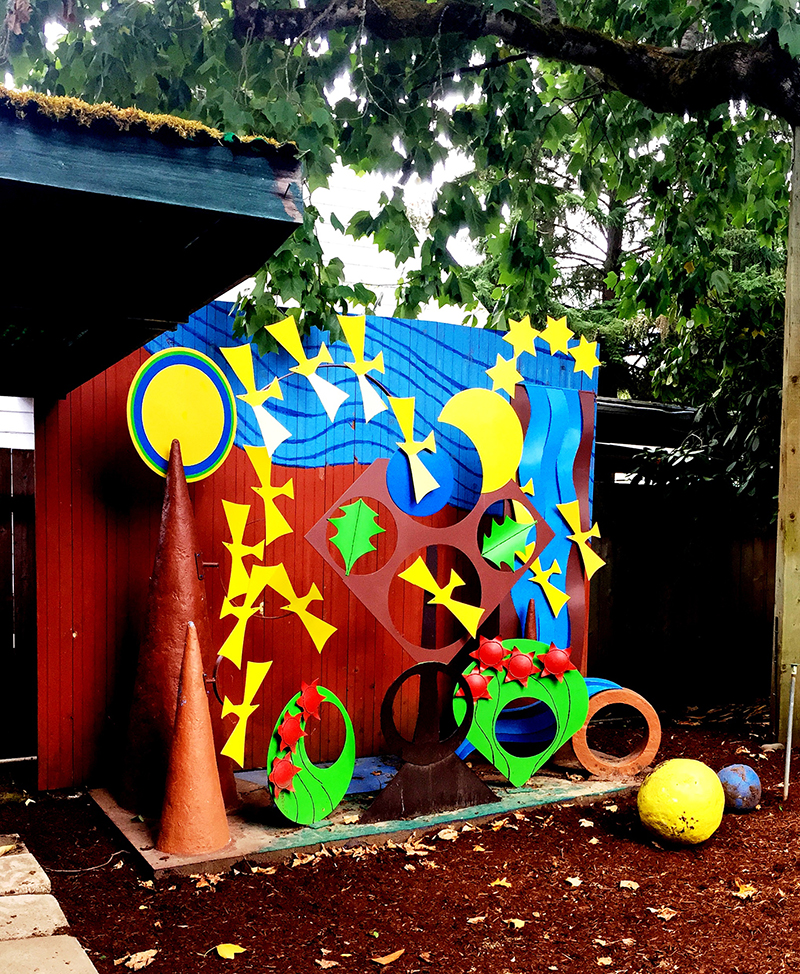
There are four sculptures in this space, two of them made of concrete and steel, and two of them made of steel only. Cézanne advised painters to “treat nature in terms of the cylinder, the sphere, and the cone, the whole put into perspective." Following this advice – very loosely, not in the way Cézanne had in mind– I made two sculptures using geometrical shapes. In one, simple geometric forms are repeated at different scales and orientations, and a circulating steel rod adds a dynamic element to the composition. In the other, concrete cylinders and cones suggest hills and mountains, and metal forms suggest a waterfall, river, trees, flowers, birds, and heavenly bodies, all of which are projected against a large wooden panel painted to suggest the atmosphere. The whole sculpture is a representation of nature, which with the exception of the river and waterfall is made of simple geometrical shapes, a homage to Cézanne’s idea of nature.
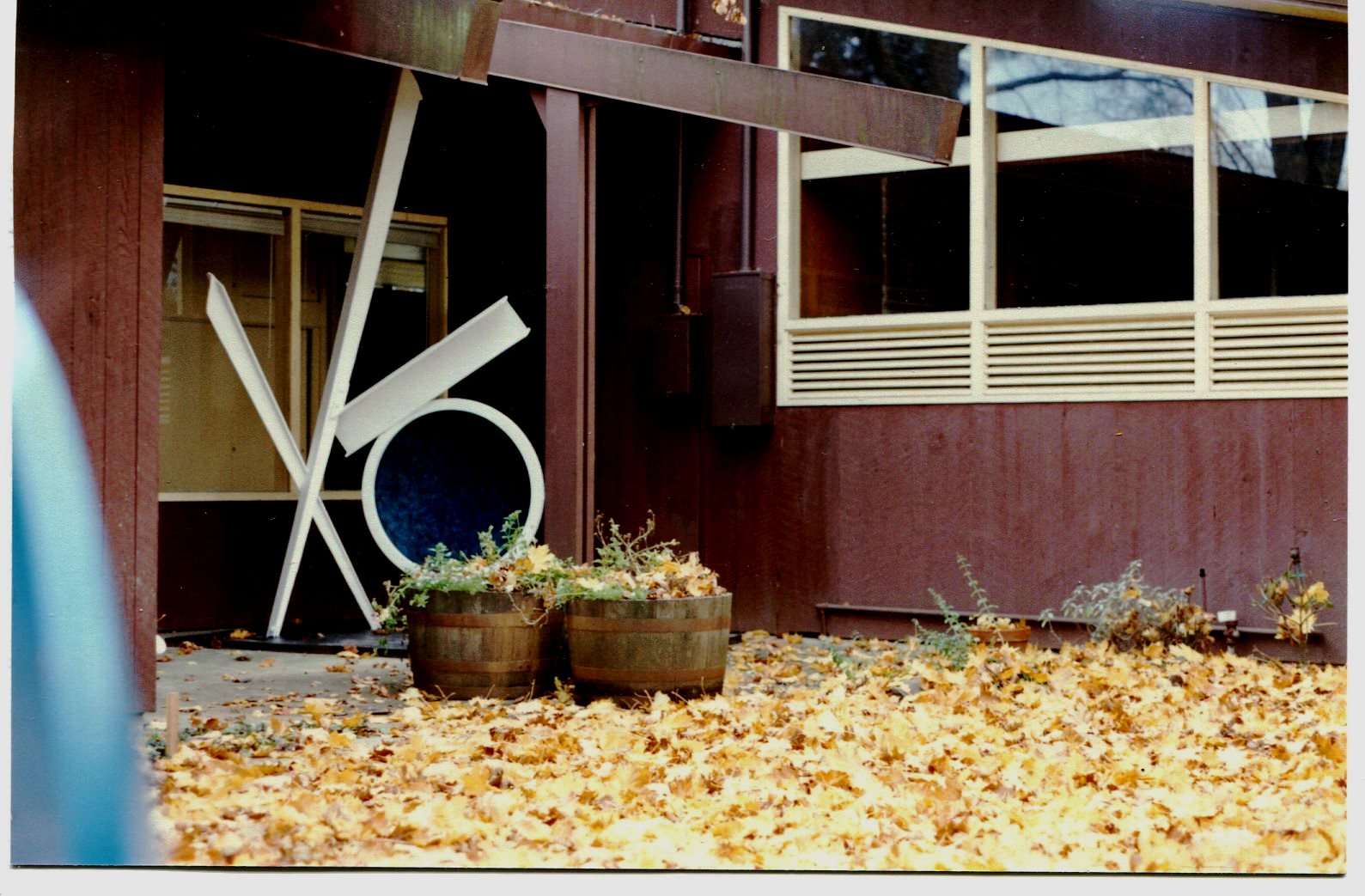
The larger of the all- steel sculptures can be looked at as a three-dimensional drawing, consisting of straight lines of varying thickness and a hemi-spherical surface. When set in the small patio, as shown in the picture, it interacts with the post and beam construction of the house. The smaller sculpture, not shown, likewise is built around a circular form, with organic pieces attached to it.
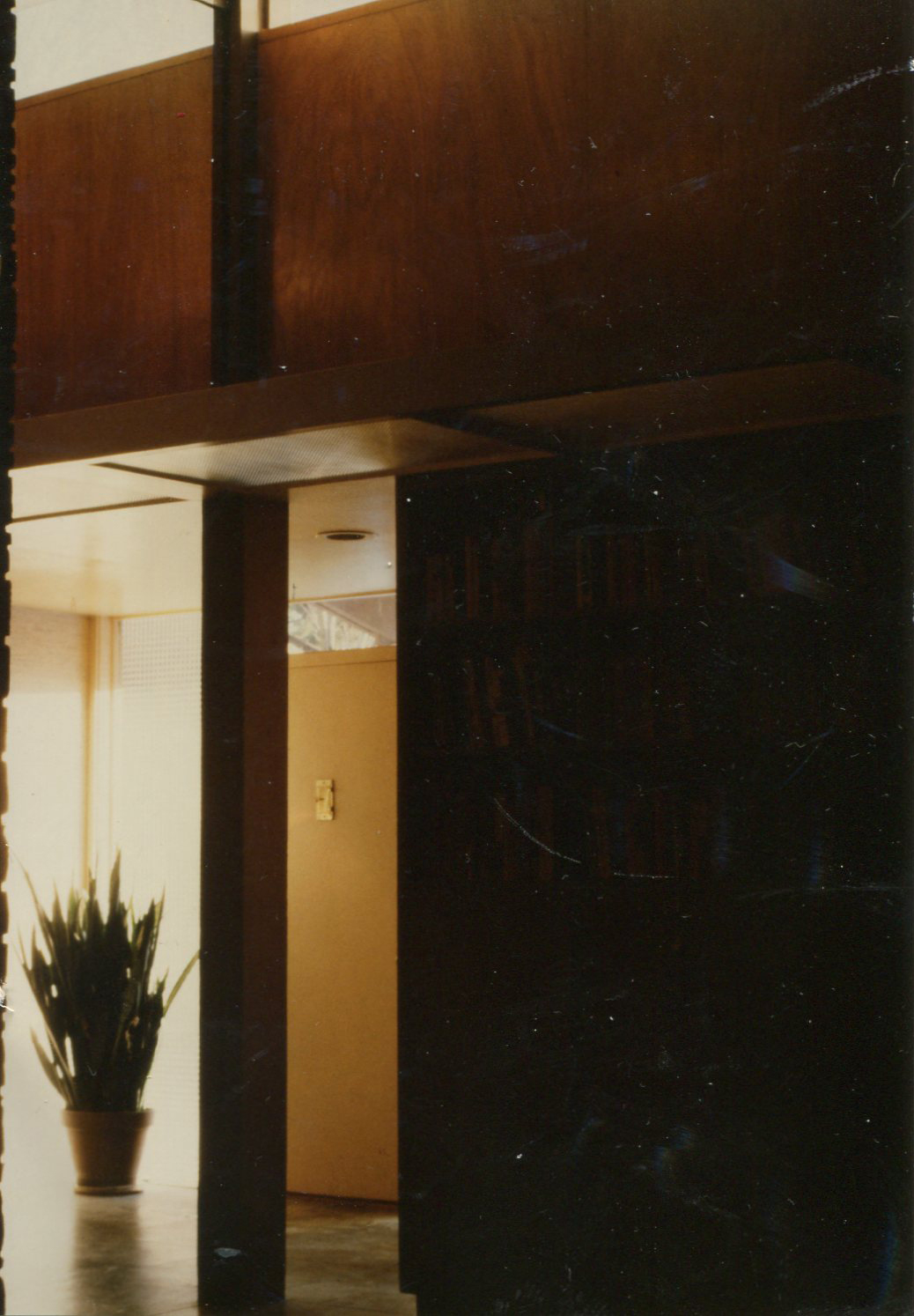
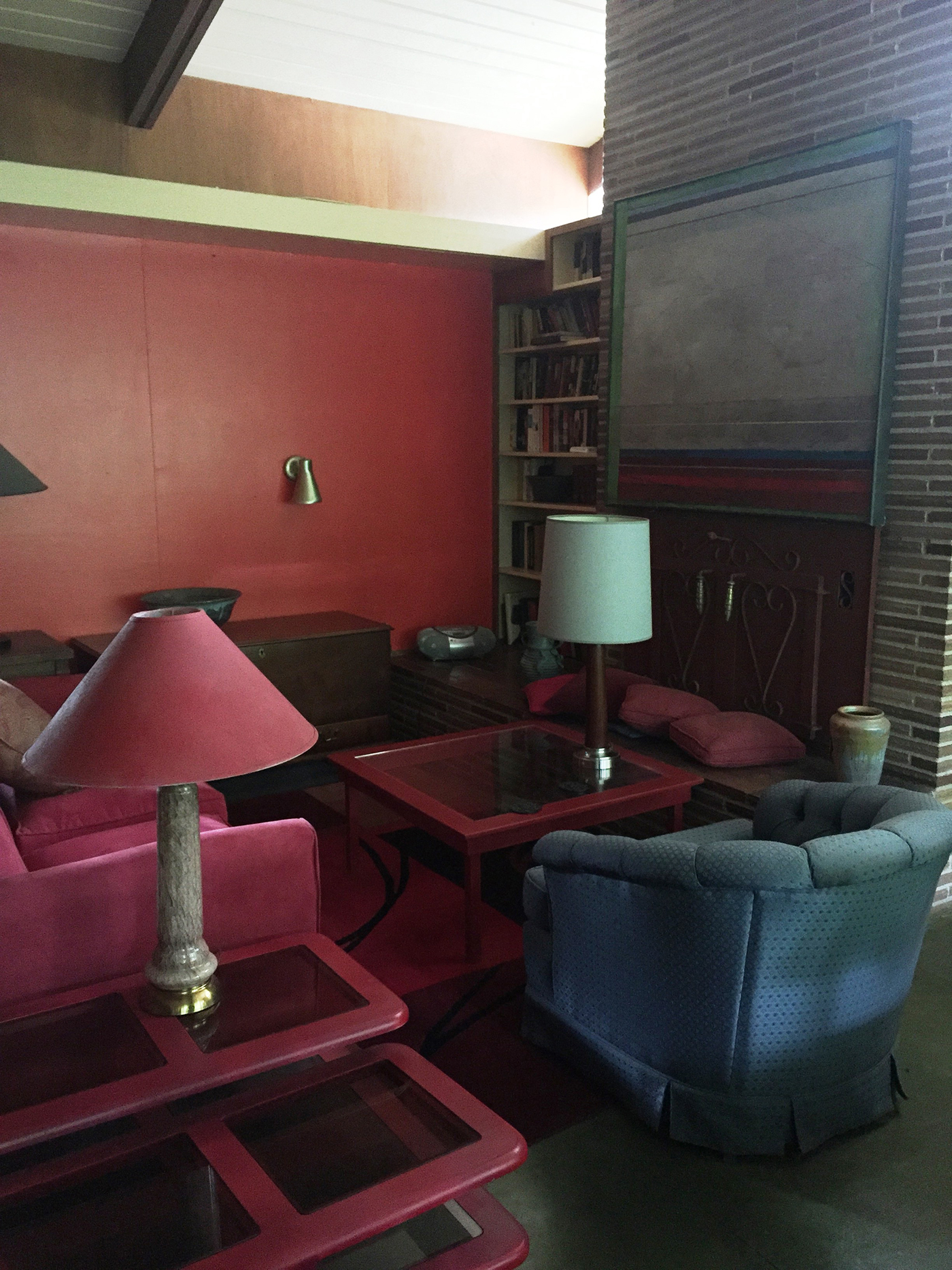
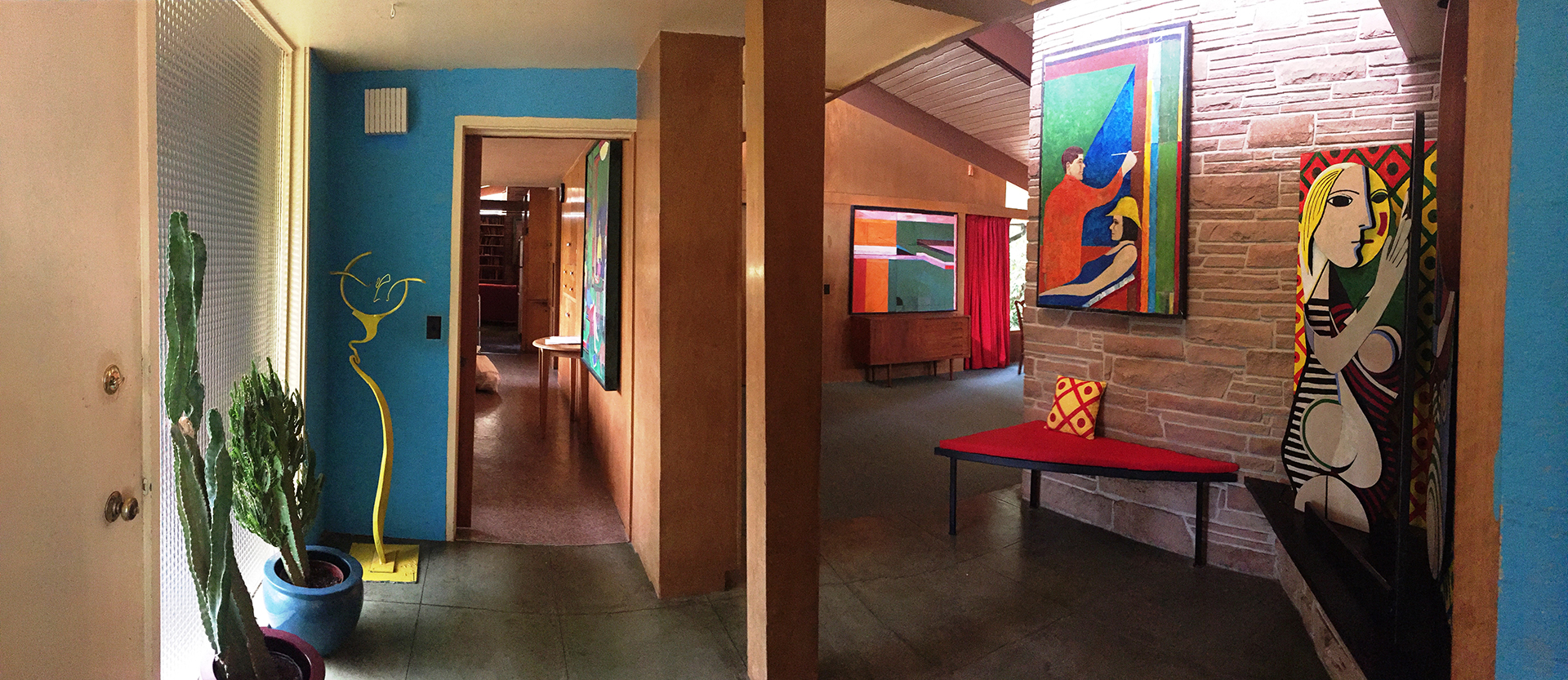
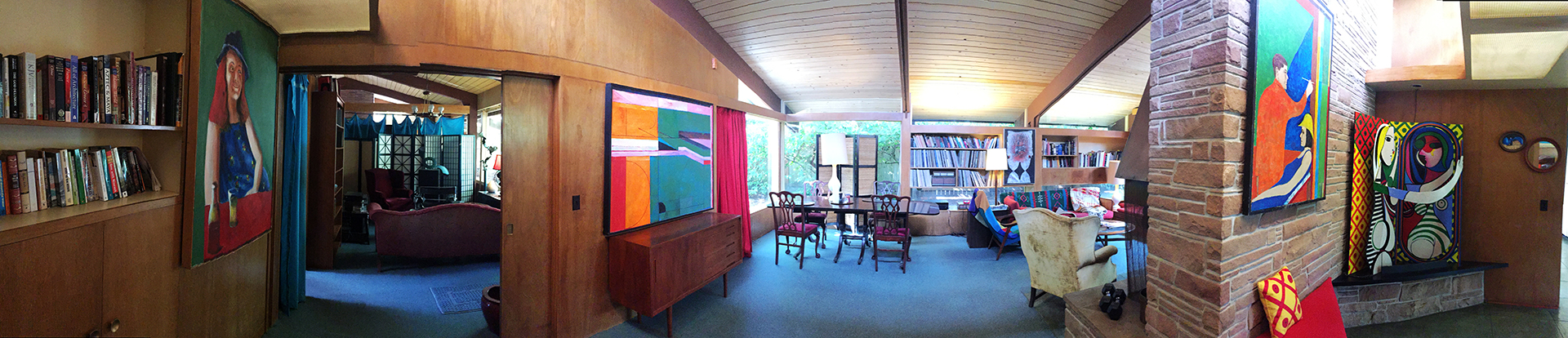
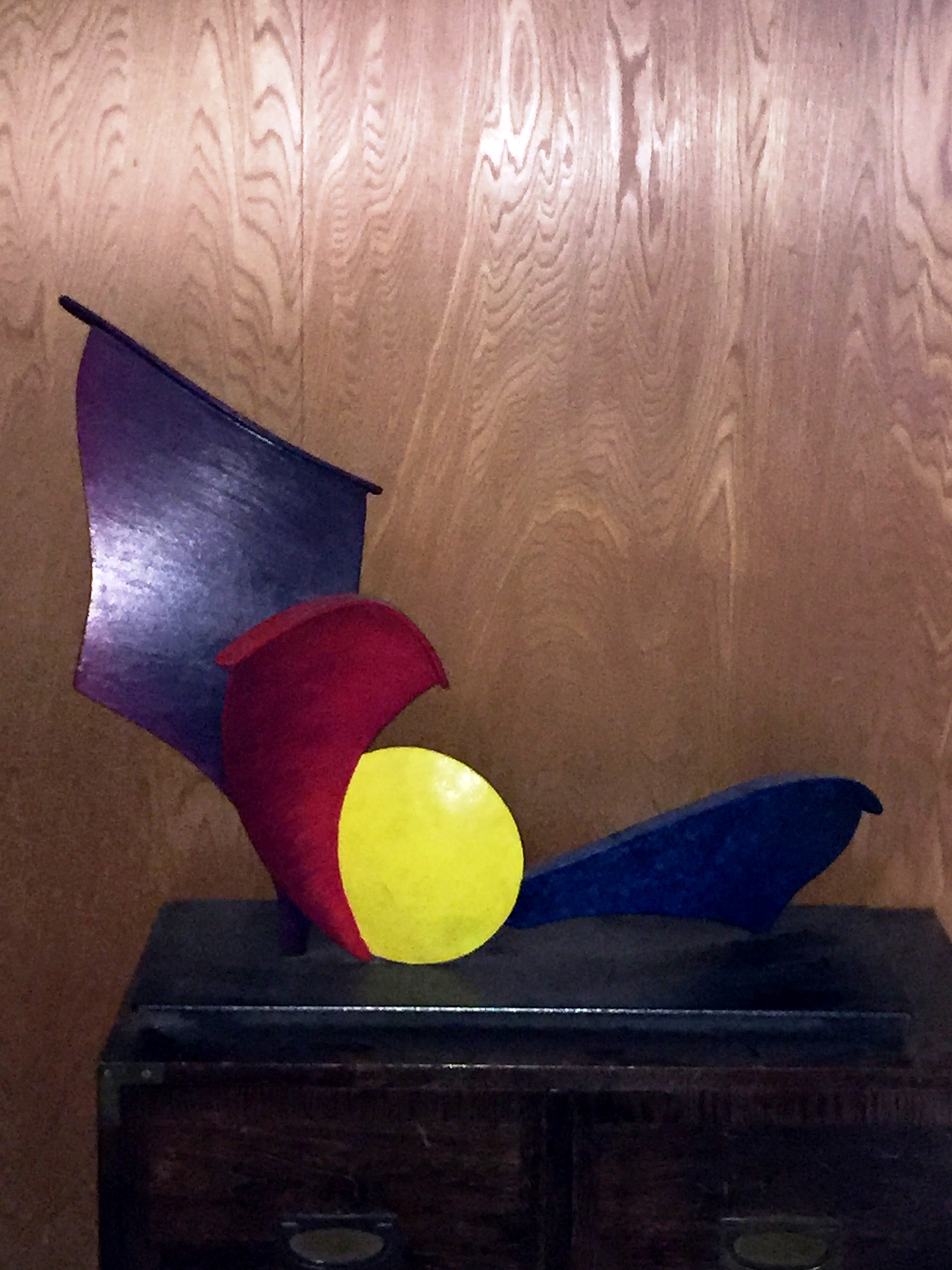
The architect of the house told me that he welcomed the use of it for art. The photographs here of the interior give an idea of the house as a setting for paintings and small sculptures.
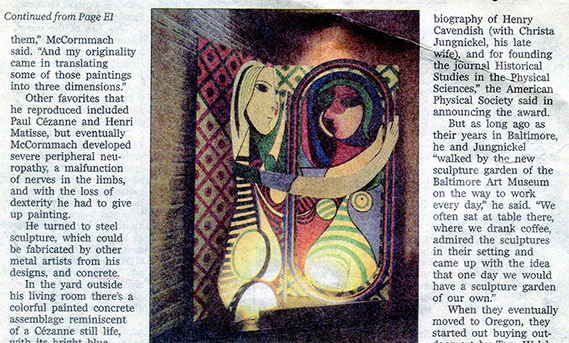
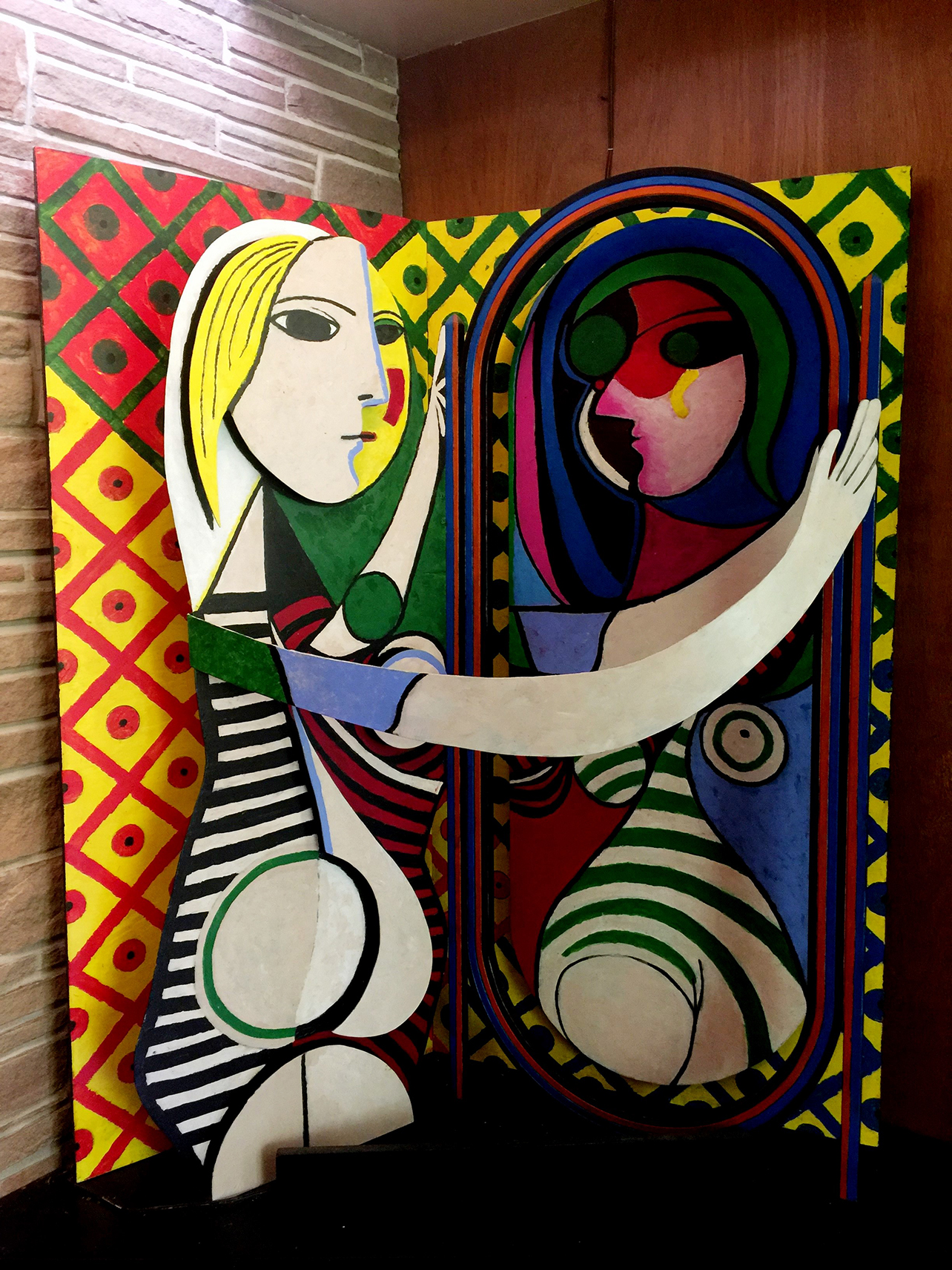
There are several small sculptures, some standing and others set on tables. One of them is a three-dimensional rendering of Picasso’s painting of a woman before a mirror. I’ve always seen the women’s right arm reaching out from the plane of the painting, the germ of this sculpture. The sculpture is made of steel, and as in the reclining-nude sculpture, the image is broken up into discrete forms, which are projected at different distances. In this instance the colors are faithful to Picasso’s original. Shaped like a screen, the sculpture stands in the entranceway, the first thing you see when you open the front door.
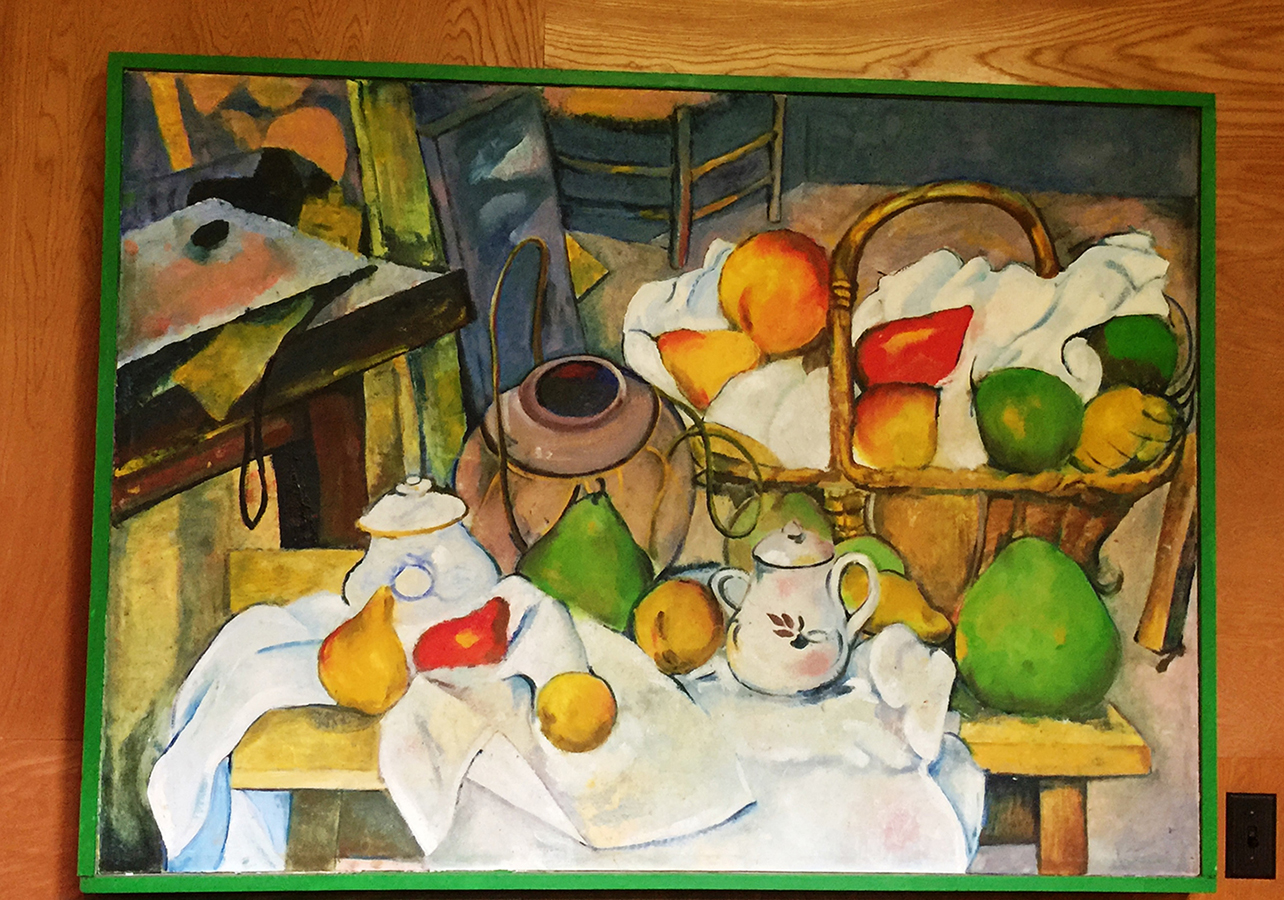
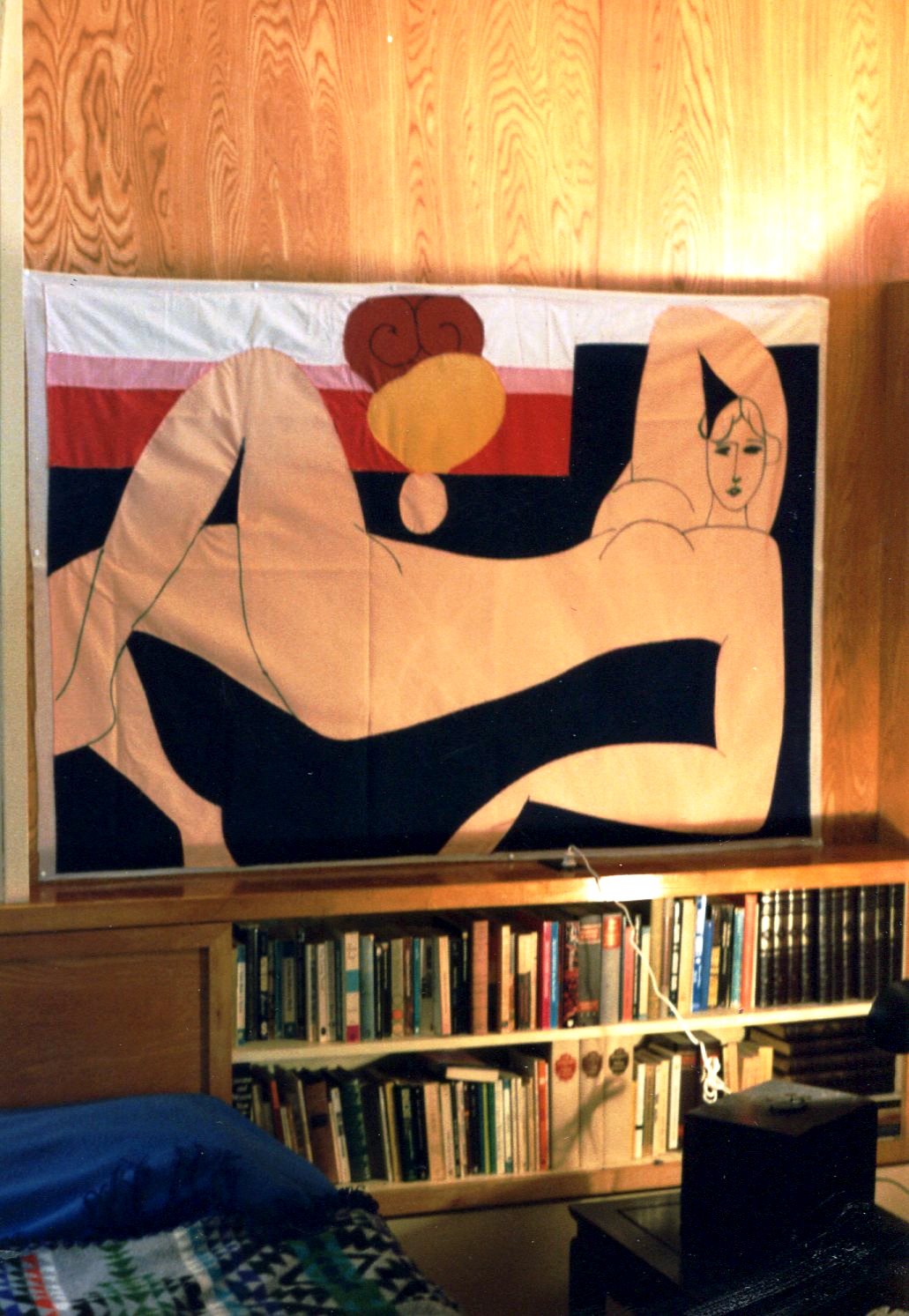
I used to copy paintings by known artists to understand the paintings better, and I also liked being around the paintings. As an example, I copied a Cézanne still life because it includes (off to one side) the end of a table holding his easel and a paint tube, the tools of the painter. My copy is a large painting, which hangs in my study, and when I look at it, I think of Cézanne at work.
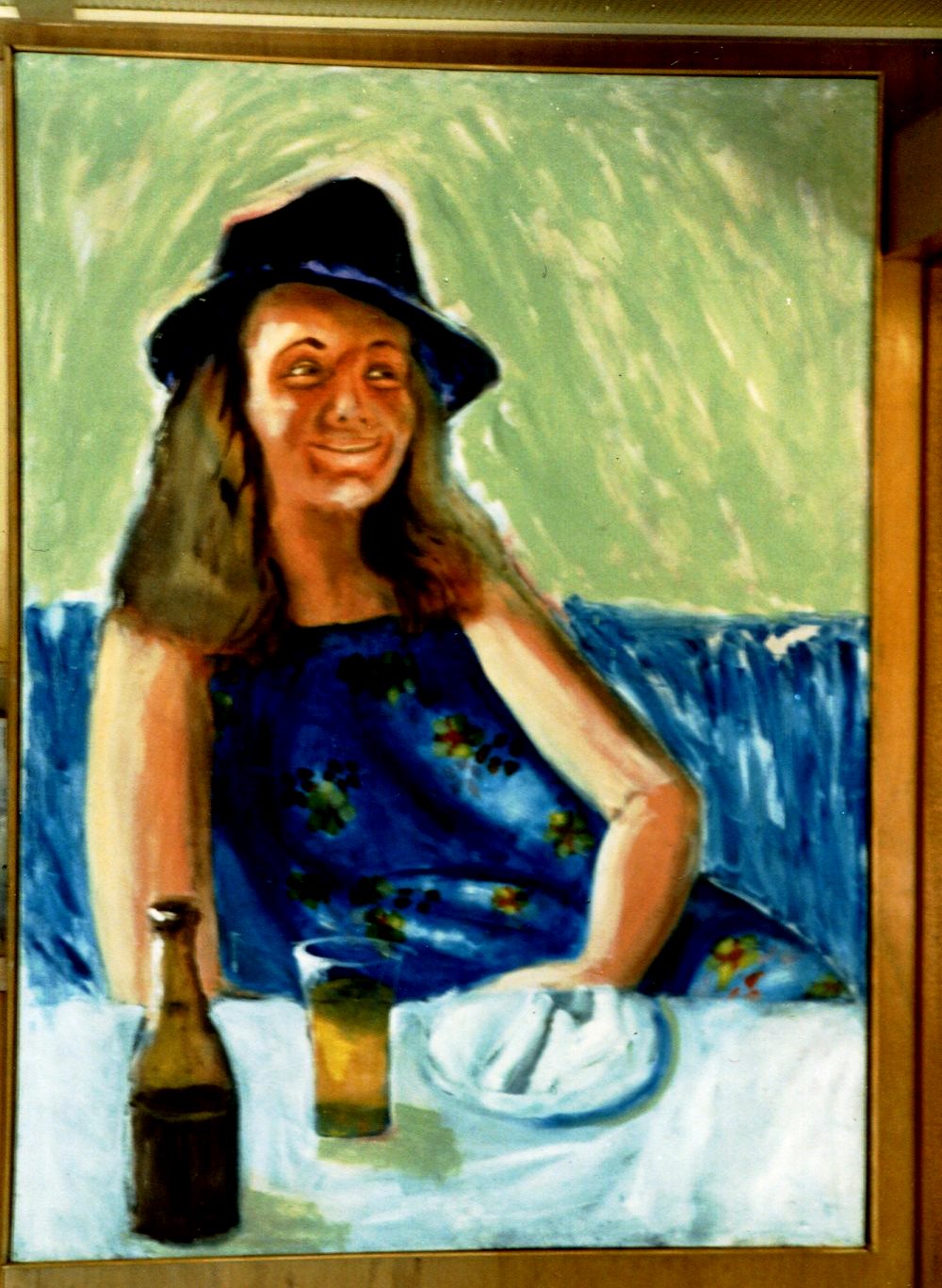
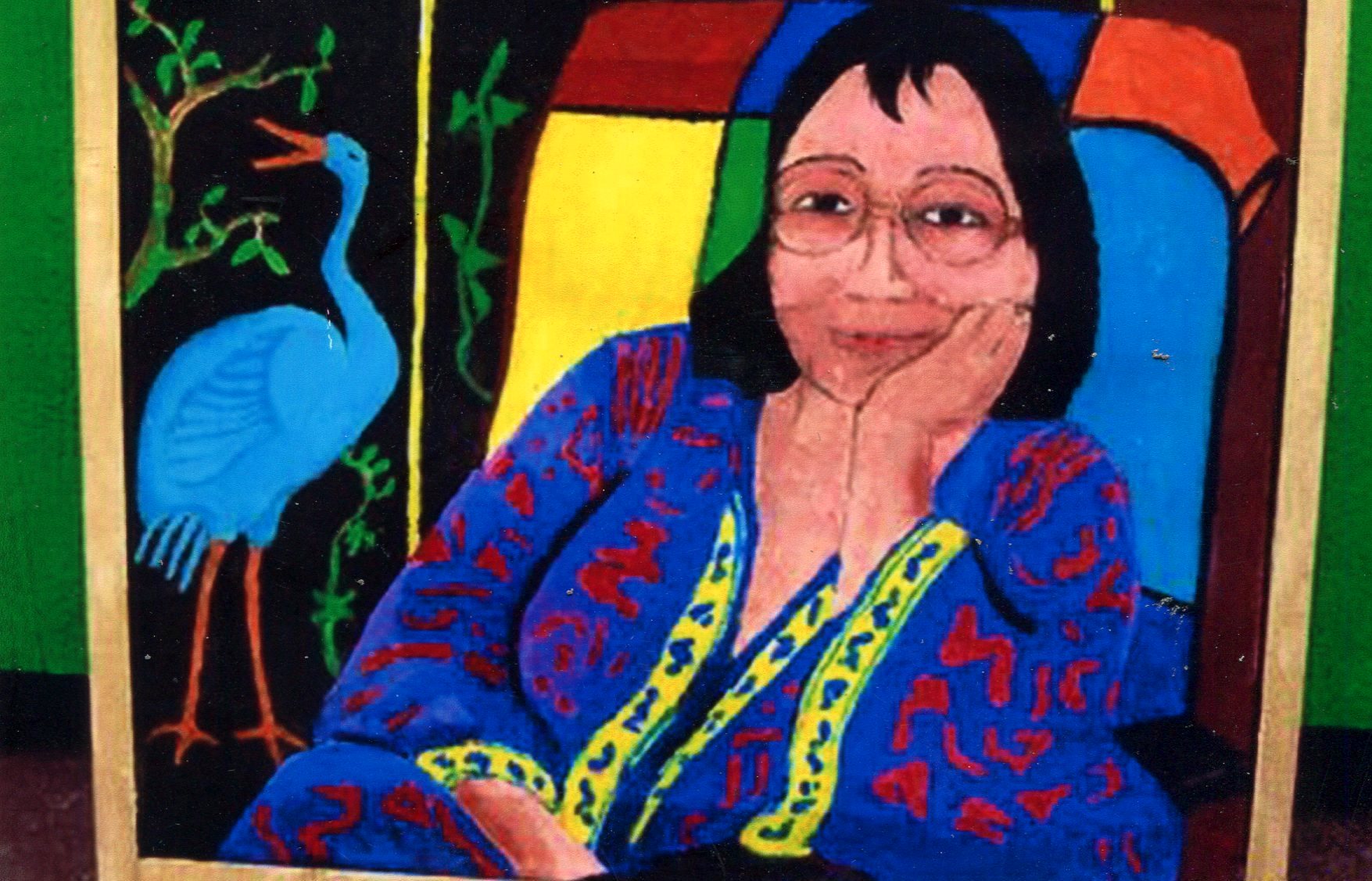
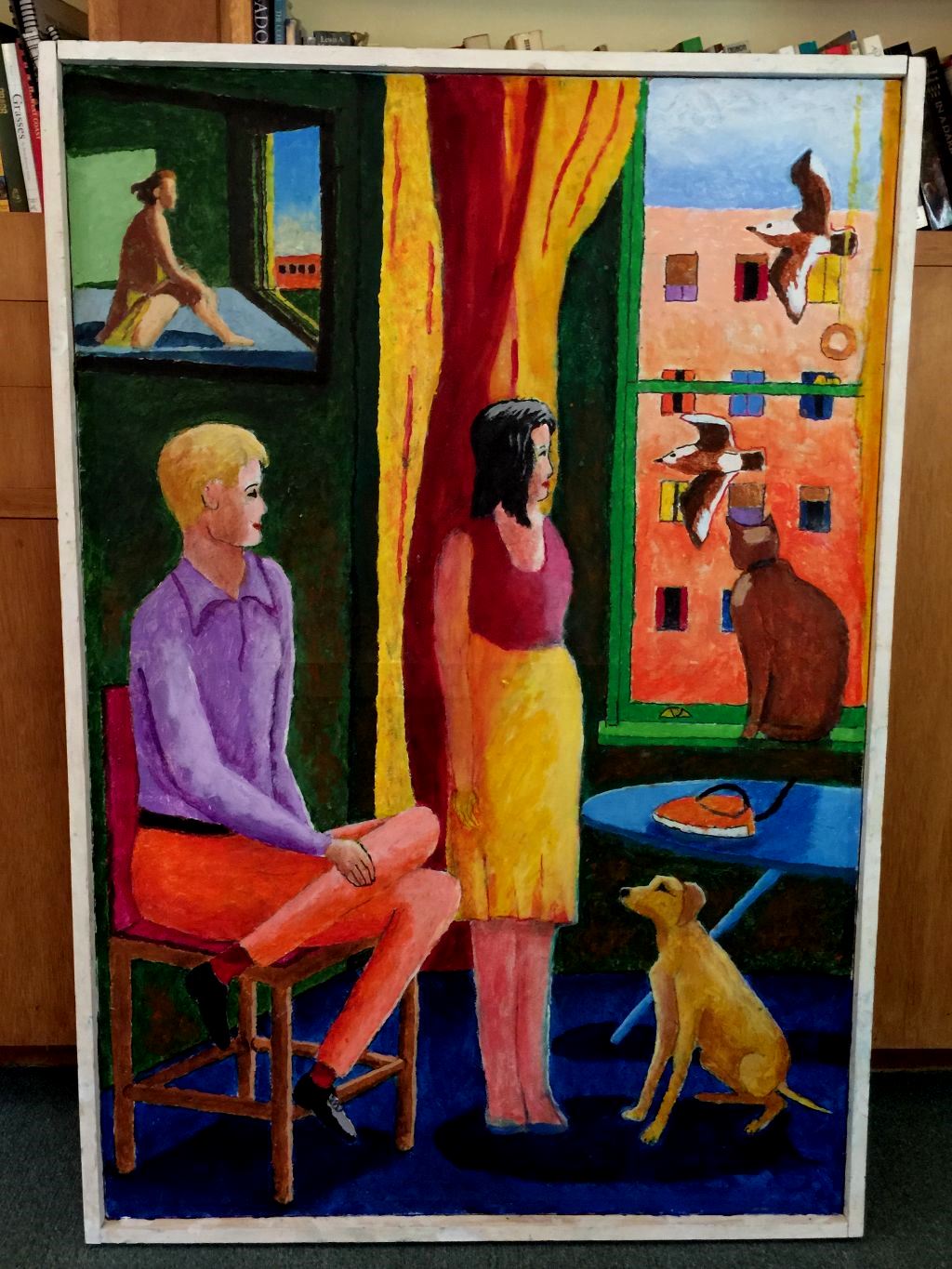
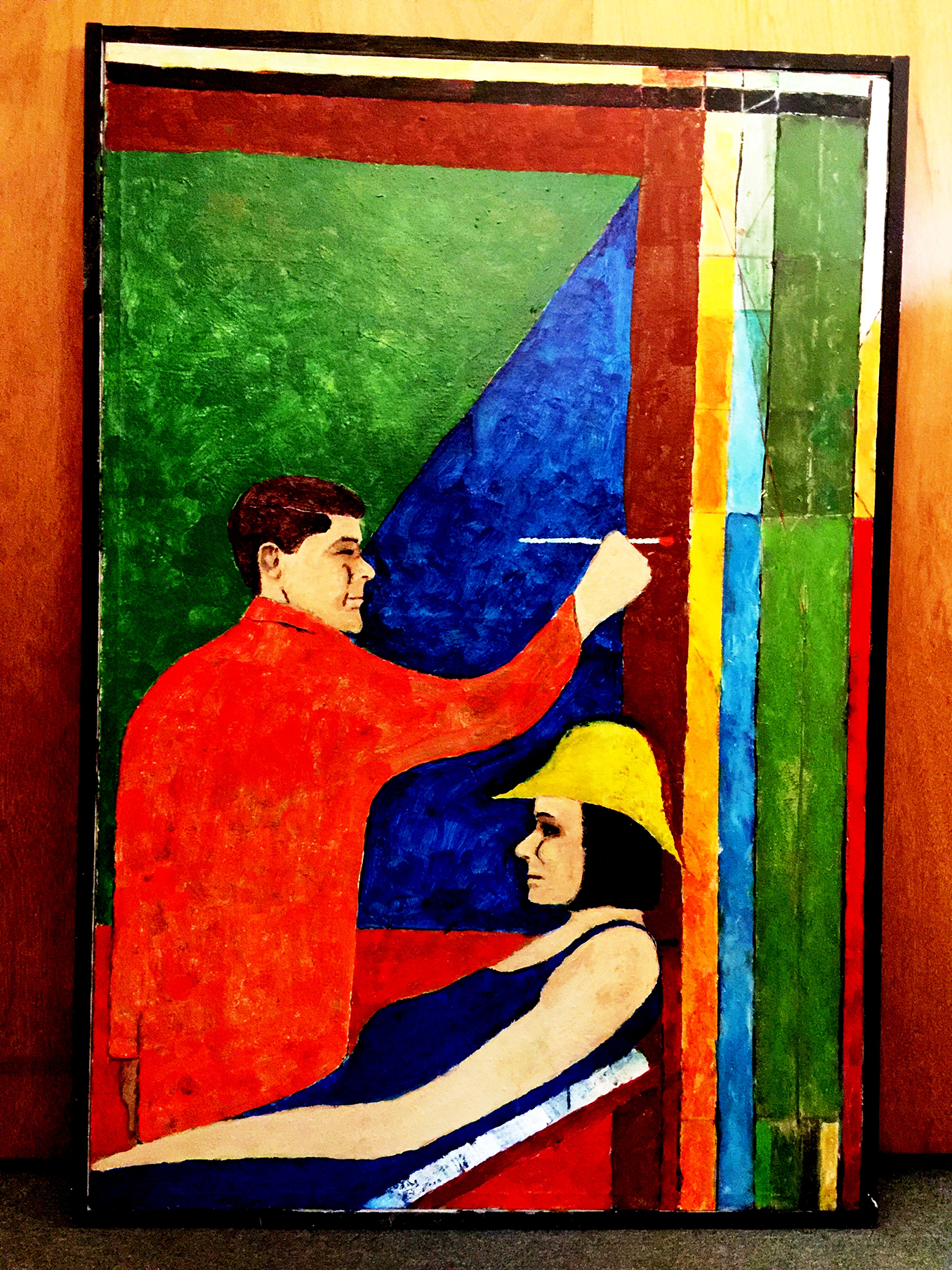
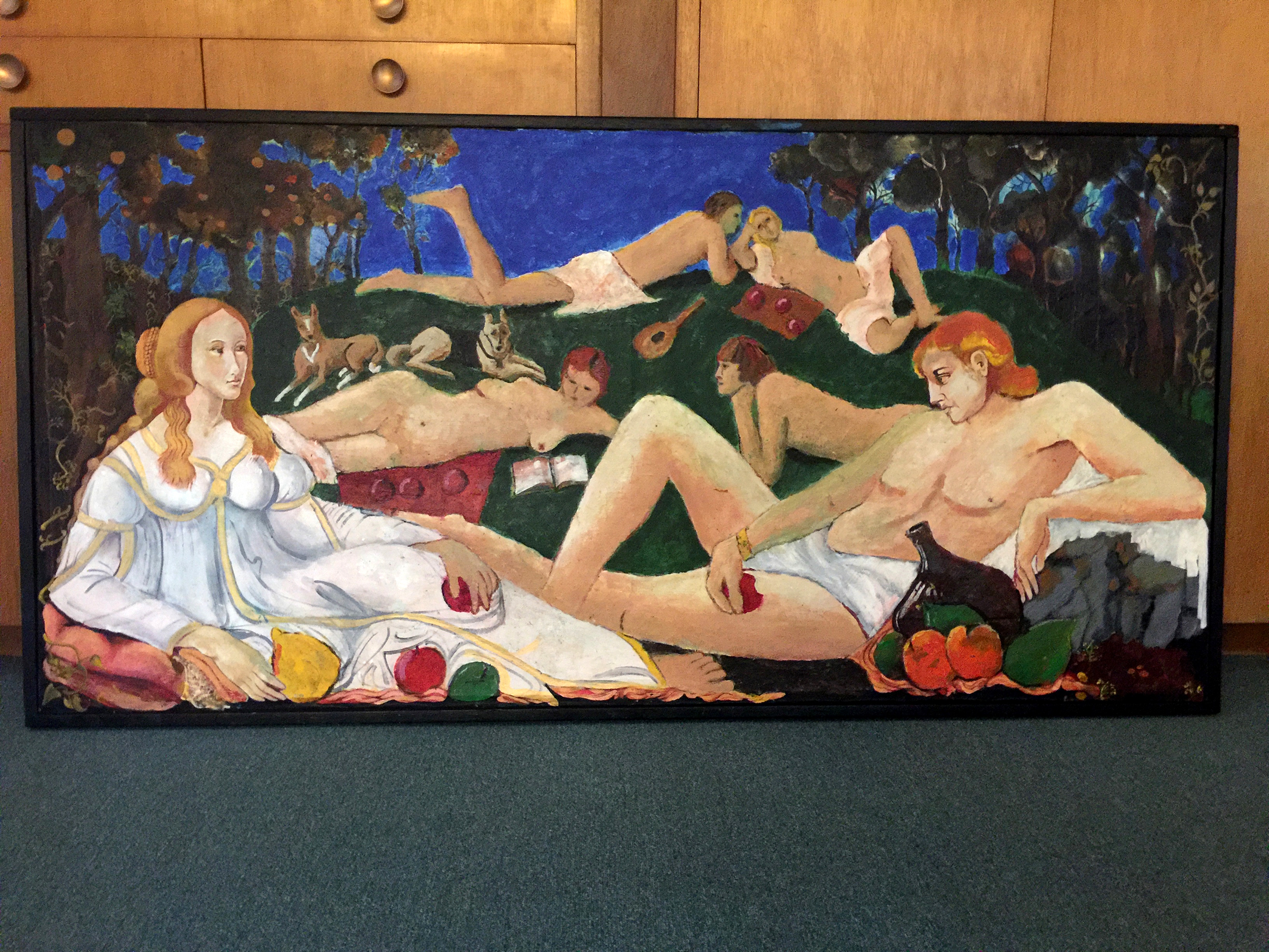
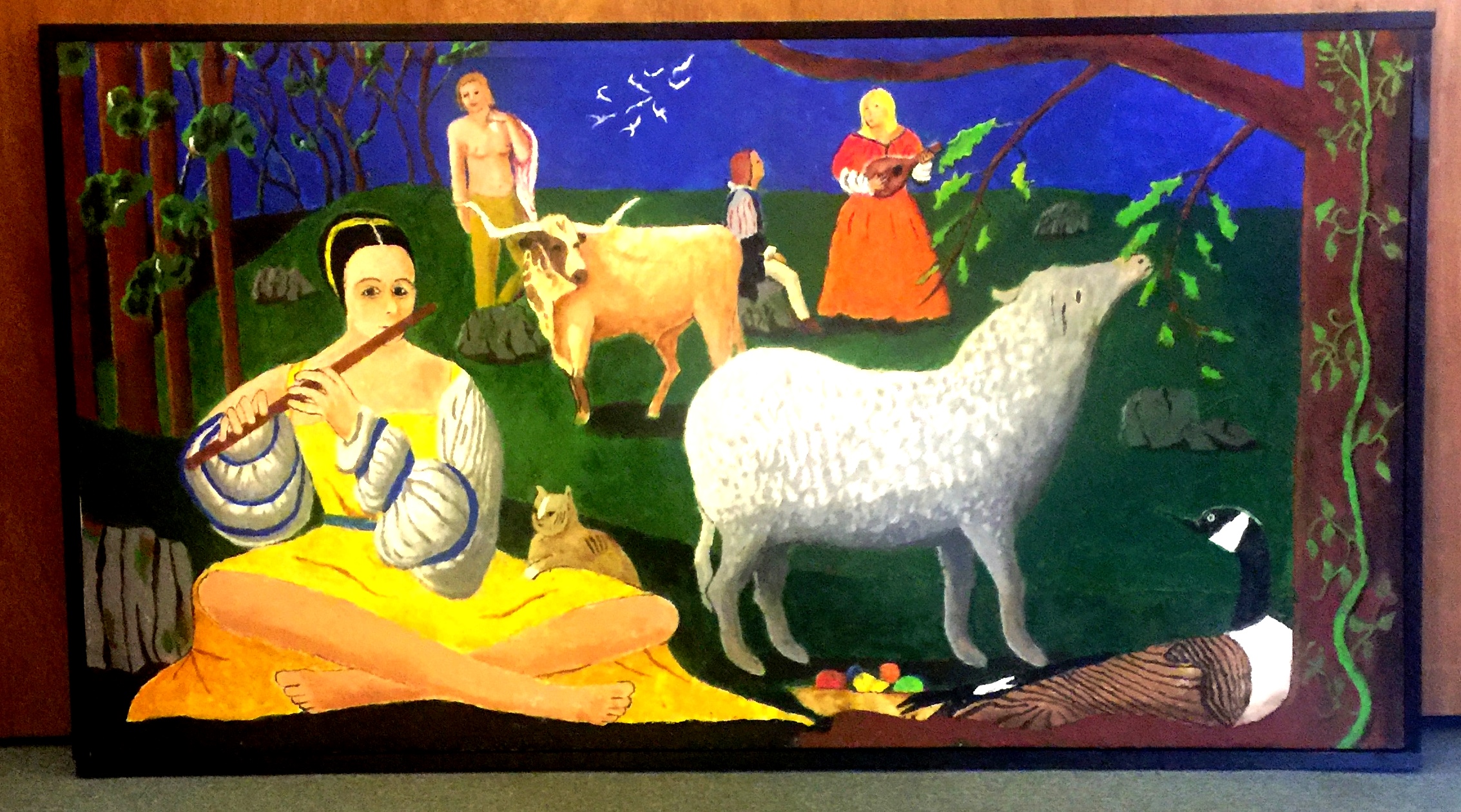
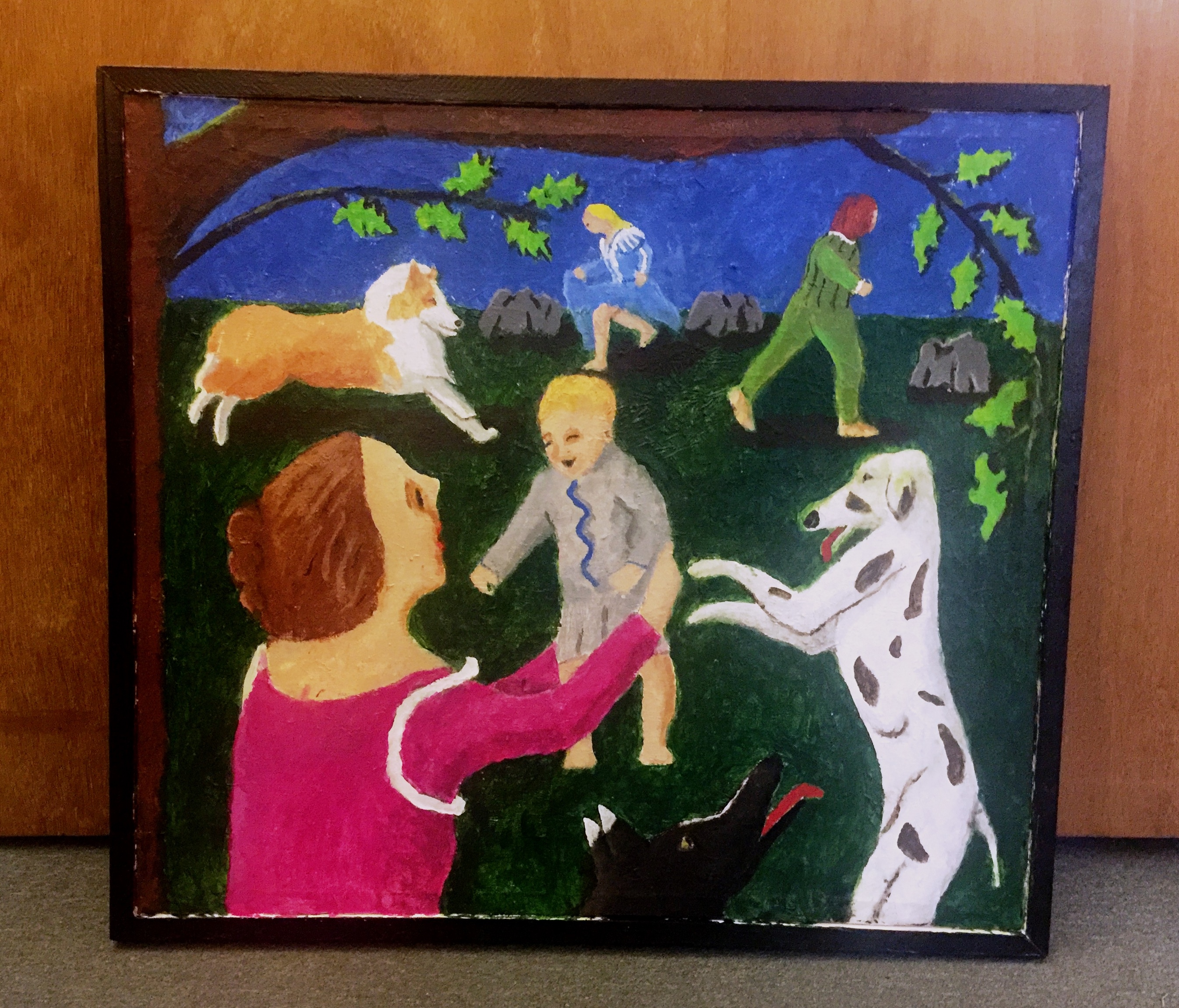
Because I’m not an artist who needs to exhibit his work and make money, I can be indifferent to the finished product, which I usually lose interest in. I have a selection of homemade stretchers for canvas of various sizes and shapes at hand, which I use over and over again, whiting out the last painting to begin another. There are, however, a number of paintings I have kept, more for their subject than for their quality. I include a selection of them, for they partly explain why I regard colors on sculptures as important. The mood of these paintings is largely serene, in which respect they are companions of the sculptures.
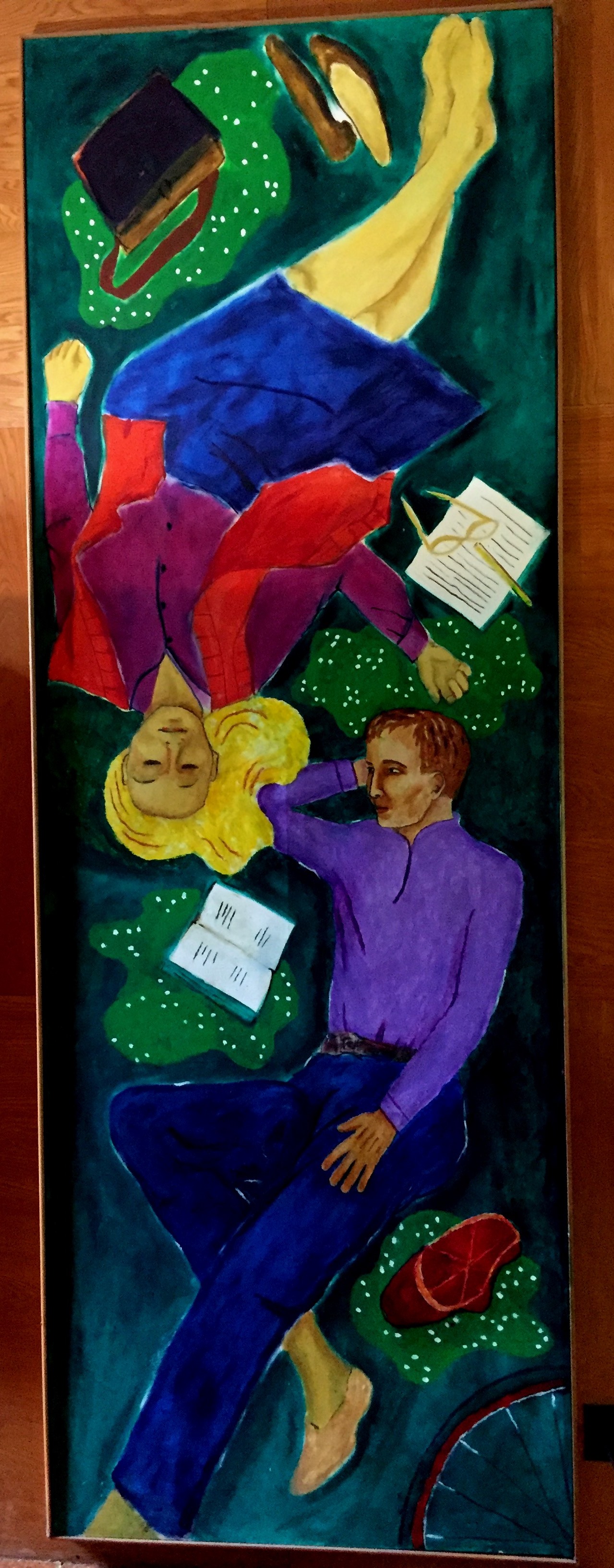
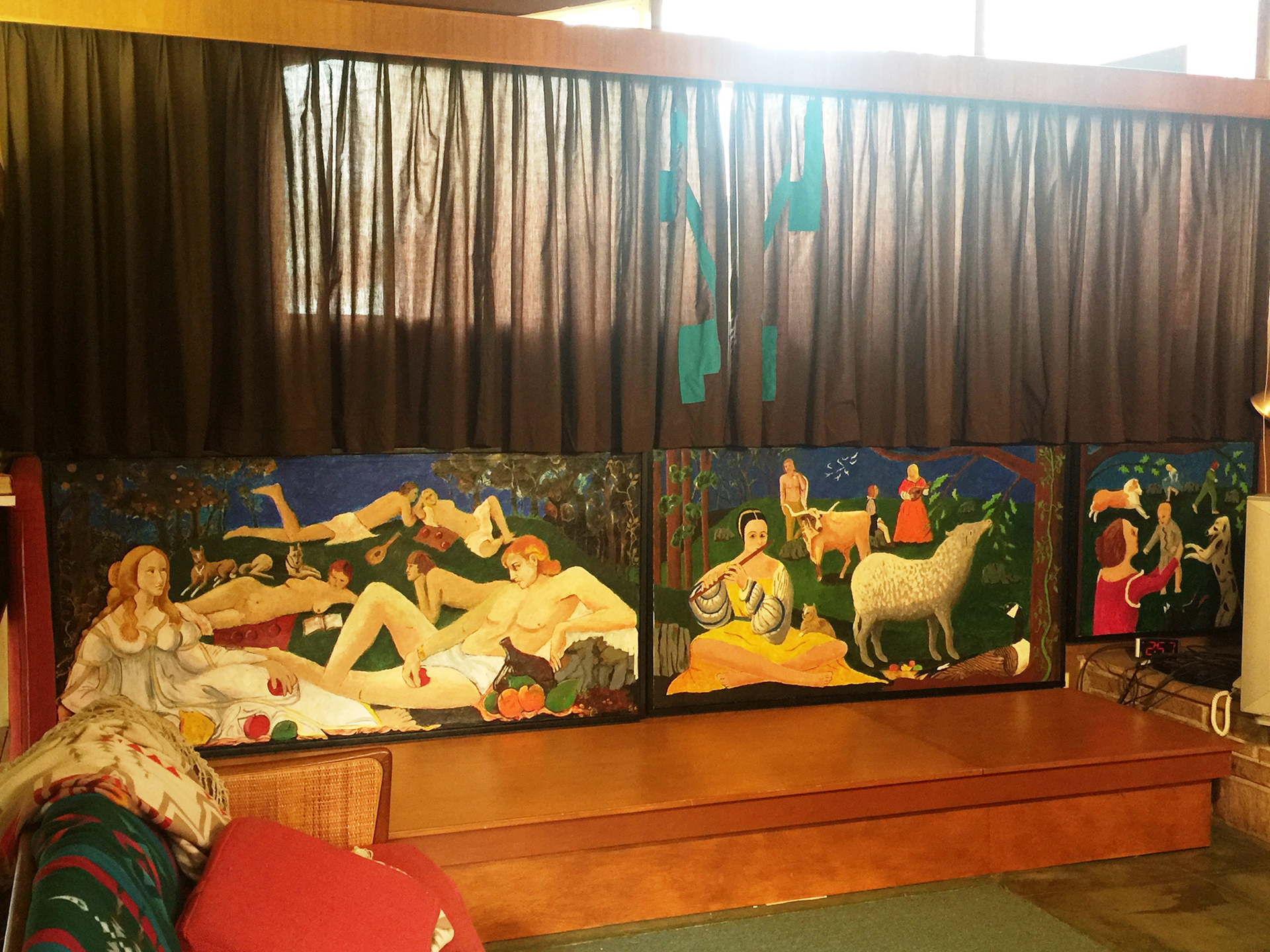
I include another painting because it, like the sculptures, belongs to the setting. It is part of my house, a 15 foot, mural-like painting on three canvases set side-by-side, designed to fill the end of a room.
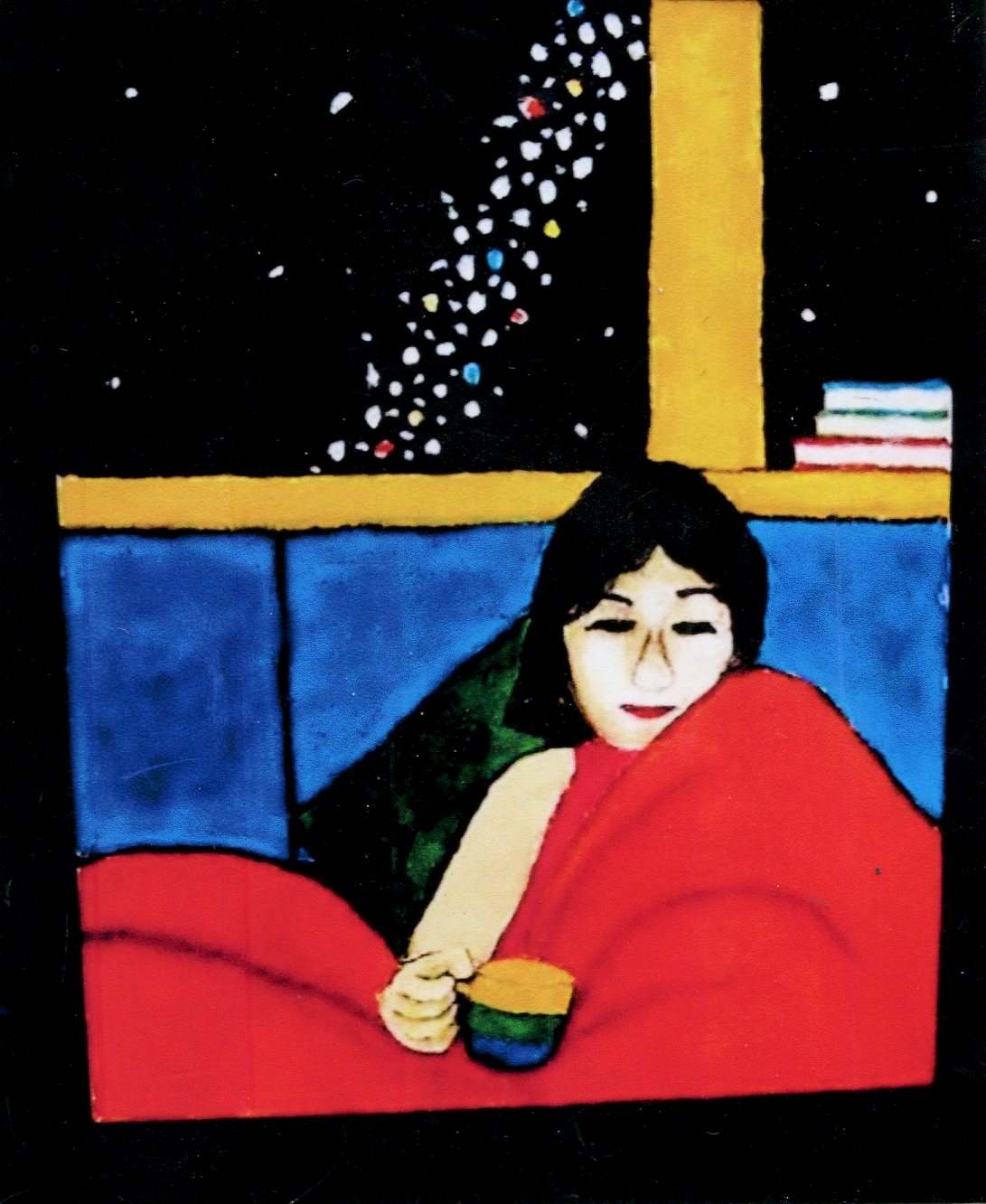
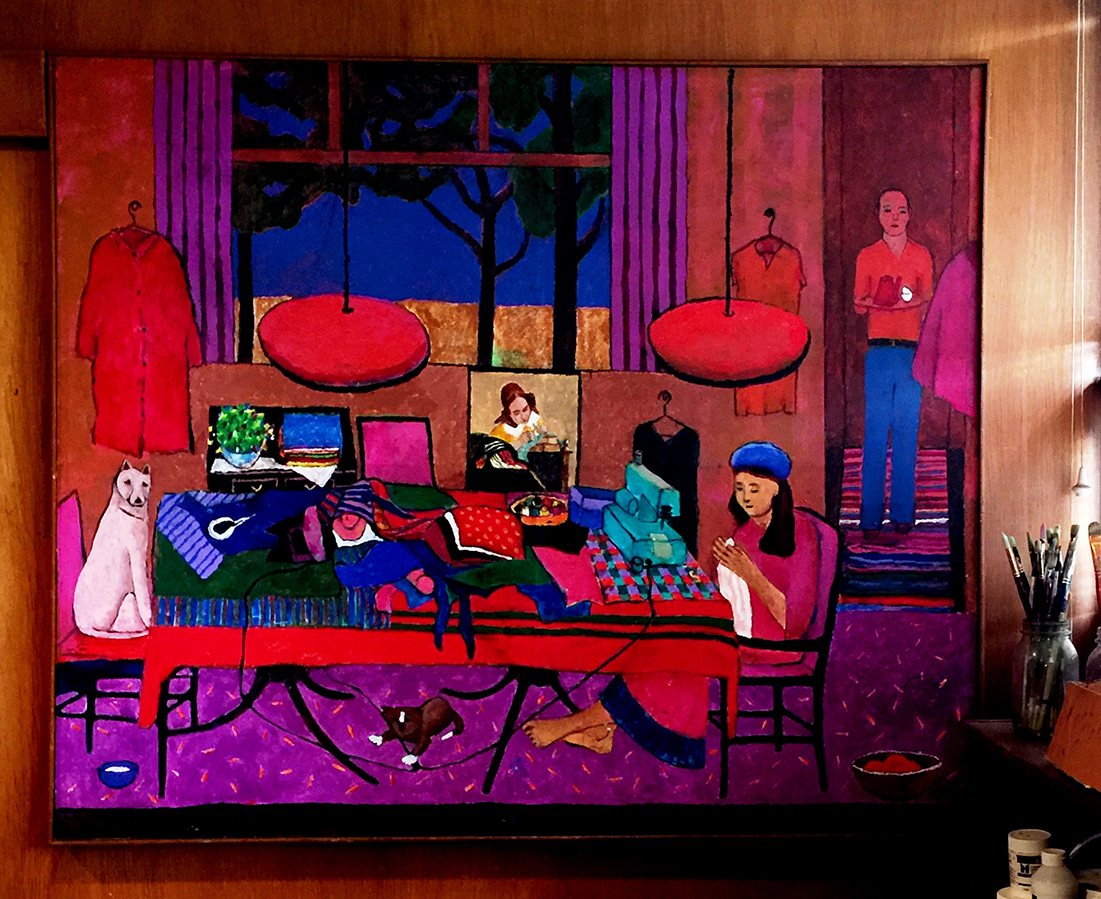
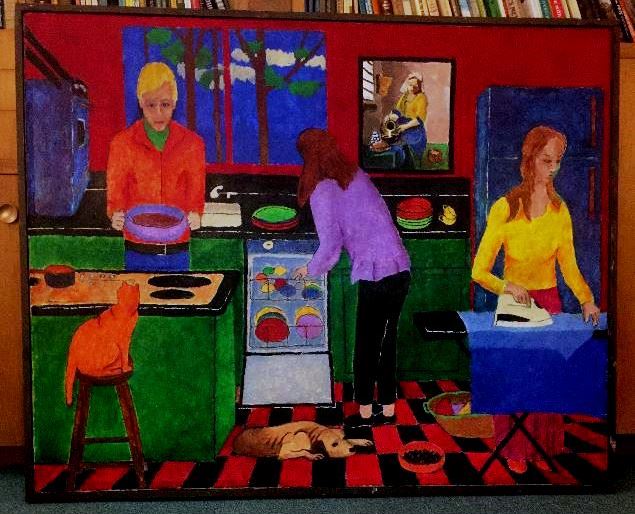
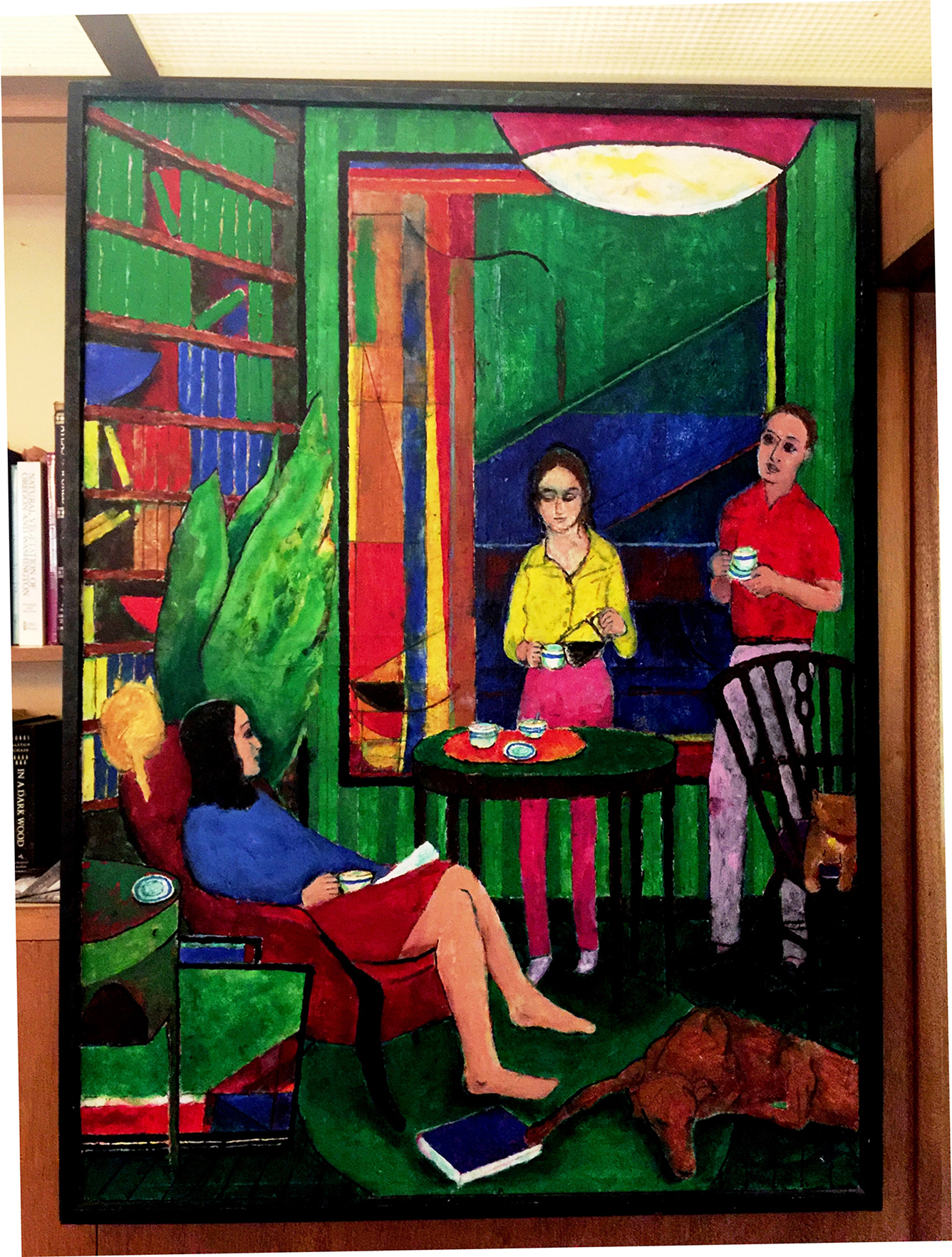
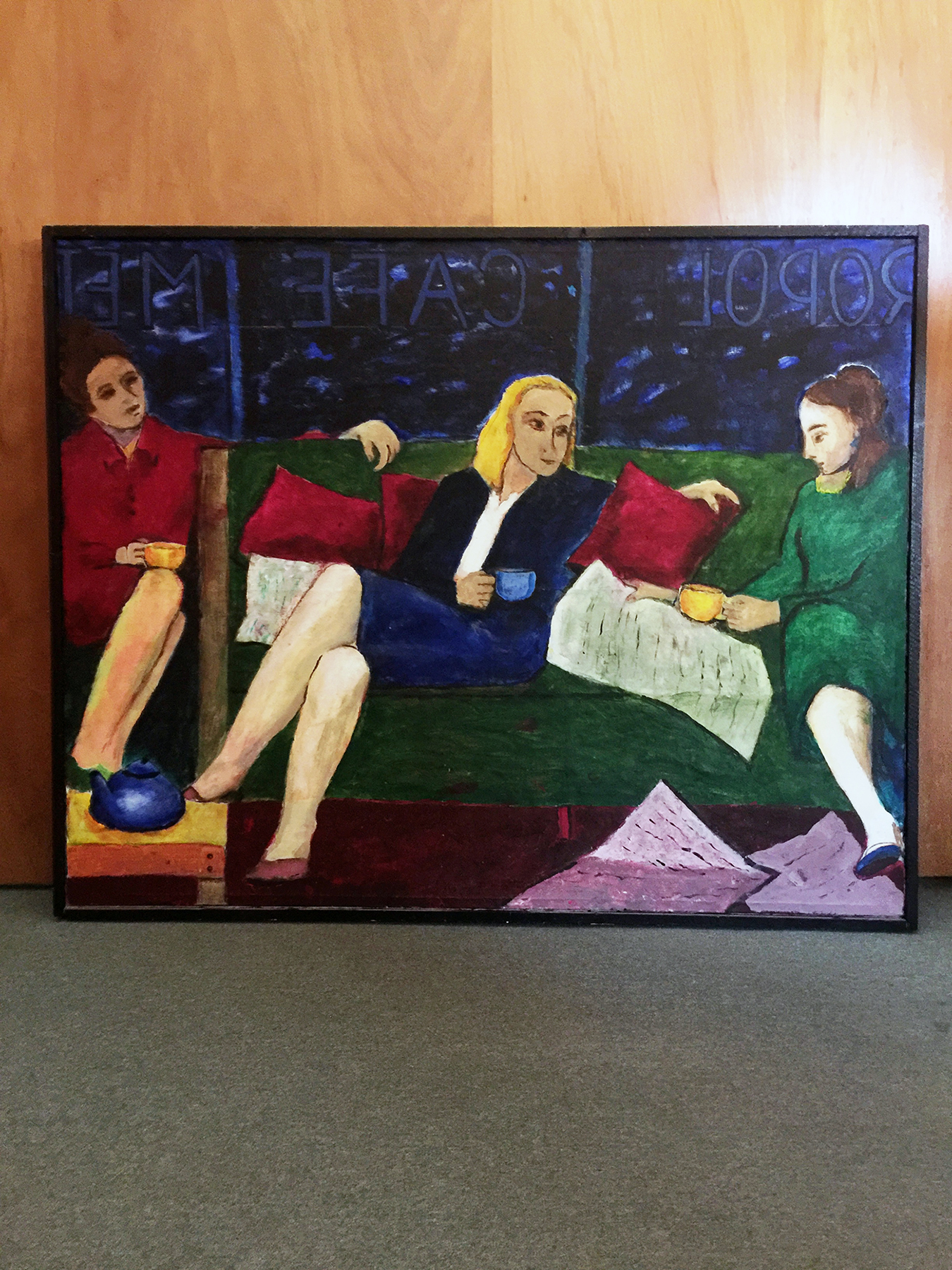
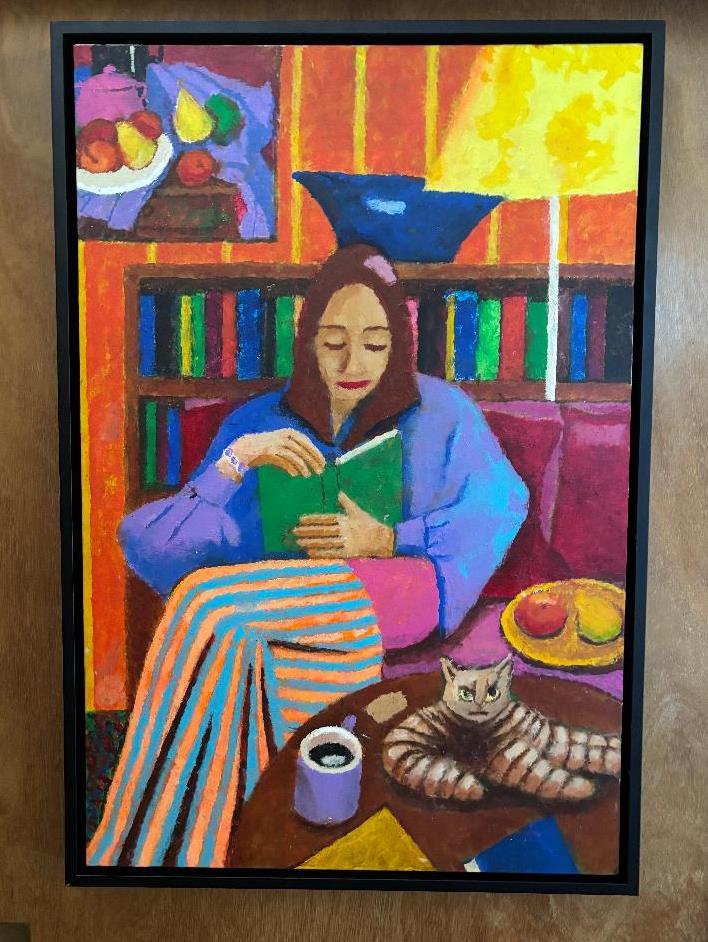
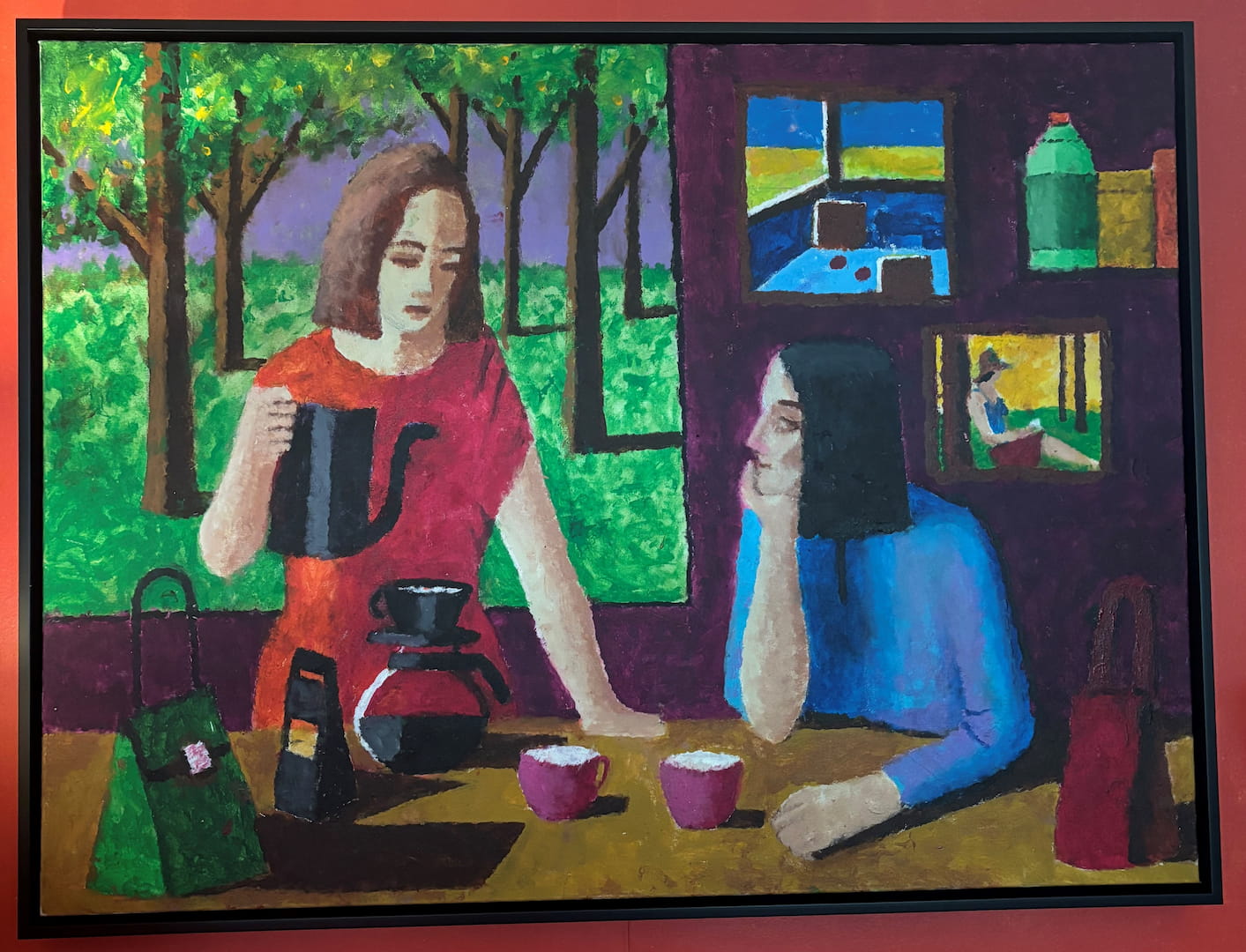
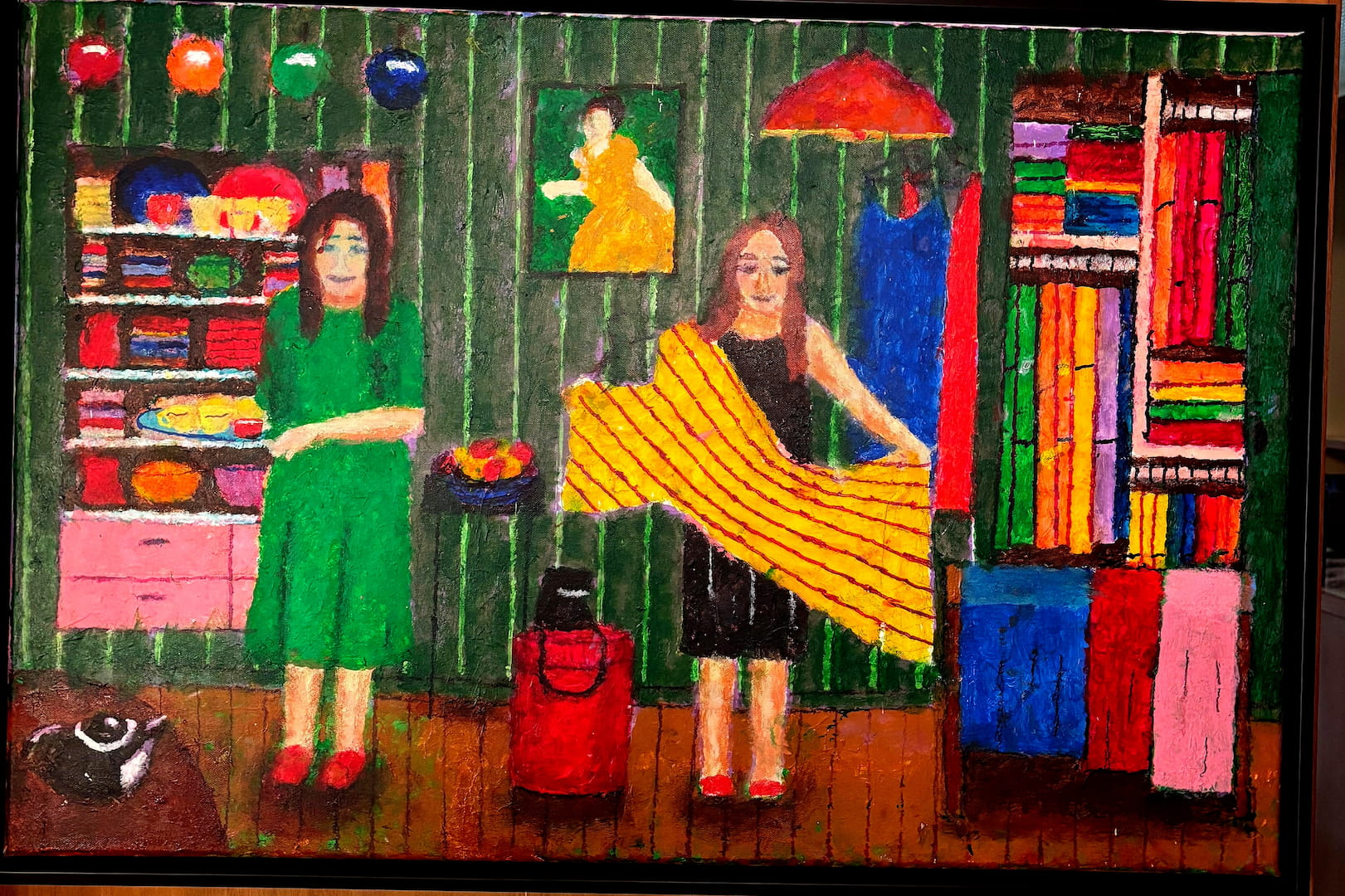
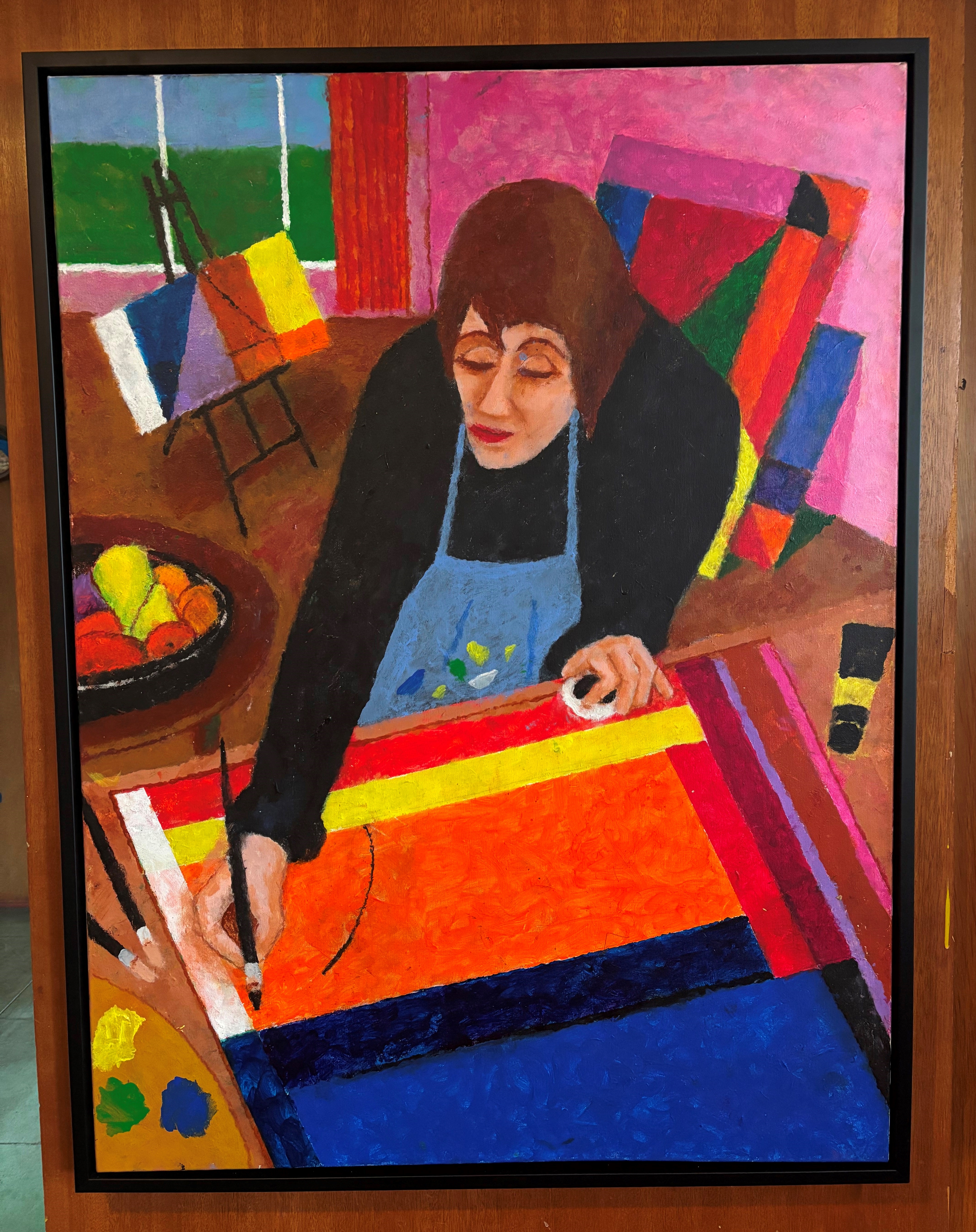
To keep today’s political tempest from monopolizing my mind, I recently invented a temporary diversion: It was to make several large paintings of quiet areas of life, away from the public noise: reading, making early morning coffee, choosing colors of clothing and dishware, and painting itself. The project worked, sort of, though the mental space it freed up was quickly occupied by doubts about the paintings.
I am 92 and my hearing, taste, and other senses are weak. An exception is my perception of color, which seems unaffected by age. I pay more attention to the variegated colors we choose to surround ourselves with, in our homes especially. The paintings here reflect this late-in-life awareness.
Required fields are marked *
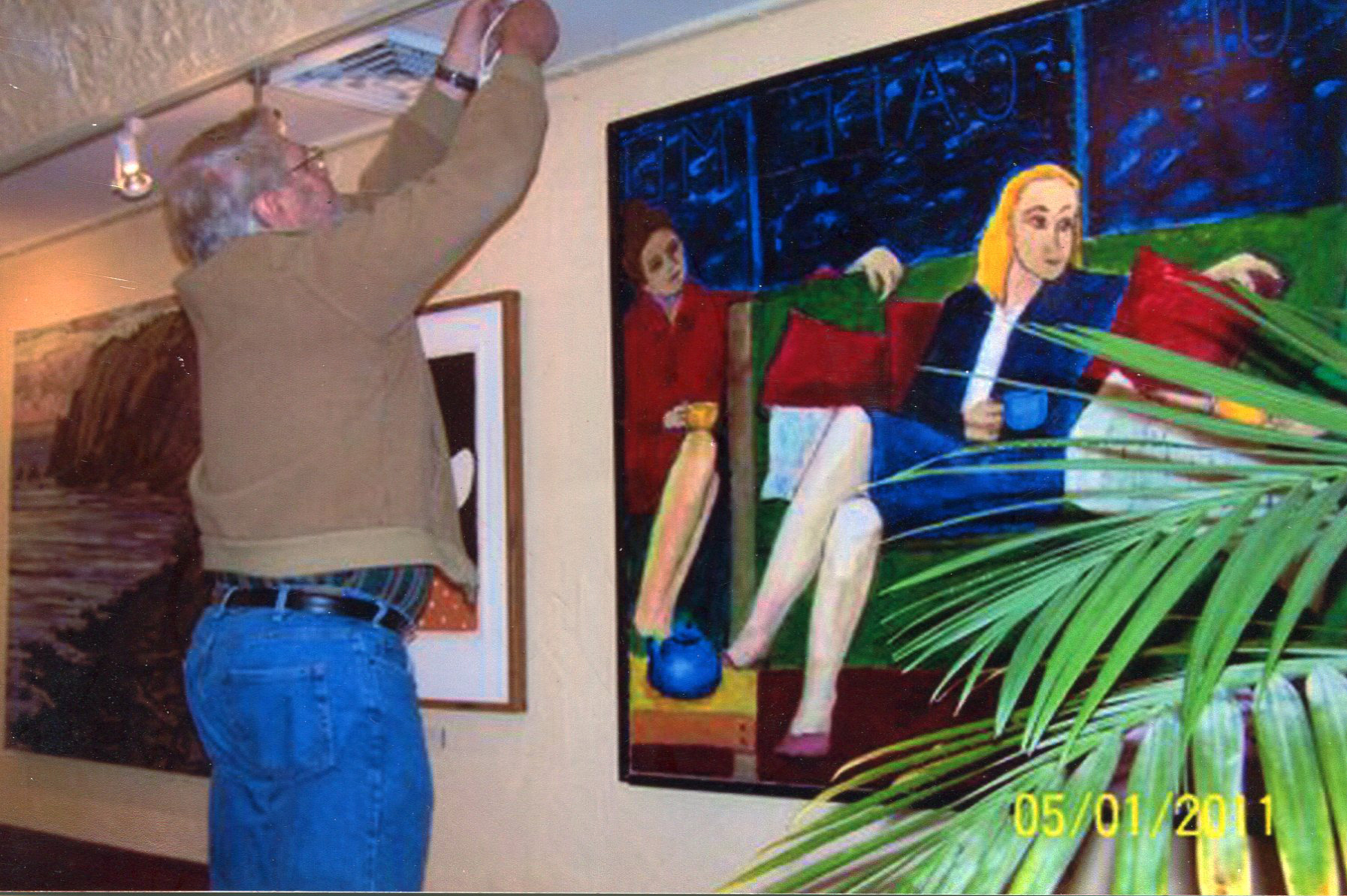
21a. This photograph was taken on a visit to Oregon shortly before my wife and I moved from Baltimore to Eugene, where we began our sculpture garden.